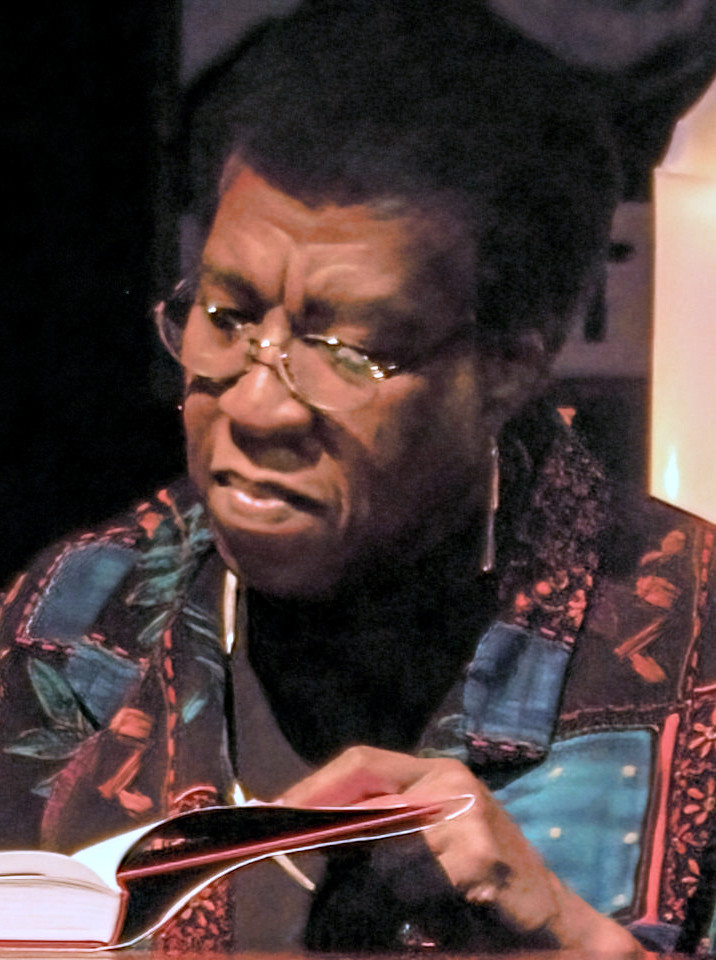
Photo of Octavia E. Butler
Photo: Nikolas Coukouma · CC BY 2.5 · via source

Author profile

Octavia E. Butler

Octavia E. Butler was an American science-fiction writer whose lucid, unsettling novels examine power, race, gender, survival and humanity’s response to change.

2 published books 0 published articles

Official website

About Octavia E. Butler

Octavia E. Butler (1947–2006) was an American science-fiction writer born in Pasadena, California. She began publishing in the 1970s and built a body of work that placed Black women at the center of speculative fiction. Beyond Kindred and the Parable novels, her major works include the Patternist series, the Xenogenesis trilogy, Fledgling and the collection Bloodchild and Other Stories.

Butler wrote about unequal power: who holds it, how it shapes intimacy and what people surrender to survive. Her settings range from a Maryland plantation to damaged future societies and encounters with alien species. The prose is direct and controlled, while the moral choices are rarely simple. Race, gender, hierarchy, biological change and humanity’s capacity for violence recur throughout her fiction.

Her honors include a 1995 MacArthur Fellowship. “Speech Sounds” and “Bloodchild” won Hugo Awards; “Bloodchild” also received a Nebula, and Parable of the Talents won the Nebula Award for Best Novel. Kindred was adapted as a graphic novel and later as a television series.

Start with Kindred. Dana’s repeated journeys from 1970s California to an antebellum Maryland plantation make Butler’s concerns immediate, personal and historically grounded. Readers ready for a harsher future should continue with Parable of the Sower, in which Lauren Olamina crosses a collapsing California while forming the ideas that become Earthseed.

Published books

Author

Parable of the Sower

In a near-future California destabilized by climate disruption, extreme inequality, privatization, addiction, and failing public institutions, teenager Lauren Olamina recognizes that her walled neighborhood cannot remain safe. She also lives with hyperempathy, a condition that makes her physically experience the suffering she witnesses. When violence destroys her home, Lauren travels north among displaced people, concealing her vulnerability while gathering companions and testing the principles of Earthseed, the belief system she has begun to formulate. Told chiefly through Lauren’s dated journal entries, the novel combines a dangerous migration story with an inquiry into leadership, faith, adaptation, and collective survival. Butler’s future is frightening not because it depends on a single spectacular catastrophe, but because familiar social failures intensify and reinforce one another. The result is both dystopian science fiction and a coming-of-age novel about building purpose wit…

View book

Author

Kindred

In 1976 California, Dana Franklin, a Black writer, is repeatedly and inexplicably transported to antebellum Maryland. Each journey places her near Rufus Weylin, a white ancestor whose survival is necessary for Dana’s own birth. What initially appears to be a series of rescues becomes prolonged exposure to the plantation on which Rufus is being formed by slavery’s habits of ownership, violence, and entitlement. Dana must protect him without accepting the system he represents, while also trying to help the enslaved people whose lives are bound to her family history. When her white husband, Kevin, is carried into the past with her, their marriage is tested by a society that assigns them radically unequal positions. Combining time travel, historical fiction, and the tradition of the slavery narrative, Kindred turns ancestry into an immediate physical crisis. Butler asks what it means to inherit a history that remains present in bodies, families, institutions, and relationships.

View book

Articles about Octavia E. Butler's books