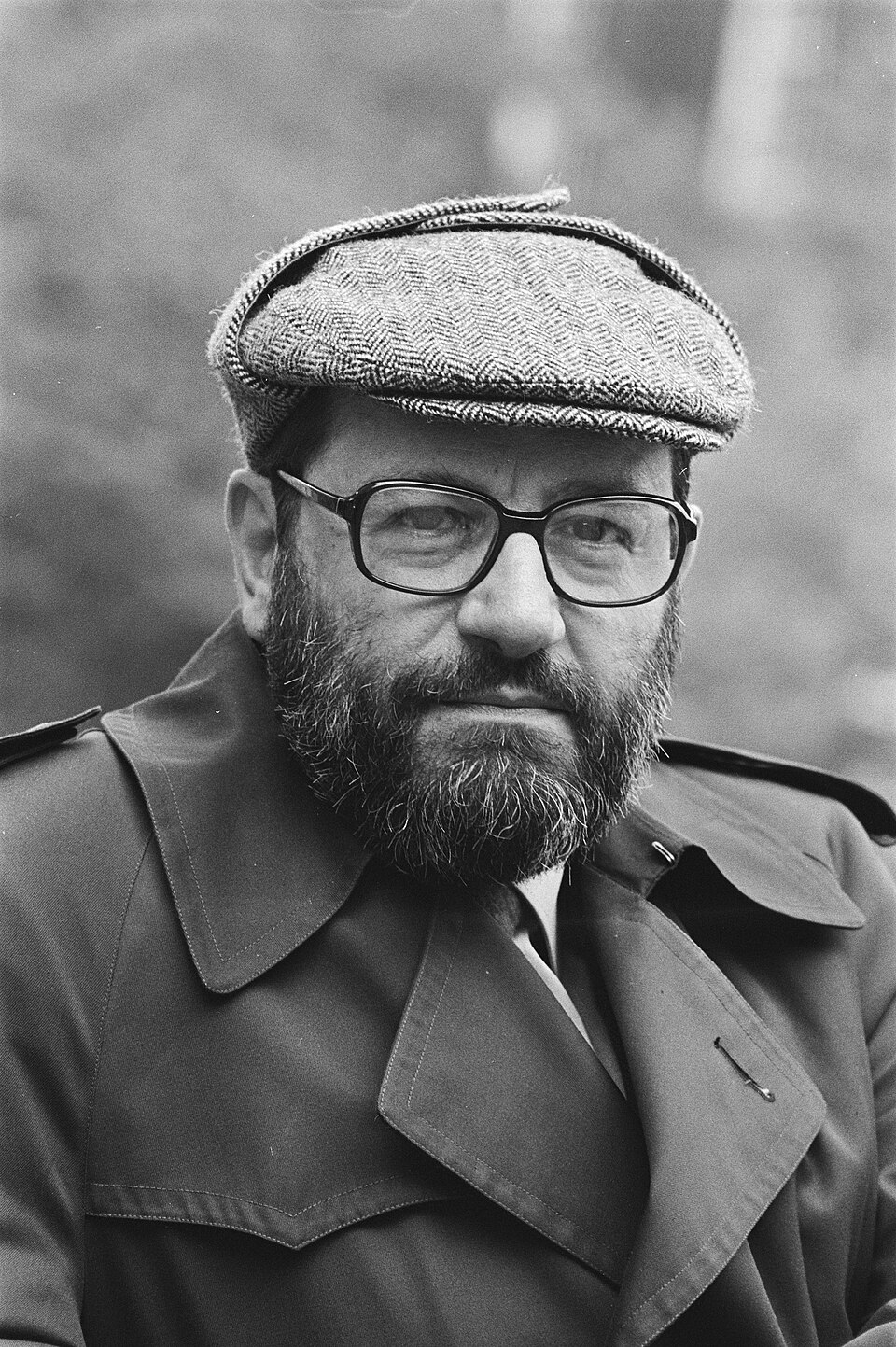
Photo of Umberto Eco
Photo: Rob Bogaerts for Anefo · CC0 · via source

Author profile

Umberto Eco

Umberto Eco was an Italian novelist, philosopher and semiotician whose erudite fiction joins historical mystery with questions about language, interpretation and the stories people choose to believe.

1 published book 0 published articles

Official website

About Umberto Eco

Umberto Eco (1932–2016) was an Italian novelist, philosopher, literary critic and scholar of semiotics. Born in Alessandria, he studied philosophy at the University of Turin, writing his thesis on the aesthetics of Thomas Aquinas. He later worked in broadcasting and publishing before becoming professor of semiotics at the University of Bologna in 1975.

Eco’s fiction grew directly from his scholarly interests. His novels are rich in historical detail, codes, disputed documents and competing interpretations. The Name of the Rose places a murder investigation inside a fourteenth-century monastery, where William of Baskerville and the novice Adso confront theological conflict and a labyrinthine library. Foucault’s Pendulum turns the construction of a grand conspiracy into a warning about the seductions of pattern and belief.

The Name of the Rose, Eco’s 1980 fiction debut, won the Strega Prize and was adapted into Jean-Jacques Annaud’s 1986 film. Six further novels followed, including The Island of the Day Before, Baudolino, The Prague Cemetery and Numero Zero. Alongside them, Eco continued to publish influential studies of signs, language, literature and interpretation.

Begin with The Name of the Rose. It is the clearest meeting point between Eco the storyteller and Eco the scholar: a compelling mystery whose clues lead into medieval politics, forbidden knowledge, laughter and the uncertain relationship between signs and truth.

Published books

Author

The Name of the Rose

In a secluded Benedictine abbey in 1327, a series of unexplained deaths interrupts preparations for a politically sensitive religious meeting. William of Baskerville, a Franciscan friar skilled in observation and inference, investigates with the help of Adso of Melk, the young novice who later records their experience. Their inquiry leads through theological disputes, concealed histories, encoded manuscripts, and the abbey’s forbidden labyrinthine library. Although structured as a murder mystery, The Name of the Rose is equally concerned with how people interpret signs, preserve knowledge, enforce orthodoxy, and mistake persuasive patterns for truth. Umberto Eco combines a vividly constructed medieval setting with detective fiction, philosophical argument, literary play, and reflections on censorship. The result is a novel in which solving crimes cannot be separated from examining who controls books, how institutions defend authority, and whether certainty is ever justified by the evi…

View book

Articles about Umberto Eco's books