
The Unreliable Editor: What Framed Manuscripts and Fictional Footnotes Do to a Story
How invented documents and their supposed custodians reshape truth, authority, and doubt
Learn to recognize fictional editors, translators, archives, and annotations—and to judge how each intervening voice changes the apparent source, credibility, and meaning of a story.
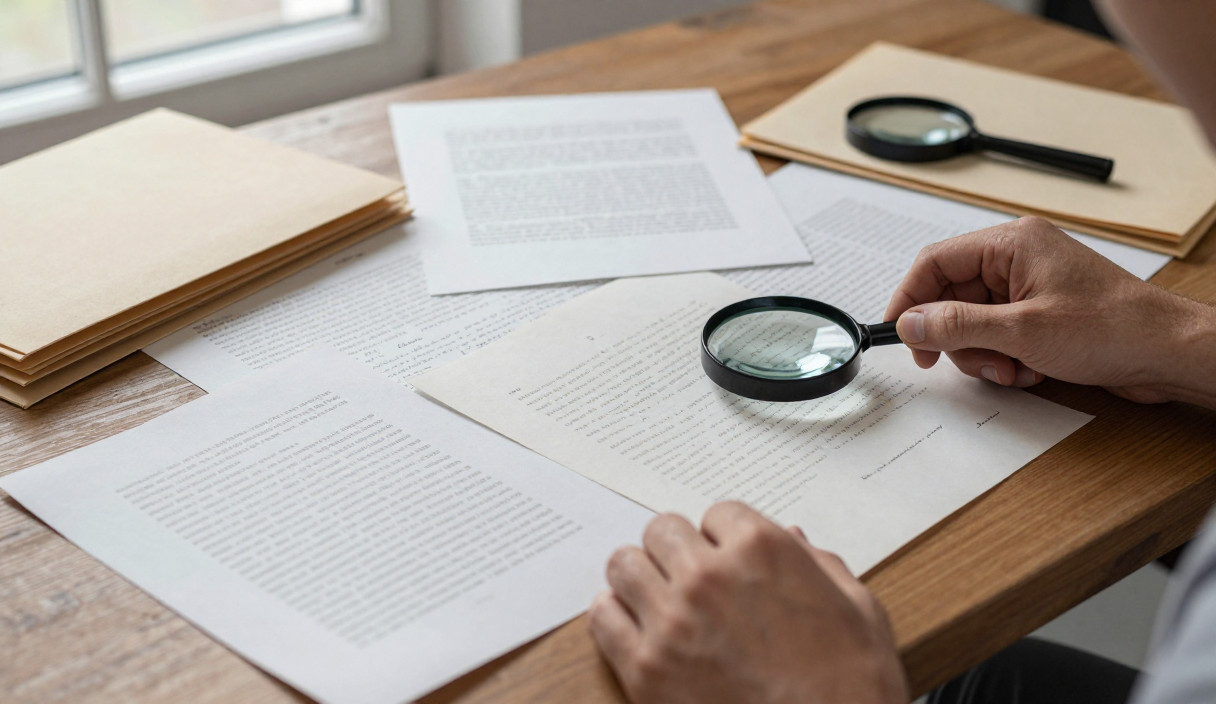
Some novels ask readers to imagine that the book in their hands is not simply a novel. It may present itself as a memoir recovered from a trunk, a manuscript translated from another language, a scholarly edition of a lost poem, or a bundle of letters arranged by an unnamed custodian. Footnotes, prefaces, appendices, indexes, and editorial corrections strengthen the illusion that the story existed before the novelist published it.
These devices place one or more fictional intermediaries between the reader and the supposed original account. The intermediary may promise accuracy, but that promise should not be accepted automatically. An editor can omit material, a translator can reshape a voice, and an annotator can use another person’s text to pursue a private argument. Even a document that appears immediate—a diary entry, letter, or testimony—was written for a purpose and from a limited position.
The practical question is therefore not merely whether the innermost narrator can be trusted. Readers should also ask who found the narrative, who prepared it for publication, what changes were supposedly made, and whose interests the finished object serves. Once those layers become visible, paratext that initially looked like decoration can become a second plot: a struggle over who has the right to preserve, explain, correct, translate, or possess another person’s story.
The story may arrive through several hands
A conventional narrator appears to tell the story directly, even when that narrator is a character. A framed manuscript adds a transmission history. The novel asks readers to imagine an earlier document and then introduces the person or institution responsible for delivering it.
A simple version might follow this sequence:
- A character experiences events.
- That character records them in a diary or memoir.
- Someone discovers the record later.
- An editor selects and arranges it.
- A translator converts it into the language being read.
- An annotator supplies explanations, objections, or corrections.
Every step creates another possible source of error or manipulation. The witness may misremember. The diarist may conceal something. The discoverer may misunderstand the document’s origin. The editor may reorder passages. The translator may choose loaded equivalents. The annotator may force the text to support an unrelated theory.
Letters and other supposedly authentic records can also become the entire narrative rather than material embedded within it. The epistolary novel, in its strict sense, delivers plot and character through letters from one or more correspondents. Documentary fiction expands the available materials to diaries, memoirs, testimony, newspaper reports, transcripts, and similar records. These forms imitate documents associated with private communication or factual evidence, while remaining parts of an invented work.
Do not assume that the innermost layer is automatically the purest. A personal letter may be candid, but it may also flatter its recipient. A retrospective memoir may offer reflection while introducing hindsight. A transcription may seem neutral while concealing who selected the interview or removed pauses and repetitions. The novel’s chain of custody is not a guarantee of truth; it is a map of competing perspectives.
How to spot an invented intermediary
The clearest signal is a prefatory voice that distinguishes between the work’s real author and its supposed source. This voice may claim to have found, inherited, purchased, decoded, restored, abridged, or translated the text. It may discuss missing pages, illegible handwriting, disputed names, inconsistent dates, or decisions about arrangement.
Other clues appear throughout the book:
- Brackets, ellipses, or labels indicating gaps and damaged passages
- Notes that correct or contradict the main narrative
- References to an original language that the reader never sees
- Claims that names have been changed or identifying details suppressed
- Competing typefaces or layouts assigned to different textual authorities
- Appendices containing letters, exhibits, genealogies, or alternative endings
- An index that quietly advances interpretations rather than merely locating topics
- Citations to works that belong to the invented world
- Editorial remarks that become increasingly emotional, defensive, or intrusive
The decisive question is whether an editorial statement belongs to the real edition or to the fiction. A real translator’s note normally identifies an actual choice made in translating an actual source text. A fictional translator’s note is written by the novelist as part of the imagined world. Some works deliberately place the two kinds of material close together, so check the title page, copyright page, table of contents, and typography before deciding who is speaking.
Names are another useful guide. Write down each named agent and assign a role: author, narrator, compiler, editor, translator, commentator, publisher, or discoverer. Then note which agents claim to have met one another and which exist only through somebody else’s report. This modest diagram can reveal that a supposedly solid archive depends on a person no one else has seen, or that an editor’s certainty rests on evidence the reader cannot inspect.
Why the apparatus initially feels trustworthy
Editorial conventions borrow the visual and verbal habits of scholarship. Numbered notes, bibliographies, archival labels, cross-references, and cautious qualifications suggest that claims have been checked against evidence. In nonfiction, these features can direct readers toward sources and delimit an argument. Fiction can imitate the same conventions to enlarge its invented context while exposing how unstable the pose of neutrality may be.
Daniel Defoe’s fiction belongs to an early tradition in which the real author could present himself as the editor of a protagonist’s history. Such framing accompanied the development of the English novel and helped invented lives resemble testimony or recovered experience. Later documentary novels continued to use artificial letters, memoirs, clippings, and witness statements as apparent confirmation of narrative truth.
The paradox is central to the form. Added documentation may make an imaginary world feel denser and more authentic. At the same time, every new document introduces another voice with its own knowledge, motives, and blind spots. A stack of evidence can therefore increase uncertainty rather than settle it.
This is why readers should distinguish authentication from truth. A seal, date, citation, or editorial assurance authenticates the text within the story only if the fictional system producing that assurance is reliable. If the editor controls all available evidence, the appearance of verification may simply display that character’s power. The apparatus tells readers not only what supposedly happened but also who is permitted to classify what happened.
Footnotes can challenge the text they seem to serve
A footnote appears subordinate because it sits below the main text or at the back of the volume. In fiction, however, the margin can compete with the center. Notes can interrupt the pace, supply an alternative history, undermine a narrator, or gradually take over the story.
Pale Fire offers an especially concentrated example. The work contains a poem attributed to John Shade, surrounded by a foreword, commentary, and index supplied by Charles Kinbote. The commentator repeatedly redirects attention from the poem toward his own account. The reader must decide whether the apparatus explains the central text, distorts it, or generates a rival narrative that consumes it.
Jonathan Strange & Mr Norrell uses faux-academic notes that refer to an invented literature and history of English magic. The notes widen the fictional world beyond the events in the main narrative. Their scholarly manner helps the impossible acquire the texture of recorded tradition, while their digressions remind readers that histories are built by selection and commentary.
House of Leaves multiplies the conflict among documents and interpreters. Its layers include an account of a nonexistent film, a manuscript assembled around that account, interventions by another narrator, editorial material, appendices, and elaborate typographical changes. The reading process becomes physically difficult to separate from the novel’s preoccupation with disorientation and labyrinths.
In each case, annotation is action. Ask what a note makes you do. Does it send you backward, force a comparison, delay a revelation, contradict a fact, or lure you into following the annotator’s obsession? The inconvenience may be purposeful. Control over a reader’s route through the pages is one form of narrative authority.
Editors and translators may become interested parties
The title “editor” sounds procedural, but a fictional editor is a character whenever the work gives that figure a voice, motive, history, or pattern of judgment. The same applies to a fictional translator. Neither should be treated as a transparent pane between reader and source.
Look for forms of editorial pressure:
- Selection: Which documents were included, and which are described but withheld?
- Sequence: Is chronological order preserved, reconstructed, or abandoned?
- Correction: On what grounds does the intermediary reject another voice’s account?
- Naming: Who receives a proper name, a pseudonym, a title, or anonymity?
- Explanation: Which cultural details are treated as normal, and which require glosses?
- Ownership: Does the intermediary behave as though discovering a text confers the right to control it?
- Self-display: Do notes illuminate the source, or mainly exhibit the annotator’s learning and importance?
A translator introduces a particularly revealing fiction of access. The reader is told that an original exists elsewhere, yet may have no way to compare it with the version provided. Scholars use “pseudotranslation” for works that present themselves as translations even though no source text exists. In narrative terms, this device can create distance, license an unfamiliar style, or make the imagined work seem to come from a culture beyond the apparent author.
Translation can also dramatize inequality. The intermediary may explain one culture to another, standardize dialect, remove ambiguity, or claim that a difficult expression has no exact equivalent. Those gestures tell readers whose language is presumed central and whose voice requires mediation. A useful interpretive question is: what becomes possible only because the story claims to be translated?
A practical method for reading layered texts
You do not need to solve every puzzle or verify every citation to read this kind of novel well. Begin by treating the book as both a narrative and an artifact assembled inside the narrative.
- Identify the supposed source.
State what the work claims the central material originally was: memoir, poem, chronicle, letters, film transcript, oral account, legal evidence, or something else.
- Trace the chain of custody.
List everyone who possesses, copies, translates, edits, publishes, or comments on the material. If part of the chain is missing, mark the gap rather than silently completing it.
- Separate access from interpretation.
An editor may be the only person able to provide a document without being the best person to explain it. Distinguish factual control over the archive from interpretive credibility.
- Compare voices and claims.
Notice repeated events, dates, names, and quotations. Contradictions are often more revealing than the question of which version is finally correct. They show what each speaker needs the record to mean.
- Watch the margins for a second plot.
Track changes in the notes’ tone and subject. A restrained annotator may become defensive; an impersonal compiler may disclose personal involvement. The editorial apparatus can have its own character arc.
- Notice what cannot be checked.
References to missing originals, destroyed pages, private archives, or untranslatable phrases place evidence beyond the reader’s reach. Such barriers may create mystery, but they can also reveal a power imbalance between the intermediary and the audience.
- Ask who benefits from the final arrangement.
Does the edition vindicate someone, conceal responsibility, manufacture a legend, claim ownership, or discredit the person who supposedly produced the original account?
This approach avoids reducing the novel to a truth-detection exercise. Sometimes no stable reconstruction is available. The uncertainty itself may be the point, especially when the work is concerned with archives, historical memory, institutional authority, cultural translation, or the ethics of speaking for the absent.
What the extra layers ultimately change
Framed documents alter the relationship among author, narrator, and reader. The real author retreats behind invented agents, apparently surrendering control while actually designing every conflict among them. The reader, meanwhile, is promoted from recipient to evaluator. Reading becomes an act of comparing sources, detecting omissions, and deciding how much weight each voice deserves.
These structures also complicate authenticity. A fabricated document can feel more immediate than conventional narration because it seems to bear traces of a particular occasion: a date, recipient, stain, missing leaf, hurried correction, or editorial dispute. Yet such details are crafted signs of authenticity, not independent proof. Their effectiveness reveals how readily documentary form influences belief.
Most importantly, the devices turn authority into a visible problem. Who may interpret a dead person’s words? Can an institution preserve a record without reshaping it? Does expertise clarify a text, or enable possession of it? When does translation become appropriation? What happens when commentary receives more space and prestige than the work it claims to serve?
The best reading stance combines provisional trust with sustained attention. Accept the fictional arrangement long enough to experience its effects, but keep asking who built it. An invented editor may provide indispensable context and still be vain, mistaken, coercive, or dishonest. A footnote may contain accurate information while drawing an absurd conclusion. A damaged archive may prevent certainty without making every interpretation equally persuasive.
The layers are therefore not obstacles to the real story. They are the means by which the novel shows that stories rarely arrive untouched. Someone preserves them, labels them, translates them, and decides where they end. The reader’s task is to interpret both the surviving account and the hands that claim to deliver it.