Two Columbia College classmates, Alfred Harcourt and Donald Brace, left the New York publisher Henry Holt and started their own house in 1919. They brought in Will D. Howe, then head of the English department at Indiana University, as a third partner. Howe departed in 1921 and the firm became Harcourt, Brace and Company. Among its first books were Sinclair Lewis's Main Street and John Maynard Keynes's The Economic Consequences of the Peace.
The name Harcourt Brace Jovanovich arrived in 1970. William Jovanovich had run the company since the mid-1950s, and in 1960 he merged it with the educational publisher World Book Company. Under him the firm became a diversified business: textbooks, psychological tests, and for a time theme parks, including SeaWorld, which it bought in 1976 and sold in 1989. In 1982 it announced a move out of New York, to Florida, with the trade department going to San Diego. Heavy debt followed. General Cinema agreed to buy the company in 1991 for more than $1.4 billion, and in 1993 the older name Harcourt Brace and Company came back. Reed Elsevier took over the group in 2001, and Houghton Mifflin bought the Harcourt businesses in 2007, which led to Houghton Mifflin Harcourt.
The house published fiction and nonfiction for adults and children, alongside a large school and college textbook business. Its trade list over the decades included Lewis, Virginia Woolf, T. S. Eliot, James Thurber, George Orwell and Robert Penn Warren. Open Library's record of books under the Harcourt Brace Jovanovich name lists several titles each by Orwell, Woolf, Hannah Arendt and Eliot, next to a long run of textbook authors.
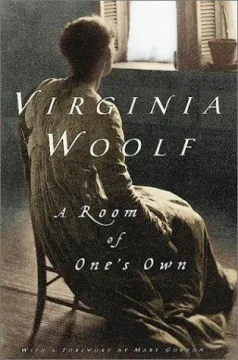
The Woolf title on WebToTell is the 1981 Harcourt Brace Jovanovich edition of A Room of One's Own, about 114 pages according to library records, with a foreword by Mary Gordon. Woolf's essay concerns the money and private space a woman needs in order to write. Readers who follow it to this publisher should know the imprint name is historical: the company changed names and owners several times, so what they find under it is a backlist of literary and general nonfiction titles, kept alongside a much larger educational business.