Category

Adventure Fiction

7 published books 0 published articles

Books in this category

Primary category

Watership Down

By Richard Adams

After the visionary Fiver foresees the destruction of Sandleford Warren, his brother Hazel leads a small band of rabbits into the dangerous English countryside. Their search for a secure home becomes an epic of migration, improvisation, and political conflict. The travelers encounter communities that have answered fear in radically different ways, from passive accommodation to rigid authoritarian control. To survive, they must combine courage, specialized talents, storytelling, and cooperation. Richard Adams grounds the adventure in recognizable animal behavior while giving the rabbits a language, mythology, and social memory of their own. The result is both a suspenseful survival narrative and an inquiry into leadership, freedom, community, and the stories through which vulnerable creatures make sense of danger.

View book

Related category

The Princess Bride

S. Morgenstern’s Classic Tale of True Love and High Adventure, the “Good Parts” Version

By William Goldman

William Goldman presents a comic adventure about Buttercup, Westley, and the ruthless Prince Humperdinck—but disguises it as his abridgment of an older novel by the invented S. Morgenstern. The romance unfolds through abduction, swordplay, revenge, deception, torture, and unlikely alliances. Around that tale, a fictionalized Goldman interrupts to explain what he has supposedly removed and why the story mattered to him as a child. The result is both an absorbing fairy-tale adventure and a playful examination of how stories are selected, reshaped, remembered, and passed between generations. Its wit does not cancel its emotional stakes: loyalty, grief, courage, and the difficult survival of love remain central.

View book

Related category

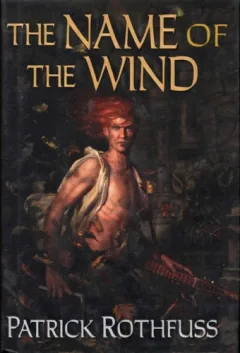
The Name of the Wind

The Kingkiller Chronicle: Day One

By Patrick Rothfuss

At a quiet inn in a troubled corner of the world, an unassuming man called Kote is revealed as Kvothe, the brilliant and notorious figure at the center of countless contradictory legends. Persuaded to tell his own story, Kvothe recounts his childhood among the Edema Ruh, his early instruction under the arcanist Abenthy, a devastating encounter with the mysterious Chandrian, and his struggle to survive in Tarbean before earning admission to the University. There he pursues knowledge, music, status, and clues about the forces that destroyed his family. The Name of the Wind combines a coming-of-age narrative with a framed confession, continually asking how much of a celebrated life is truth, performance, memory, or myth. Its distinctive appeal lies less in a conventional campaign against evil than in the making—and possible unmaking—of a legendary identity.

View book

Related category

The Stand

By Stephen King

After a lethal, laboratory-created influenza escapes military containment, the United States collapses with terrifying speed. The scattered survivors must first endure bereavement, isolation, and the hazards of an abandoned country; then shared dreams begin drawing them toward rival communities. In Boulder, Mother Abagail inspires an uncertain experiment in cooperation. In Las Vegas, Randall Flagg builds an authoritarian order based on fear and force. Following characters such as Stu Redman, Frannie Goldsmith, Larry Underwood, Nick Andros, and Harold Lauder, Stephen King combines plague narrative, road novel, social reconstruction, and supernatural conflict. The result is an expansive examination of what remains when institutions disappear—and how ordinary choices can become moral commitments.

View book

Related category

A Wizard of Earthsea

By Ursula K. Le Guin

On the mountainous island of Gont, a gifted boy called Duny discovers an unusual power over words, weather, and living things. Renamed Ged by the mage Ogion, he enters the school of wizardry on Roke but allows pride and rivalry to outrun judgment. A forbidden act releases a shadow that pursues him across the island world of Earthsea. What begins as a tale of magical education becomes a searching account of responsibility: Ged must understand that strength does not mean domination and that an enemy cannot always be defeated by violence. Ursula K. Le Guin builds the novel around true names, equilibrium, and the moral consequences of action. Its voyages, dragons, spells, and ancient lore give it epic range, while its deepest conflict remains internal. First published in 1968, it opens the Earthsea sequence and stands independently as a compact coming-of-age novel about recognizing and accepting the whole self.

View book

Related category

Dune

By Frank Herbert

On Arrakis, the only source of the consciousness-altering spice melange, control of ecology is inseparable from control of empire. When House Atreides receives authority over the desert planet, young Paul Atreides enters a trap shaped by imperial politics, family rivalry, economic dependence, and ancient schemes. Betrayal drives Paul and his mother, Jessica, into the desert, where the Fremen have built a demanding culture around water scarcity and dreams of planetary transformation. Paul’s unusual training and emerging prescience make him valuable to competing powers—and dangerous to himself. Dune combines dynastic conflict, survival adventure, religious mythmaking, and ecological speculation. Its deeper tension lies in Paul’s rise: the abilities that help him resist oppression may also create a leader whose legend unleashes consequences beyond his control. The novel asks readers to distrust simple heroic narratives even while constructing one of science fiction’s most influential exa…

View book

Related category

The Thousand Autumns of Jacob de Zoet

By David Mitchell

In 1799, Jacob de Zoet arrives at Dejima, the tightly controlled Dutch trading post in Nagasaki Harbor, intending to earn enough money to marry his fiancée at home. Employed as a clerk, he is expected to investigate corrupt accounts without becoming entangled in the colony’s rivalries. His plans change after he meets Orito Aibagawa, a gifted Japanese midwife and medical student whose intelligence attracts him across formidable boundaries of language, law, class, and custom. When Orito is taken to an isolated religious estate governed by the powerful Lord Enomoto, the novel widens from commercial intrigue and constrained courtship into a darker struggle over coercion, belief, and political influence. David Mitchell uses Jacob’s moral awakening, Orito’s fight for autonomy, and interpreter Uzaemon Ogawa’s divided loyalties to explore contact between societies that exchange goods and knowledge while remaining deeply suspicious of one another.

View book

Articles in this category

No published articles are currently connected to this category in this language.