Category

Education Theory

The big ideas behind teaching. Paulo Freire's Pedagogy of the Oppressed rejects "banking" education, where teachers deposit facts into students, in favour of dialogue and critical awareness. bell hooks's Teaching to Transgress builds on Freire to describe teaching as a practice of freedom. Neil Postman's The End of Education asks which stories can still give schools a shared purpose. Short, influential and widely taught, these books suit teachers, education students and anyone who wants to think about what learning should be.

3 published books 0 published articles

Books in this category

Primary category

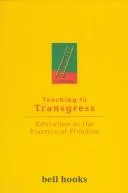
Teaching to Transgress

Education as the Practice of Freedom

By bell hooks

In this collection of essays, bell hooks presents education as a potentially liberating practice rather than the one-way transmission of approved knowledge. Drawing on her experiences as a Black student, feminist theorist, and university teacher, she examines how race, gender, class, language, authority, and emotion shape classroom life. Her alternative, “engaged pedagogy,” asks teachers and students to participate actively in learning, connect ideas with lived experience, and recognize that education is never detached from power. hooks develops her position through encounters with critical pedagogy, Black intellectual traditions, feminism, multicultural education, and engaged Buddhism. She also confronts practical tensions: who gets to speak, how authority should operate, whether experience counts as knowledge, and how teachers can invite participation without denying conflict. The result is both an argument about educational freedom and a candid account of how difficult such freedom…
View book

Primary category

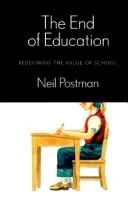
The End of Education

Redefining the Value of School

By Neil Postman

Neil Postman argues that the deepest crisis in American public schooling is not primarily a shortage of information, technology, testing, or administrative technique. It is a crisis of purpose. Schools, he contends, need compelling shared narratives that explain why learning matters and what kind of society education should help create. He examines inadequate substitutes—including economic utility, consumerism, technological progress, and narrowly divisive accounts of identity—and then proposes alternative organizing stories. These include planetary responsibility, disciplined awareness of human fallibility, democratic experimentation, diversity as a source of collective strength, and attention to language as a maker of social reality. The title uses “end” chiefly in the sense of an aim or purpose, while warning that schooling without a defensible end may lose public legitimacy. Written as cultural criticism and philosophy of education, the book asks readers to judge schools not only…

View book

Primary category

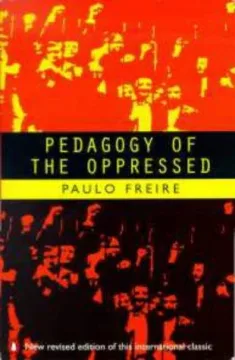
Pedagogy of the Oppressed

50th Anniversary Edition

By Paulo Freire

Paulo Freire’s Pedagogy of the Oppressed examines education as a field where social power is either reproduced or challenged. Freire criticizes the “banking” model, in which teachers treat learners as passive containers for authorized knowledge. He proposes instead a dialogical, problem-posing education rooted in learners’ experience and directed toward critical understanding of the world. Central to the book is praxis: the continuing union of reflection and action through which people can recognize oppression and participate in transforming the conditions that sustain it. Freire insists that liberation cannot be delivered to marginalized people as a gift; it must be developed with them as thinking and acting subjects. Moving from an account of dehumanization to contrasting theories of oppressive and liberatory cultural action, the book connects classroom relationships with wider struggles over authority, knowledge, and political agency. It remains a foundational work of critical peda…

View book

Articles in this category

No published articles are currently connected to this category in this language.