
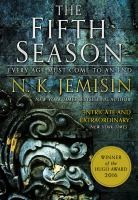
The Fifth Season
On the continent called the Stillness, civilization has been shaped by recurring geological catastrophes known as Fifth Seasons. Communities survive through rigid planning, inherited rules, and the exploitation of orogenes—people capable of sensing and manipulating thermal and seismic energy. When a massive rift threatens to produce an exceptionally long Season, Essun discovers that her husband has murdered their young son and fled with their daughter. Her pursuit unfolds alongside the stories of Damaya, a frightened child taken for training, and Syenite, an ambitious young orogene sent on an imperial assignment. Through these intertwined lives, N. K. Jemisin examines oppression, survival, parenthood, trauma, and the dangerous bargain between social usefulness and freedom. The result is both an apocalyptic journey and a structural mystery, using speculative geology and intimate human loss to ask what happens when a civilization depends upon the people it dehumanizes.
Where to buy or borrow
Are you selling this book? Bookstores, publishers, authors and libraries can be listed here for free. Request a listing
About this book
Deep Overview
Within this system, orogenes possess the ability to detect and redirect seismic and thermal energy. Their powers can save entire communities, but they can also cause devastating harm when uncontrolled. The ruling order resolves this tension through the Fulcrum, an institution that trains orogenes while denying them meaningful autonomy. Guardians supervise them, imperial authorities deploy them, and the wider population fears them. Jemisin thus builds a society that relies upon a persecuted group while treating its members as dangerous instruments rather than complete human beings.
The novel develops this world through Essun, Damaya, and Syenite. Essun begins amid simultaneous private and planetary disasters: her son is dead, her daughter has been taken, and an immense rupture has initiated a new Season. Her journey is driven by grief and maternal determination, yet she must also conceal the very ability that might help her survive. Damaya's story shows a young orogene being removed from her family and introduced to the Fulcrum's discipline. Syenite, already trained and ranked within that institution, encounters the compromises demanded of an adult whose work, movements, and reproductive future are controlled by others.
These strands reveal oppression at different scales. Cruelty appears in homes, professional hierarchies, public prejudice, imperial policy, and the stories a society tells about necessity. Characters do not confront a single villainous institution from a safe moral distance; they have been formed by the system and sometimes reproduce its assumptions even while resisting it. Alabaster Tenring, an exceptionally powerful orogene, is especially important because his knowledge and anger expose both the reach of imperial exploitation and the instability of the civilization it supports.
Jemisin also connects environmental catastrophe with historical memory. The Stillness's people inherit survival knowledge but possess only fragments of the deeper past. Obelisks floating in the sky, stone eaters, ruined technologies, and incomplete records suggest that accepted explanations are inadequate. The physical world therefore becomes part of the mystery: geology is not background scenery but a record of power, violence, and forgotten choices.
The book's unusual shifts in viewpoint are integral to its examination of trauma and identity. Different narrative distances allow painful experience to be separated, revisited, and reorganized. As the relationships among the storylines become clearer, the form itself demonstrates how a person may divide life into survivable versions. The approaching apocalypse consequently operates on three levels at once: the destruction of communities, the exposure of an unjust political order, and the rupture of an individual life.
Key Themes
Survival is another recurring concern, but Jemisin treats it as morally complicated. Stonelore, communal planning, and specialized labor preserve life during catastrophe, yet appeals to survival can also justify exclusion and cruelty. The book repeatedly asks who is protected, who is sacrificed, and who gets to define necessity.
Family appears as both refuge and danger. Parents may love their children while also passing on fear, secrecy, or the logic of an oppressive society. Chosen relationships offer alternatives, but they remain vulnerable to external power and internalized trauma.
Other major themes include anger as a response to injustice, the psychological costs of concealment, the unreliability of inherited history, and the relationship between environmental power and political power. Destruction is never merely spectacular: it exposes structures that were already violent.
Historical and Literary Context
The novel also participates in a long speculative tradition of using extraordinary abilities to examine social difference. Its treatment of orogenes, however, resists a simple metaphor in which power automatically produces liberation. Ability makes them indispensable, but indispensability gives institutions further reasons to control them.
The book won the 2016 Hugo Award for Best Novel. It became the first volume of a trilogy whose three installments each received the Best Novel Hugo in consecutive years, placing the Broken Earth series prominently within contemporary science fiction and fantasy.
Intended Audience
Readers seeking an uncomplicated adventure, a light tone, or immediate explanations of every invented term may find it demanding. The story includes child death, abuse, coercive control, reproductive exploitation, prejudice, mass death, and sustained depictions of grief. Those subjects are central rather than incidental, making the novel emotionally intense even when violence occurs off the page.
Reading Difficulty
The opening chapters deliberately provide incomplete information about the world's history and social organization. Terms such as orogene, Guardian, comm, use-caste, node maintainer, and stonelore accumulate before all their relationships are clear. The glossary can help, although readers who want to experience the revelations in their intended order may prefer to consult it only when necessary. The emotional material also requires attention: character decisions often emerge from accumulated trauma rather than from openly stated motives.
Helpful Background Knowledge
Readers may find it useful to distinguish a Fifth Season from an ordinary season: in this world, the term refers to an extended period of catastrophic environmental disruption and social collapse. It is also helpful to approach the novel without assuming that its institutions, historical records, or familiar-sounding rules are neutral. Much of the reading experience involves discovering what the Stillness has normalized and what its official knowledge leaves unexplained.
Why Read This Book?
The book is also worth reading for its use of form. Its perspectives are not arranged merely to delay information; they express how identity and memory are altered by fear, loss, and enforced adaptation. Readers interested in the possibilities of second-person narration will find an unusually consequential example.
Finally, the novel offers an apocalypse story concerned less with rescuing civilization than with determining whether the existing civilization deserves preservation. That tension gives its large-scale catastrophe lasting ethical and emotional weight.
Reader Takeaways
Readers may also reconsider the meaning of resilience. Endurance can be admirable, but adapting successfully to injustice may require habits that later cause harm. Knowledge preserved as tradition can save lives while still carrying the values and blind spots of earlier authorities.
The novel encourages attention to the relationship between personal trauma and historical catastrophe. Private grief does not occur outside politics or environmental change; each alters how the other is experienced, remembered, and narrated.
Strengths
Essun, Damaya, Syenite, and Alabaster are written with conflicting desires and imperfect coping strategies. Their complexity prevents the political dimensions of the story from becoming abstract. The second-person sections, fragmented history, and geological imagery reinforce the book's interest in estrangement, memory, and unstable identity.
Its scale is another strength. The narrative can move from a damaged family to an imperial system and a planet-wide crisis without treating the intimate story as less important than the epic one.
Limitations and Considerations
The deliberate disorientation of the early chapters may create distance before the narrative strands begin to align. Some readers may also find the invented vocabulary and compressed explanations more demanding than conventional exposition.
Its portrayal of abuse, murdered children, reproductive control, dehumanization, and catastrophic death can be difficult. The relentless pressure is thematically justified, but it leaves relatively little emotional respite. Because the novel concentrates heavily on the experience of people harmed by the Stillness's system, readers seeking a broad institutional history from multiple political viewpoints will encounter only partial answers in this volume.
Important Concepts, People, and Places
Damaya is a young orogene taken from her family for Fulcrum training. Her experiences reveal how institutional control begins with isolation, shame, and enforced dependence.
Syenite is a Fulcrum-trained orogene whose assignments expose the adult system of ranking, compulsory service, and reproductive control.
Alabaster Tenring is an exceptionally powerful senior orogene. His experience, anger, and forbidden knowledge challenge Syenite's assumptions about the Fulcrum and the history of their world.
The Stillness is the planet's principal inhabited continent. Its unstable geology has produced cultures organized around preparation for recurring disaster.
A Fifth Season is a prolonged environmental crisis capable of collapsing agriculture, trade, government, and entire communities. The term embodies the normalization of apocalypse.
Orogeny is the ability to perceive and manipulate seismic and thermal energy. It can prevent disasters or cause them, making orogenes both necessary and feared.
The Fulcrum is the imperial institution that trains, ranks, houses, and deploys orogenes. It offers controlled education while treating its members as state property.
Guardians are powerful supervisors assigned to control orogenes. Their authority combines protection, surveillance, discipline, and lethal force.
Yumenes is the imperial capital and center of Sanze's political order. Events there demonstrate that even apparently permanent power remains vulnerable to geological and human upheaval.
Sanze is the dominant imperial civilization whose institutions and historical assumptions shape much of life in the Stillness.
Comms are organized settlements designed around collective survival. Their apparent practicality also reveals how quickly usefulness can become a measure of human worth.
Stonelore is the inherited body of survival instruction consulted during Seasons. It preserves essential knowledge but raises questions about authorship, alteration, and authority.
Obelisks are immense objects suspended in the sky. Widely treated as mysterious remnants, they connect orogeny to a deeper and incompletely remembered technological history.
Stone eaters are enigmatic nonhuman people whose abilities and purposes complicate the Stillness's accepted understanding of life, matter, and the past.
Questions the Book Explores
What happens to a person's identity when safety requires secrecy and repeated self-reinvention?
How do families transmit social prejudice, even when individual members believe they are acting out of love or fear?
When does resilience become accommodation to an intolerable system?
Who is permitted to express anger, and why is the anger of oppressed people so often treated as more dangerous than the conditions that produced it?
Can inherited survival knowledge be trusted when the history behind it has been forgotten or manipulated?
Is preserving civilization always desirable, or must the character of that civilization determine whether it should continue?
How does environmental catastrophe expose inequalities that were already present?
Reading Group Guide
Groups can compare personal and institutional uses of secrecy. Notice when concealment functions as resistance, when it limits intimacy, and when powerful organizations use restricted knowledge to maintain authority.
Another productive approach is to map the social consequences of geology. Examine how seismic danger influences family decisions, settlement design, professional roles, prejudice, and political legitimacy. This helps distinguish the novel's environmental worldbuilding from catastrophe used only as spectacle.
Readers may also discuss the effect of narrative person and chronology. Identify moments when second-person narration changes emotional distance, responsibility, or sympathy. Finally, consider the difference between surviving a Season and building a society worth surviving for.
Discussion Questions
2. Which parts of the Fulcrum's authority depend on force, and which depend on shaping how orogenes understand themselves?
3. How does the use of second-person narration affect your relationship with Essun's grief and decisions?
4. In what ways do parents in the novel protect their children, and in what ways do their protective choices reproduce harm?
5. Does stonelore represent trustworthy collective wisdom, political authority, or some combination of the two?
6. How does Alabaster's understanding of power differ from Syenite's at the beginning of their relationship?
7. What does the Stillness's system of use-castes reveal about the moral risks of organizing society exclusively around survival?
8. How does the novel connect environmental control with control over bodies and reproduction?
9. Which characters are allowed to be angry, and how do others interpret that anger?
10. At what point does adaptation cease to be resilience and become complicity?
11. How do the obelisks and other remnants of the past change the meaning of accepted history?
12. What obligations, if any, do the protagonists have to preserve the civilization that has harmed them?
Sources and Verification
Comments
No published comments yet.
Available editions
Paperback
Trade paperback
- Publisher
- Orbit
- ISBN-13
- 9780316229296
- Publication date
- Pages
- 512