Orbit began in 1974 as the science fiction and fantasy imprint of Macdonald Futura, a London-based publishing house. In 1992, Macdonald Futura was absorbed into Little, Brown & Company, and in 1997 Orbit added the Legend imprint after acquiring it from Random House. When Hachette Livre purchased Little, Brown in 2006, Orbit came under the French group's wing. The following year it went international: Orbit US opened in New York, and Orbit Australia followed shortly after. Today Orbit sits within Hachette Book Group, owned by Lagardère Publishing, and operates through four imprints: the core Orbit list, Redhook (commercial fiction with speculative edges), Run For It (horror), and Orbit Works (a digital-first imprint that welcomes direct author submissions).
The list spans the full width of speculative fiction. You will find widescreen space opera and near-future thrillers alongside sweeping epic fantasy, urban fantasy, and literary SF. Orbit UK and Orbit US work as a paired operation, and the division publishes roughly eighty titles a year across its various lists.
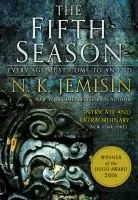
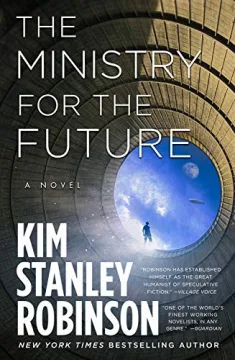
Three of the most celebrated recent voices in the genre sit on Orbit's roster. Ann Leckie's Imperial Radch novels, beginning with the Hugo-winning Ancillary Justice, were published here. N. K. Jemisin's Broken Earth trilogy, opened by The Fifth Season, is an Orbit book. Kim Stanley Robinson, whose The Ministry for the Future imagines a future defined by climate policy, is another long-standing Orbit author. Joining them are Iain M. Banks and his Culture series, James S. A. Corey's The Expanse, Ken MacLeod, Charles Stross, and Claire North.
What a reader can expect is a publisher that treats speculative fiction as a serious literary form while actively pushing the boundaries of what the genre can be. Orbit's editors have spoken publicly about seeking books that cross over from a genre audience to a mainstream readership, and the list reflects that ambition: formally inventive, character-driven, and unafraid of scale.