Category

Science Fiction

Science fiction from the classics to modern favourites. Frank Herbert's Dune and Ursula K. Le Guin's The Left Hand of Darkness and The Dispossessed are cornerstones of the genre; Ann Leckie's Ancillary Justice, N. K. Jemisin's The Fifth Season and Cixin Liu's The Three-Body Problem are award-winning modern classics. Octavia E. Butler's Kindred and Parable of the Sower and Kazuo Ishiguro's Never Let Me Go use the genre to examine society, while Andy Weir's Project Hail Mary and Douglas Adams's The Hitchhiker's Guide to the Galaxy are pure enjoyment. Browse by theme, from space exploration to time travel.

5 published books 0 published articles

Related subcategories

Science Fiction

Space & Exploration

Stories set among the stars. Frank Herbert's Dune, one of the best-selling science fiction novels of all time, follows a noble family's fall and rise on the desert planet Arrakis. Ann Leckie's Ancillary Justice, which won the Hugo, Nebula and Arthur C. Clarke awards, is told by a warship's artificial intelligence trapped in a single human body. Andy Weir's Project Hail Mary is a problem-solving survival story in deep space, and Douglas Adams's The Hitchhiker's Guide to the Galaxy is the funniest trip across the galaxy ever written.
Explore category

Science Fiction

Dystopian & Social Science Fiction

Science fiction that holds a mirror to society. Octavia E. Butler's Parable of the Sower follows a young woman through a collapsing America; Kazuo Ishiguro's Never Let Me Go reveals slowly what a quiet English boarding school is for. Frank Herbert's Dune explores power, religion and ecology on a desert planet, Ann Leckie's Ancillary Justice questions identity and empire, and Cixin Liu's The Three-Body Problem begins in China's Cultural Revolution. Stephen King's The Stand imagines the world after a plague. Books that ask hard questions about who we are, and where we are heading.

Explore category

Science Fiction

Time Travel & Alternate History

Stories that bend time or rewrite history. In Octavia E. Butler's Kindred, a Black woman in 1970s California is pulled back again and again to a slave plantation in Maryland. Colson Whitehead's The Underground Railroad turns the escape network into a real railway beneath the South. Matt Haig's The Midnight Library offers a library of other lives a woman might have lived, and Stuart Turton's The Seven Deaths of Evelyn Hardcastle repeats one fatal day until the murder is solved. Thought-provoking books that use time to ask what shapes a life.

Explore category

Science Fiction

First Contact & Alien Life

What happens when humans meet life from elsewhere. Cixin Liu's The Three-Body Problem begins with a secret signal sent into space, and the answer that comes back. Andy Weir's Project Hail Mary strands a schoolteacher-turned-astronaut far from Earth, where an unexpected partner changes everything. Douglas Adams's The Hitchhiker's Guide to the Galaxy treats the whole idea as a cosmic joke, starting with the demolition of Earth. Three very different takes on alien contact, from hard science to pure comedy.

Explore category

Books in this category

Primary category

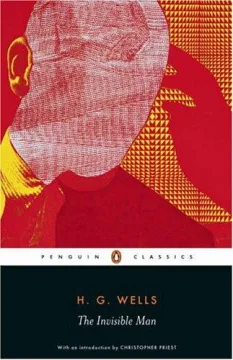
The Invisible Man

By H. G. Wells , Patrick Parrinder , Christopher Priest , Andy Sawyer

H. G. Wells's 1897 novel follows a bandaged, bad-tempered stranger who takes a room at an inn in the Sussex village of Iping. His secret is that he is Griffin, a brilliant optics researcher who has made himself invisible and cannot undo it. What begins as a village comedy of gossip and suspicion turns into a chase and a story of violence. Wells uses the idea to ask what happens when a person gains power and anonymity at the same moment, with nothing to answer to. The book is short, fast and often funny, and it is one of the foundational science fiction books of the late Victorian period. It also fixed the image of the invisible man in popular culture. This Penguin Classics edition adds scholarly notes and an introduction.

View book

Primary category

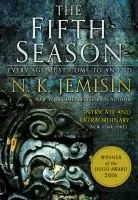
The Fifth Season

By N. K. Jemisin

On the continent called the Stillness, civilization has been shaped by recurring geological catastrophes known as Fifth Seasons. Communities survive through rigid planning, inherited rules, and the exploitation of orogenes—people capable of sensing and manipulating thermal and seismic energy. When a massive rift threatens to produce an exceptionally long Season, Essun discovers that her husband has murdered their young son and fled with their daughter. Her pursuit unfolds alongside the stories of Damaya, a frightened child taken for training, and Syenite, an ambitious young orogene sent on an imperial assignment. Through these intertwined lives, N. K. Jemisin examines oppression, survival, parenthood, trauma, and the dangerous bargain between social usefulness and freedom. The result is both an apocalyptic journey and a structural mystery, using speculative geology and intimate human loss to ask what happens when a civilization depends upon the people it dehumanizes.

View book

Primary category

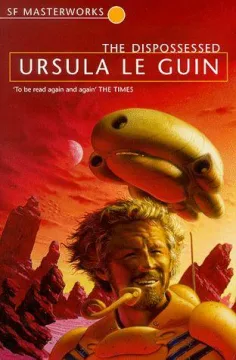
The Dispossessed

An Ambiguous Utopia

By Ursula K. Le Guin

The Dispossessed follows Shevek, a physicist raised on Anarres, an arid moon settled by revolutionaries seeking to build a stateless, non-proprietary society. Convinced that intellectual isolation is obstructing both his scientific work and meaningful contact between worlds, Shevek travels to Urras, the wealthy planet from which the Anarresti founders departed generations earlier. His journey places him between societies that define freedom in radically different ways. The novel develops along two alternating timelines. One traces Shevek’s life on Anarres: his education, scientific vocation, partnership with Takver, experience of famine, and conflicts with institutions that exercise power despite officially rejecting hierarchy. The other follows his visit to Urras, where he receives material comfort and professional recognition but gradually recognizes the political interests surrounding his research. The timelines illuminate each other, turning his journey into both a political compa…

View book

Primary category

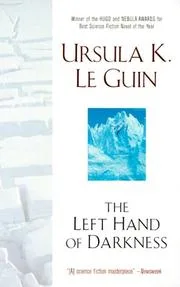
The Left Hand of Darkness

By Ursula K. Le Guin

The Left Hand of Darkness combines diplomatic science fiction, speculative anthropology, political intrigue, and an arduous survival journey. Genly Ai, an envoy from a loose interplanetary association called the Ekumen, travels alone to Gethen—also known as Winter—to invite its nations into wider contact with other human worlds. His assignment is complicated by political rivalry, his limited understanding of Gethenian customs, and his difficulty perceiving the planet’s inhabitants outside the gender categories he brings with him. The novel initially follows Genly’s uncertain dealings in Karhide, where indirect communication, personal influence, ceremonial behavior, and political suspicion make straightforward diplomacy nearly impossible. His relationship with the statesman Estraven becomes central: Genly repeatedly misreads Estraven’s motives, while Estraven acts from a conception of loyalty larger than allegiance to a single ruler or nation. The story later moves through the bureaucr…

View book

Related category

Frankenstein

By Mary Shelley , Maurice Hindle

Mary Shelley's Frankenstein follows a young scientist who builds a living being from lifeless matter, recoils from it in horror, and then watches the consequences spread from Switzerland across Europe and into the Arctic. The story is told through nested voices: an explorer, the scientist and the created being himself. Together they ask who is answerable for what knowledge produces, and what a maker owes to the one he has made. This Penguin Classics paperback, edited by Maurice Hindle, presents the revised 1831 text with a critical introduction, notes and extra material. It is often counted among the foundational science fiction books, and it remains one of the classic novels to read for anyone curious about the roots of modern arguments over technology, ambition and compassion.

View book

Articles in this category

No published articles are currently connected to this category in this language.