
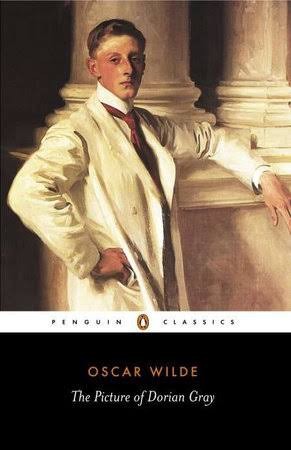
The Picture of Dorian Gray
Oscar Wilde's only novel follows Dorian Gray, a strikingly handsome young Londoner whose careless wish is granted: a portrait of him takes on the marks of age and conscience while his own face stays untouched. Encouraged by the witty, amoral Lord Henry Wotton and haunted by the painter Basil Hallward, Dorian pursues pleasure with fewer and fewer limits. What begins as a drawing-room comedy of epigrams turns into a Gothic study of vanity, influence, secrecy and guilt. Often listed among the classic novels to read for its quotable prose and unforgettable central image, it keeps raising hard questions about art, morality and the way a society punishes what it would rather not see.
Where to buy or borrow
Are you selling this book? Bookstores, publishers, authors and libraries can be listed here for free. Request a listing
About this book
Wilde's method is unusual for a story with a supernatural premise. Much of the book is conversation, with paradox and epigram carrying the ideas, while the fantastic element is limited to a single device, the changing painting. The result sits somewhere between a society comedy, a moral fable and a horror story.
This Penguin Classics printing is edited by Robert Mighall. The publisher's catalogue lists an introduction, notes, further reading, a selection of contemporary reviews and the earlier introduction by Peter Ackroyd, which suits readers who want the novel's reception and context alongside the story. For anyone building a shortlist of classic novels to read from the nineteenth century, it is a compact, quotable and debate-provoking choice.
Deep Overview
The first major test is Sibyl Vane, a young actress in a shabby theatre whom Dorian adores as long as she seems to be Shakespeare's heroines. When real feeling makes her performances falter, he rejects her with a cruelty he only partly understands, and the portrait changes for the first time. From here the narrative moves quickly across roughly two decades. Dorian becomes a collector of sensations, drawn to jewels, perfumes, music, embroideries and secret visits to the rougher parts of London. A strange, intoxicating book lent to him by Lord Henry supplies a model for this experimental life. Meanwhile his reputation in polite society grows cloudy but never quite fatal, partly because his unlined face seems to contradict the rumours.
Wilde builds the book through contrast. Basil represents reverence for beauty bound up with conscience. Lord Henry represents beauty cut loose from consequences, and he is notable for keeping his own conduct comparatively mild while his words do the damage. Dorian is the one who tries to live the theory, which gives the novel its moral pressure. The confrontation between Dorian and Basil, the entanglement of the scientist Alan Campbell, and the pursuit by Sibyl's brother James Vane turn the later chapters toward thriller and tragedy. The ending forces the question of whether the portrait is a conscience, a curse or an artwork with rules of its own.
The novel is also an argument about how art should be judged, though Wilde argues by dramatising rather than lecturing. The preface insists that a book is simply well or badly written, not moral or immoral, while the story itself shows a life organised around aesthetic experience ending in ruin. Readers have long disagreed about whether this makes the book a warning against aestheticism, a defence of it, or a self-conscious test of it. The brilliance of Lord Henry's paradoxes sharpens the problem, because the book lets seductive ideas speak well before it shows what follows from them. That tension, rather than a single moral verdict, is what the careful reader is invited to examine.
Key Themes
Art and morality: the preface and the plot pull in different directions, since the story presents consequences while the preface denies that a book can be moral or immoral.
Influence and responsibility: Lord Henry shapes Dorian mostly through talk. The book asks how much blame belongs to the speaker, the listener and the society that admires clever phrases.
The double life: secrecy, the locked room and the concealed canvas make privacy and hypocrisy central. Dorian can appear spotless in public while his real record is kept out of view.
Sensation and self-cultivation: Dorian's pursuit of new experiences, in the manner of the decadent movement, shows how a life built around refined pleasure can lose contact with other people.
Performance and sincerity: Sibyl's acting, Lord Henry's poses and Dorian's social mask all raise the question of where performance ends and character begins.
Historical Context
The Gothic tradition is another background. Stories of doubles, hidden selves and bargains with dark forces were familiar in Victorian fiction, and Wilde moves this inheritance from castles and ruins into a fashionable London setting.
Publication mattered a great deal. The 1890 magazine text was denounced by critics as immoral, and Britannica notes that the aphorisms of the 1891 preface were Wilde's answer to those attacks. Some scholars read the 1891 revisions, which expanded the story from thirteen to twenty chapters, as a response to criticism, although Wilde himself denied that was his motive.
The wider setting was a legal climate hostile to sexual relationships between men. In 1895 the novel was quoted against Wilde during his libel action against the Marquess of Queensberry and in the criminal proceedings that followed. Because of this, later readers often interpret the book through his biography. The link is real in the historical record, but it should not be used to settle every question about the text.
Intended Audience
It is a good match for anyone who enjoys Gothic stories, moral fables, or novels driven by dialogue and ideas. People who want fast action throughout may find the opening chapters talky. Readers sensitive to Victorian-era assumptions about class, gender and race, or to depictions of cruelty and addiction, should expect some uncomfortable moments. Because the novel is often assigned in school and university courses, teachers and reading groups can also make use of the contextual apparatus in this edition.
Reading Difficulty
The main challenge is conceptual: working out when Lord Henry is being witty, when he is being persuasive, and when Wilde wants the reader to notice a flaw in the argument. The notes and introduction in this Penguin Classics edition can help with allusions. This is a printed paperback with substantial front matter, so readers who prefer to meet the story unspoiled may want to read the introduction after the novel. Catalogues disagree about the total page count, so check your own copy.
Helpful Background Knowledge
It also helps to recall the Faust legend and the wider tradition of stories about doubles, since the book is in conversation with them. Some familiarity with Shakespeare's plays, especially the tragedies that Sibyl Vane performs, will make her chapters richer. Finally, knowing that Wilde's later trials involved this book gives the reception history extra weight, though it is best learned as context rather than treated as a key that unlocks the story.
Why Read This Book?
This particular edition adds reasons of its own. According to the publisher's catalogue, it pairs the novel with notes, further reading and a selection of period reviews, so you can see how readers in the 1890s argued about immorality and art. It also offers an editorial note on the text, which matters for anyone interested in how the magazine and book versions differ.
Finally, the book rewards rereading. Its central image has entered general culture, yet the original contains more humour, social observation and moral ambiguity than the familiar shorthand suggests.
Reader Takeaways
Readers can also reconsider the slogan that art is separate from morality. Wilde does not simply endorse or reject it, and following that complexity is part of the value. Finally, the novel offers practice in reading Gothic symbolism: noticing what the portrait, the locked room, the theatre and the poisonous book each stand for, and how those meanings shift as the story moves.
Strengths
Characterisation through contrast is effective: Basil, Lord Henry and Dorian each represent a different relationship to beauty, and none is reduced to a mouthpiece. The pacing also changes well, moving from salon comedy to a darker, more urgent narrative.
This edition adds scholarly support in the form of an introduction, notes, further reading and period reviews, which makes it practical for classroom and reading-group use.
Limitations and Cautions
The text itself calls for care. The 1890 and 1891 versions differ, and critics disagree about whether the revisions strengthened the book, softened its social critique, or simply expanded it. Readers who need a specific version should consult the edition's own note on the text.
Interpretations tied to Wilde's life are common but contested. Some critics read the novel as coded commentary on same-sex desire, while others stress its Gothic, aesthetic or moral dimensions. Treat biographical readings as one lens among several.
Important Concepts, People, and Places
Dorian Gray: the young protagonist whose appearance stays unchanged while his portrait records his actions.
Basil Hallward: the painter whose devotion to Dorian produces the portrait and whose idealism is tested by what he learns.
Lord Henry Wotton: the fashionable aristocrat whose epigrams and philosophy of pleasure shape Dorian's choices.
Sibyl Vane: the young actress whose relationship with Dorian becomes the first moral turning point, and her brother James Vane, who later seeks revenge.
Alan Campbell: a scientist whom Dorian coerces, showing how secrecy drags others into harm.
Aestheticism and the Decadent movement: the late nineteenth-century outlooks that give the book its vocabulary of beauty, artifice and sensation.
Lippincott's Monthly Magazine: the periodical that first printed the story in 1890, in its shorter thirteen-chapter form.
The preface: the set of aphorisms added in 1891, in which Wilde states his view of art and morality.
The Queensberry libel case of 1895: the legal context in which the novel was used against Wilde.
Robert Mighall: the editor of this edition, who supplies its introduction and notes.
Questions the Book Explores
Reading Group Guide
Useful starting points include comparing the three main male characters as three attitudes toward beauty, tracking when the portrait is mentioned and what Dorian does around those moments, and looking at how humour changes as the plot darkens. Groups curious about textual history could compare the preface with the closing chapters and ask whether they harmonise. The contemporary reviews included in this edition are a lively way to ask which complaints now seem dated and which still feel relevant.
Because the novel has been adapted for stage and screen, members can also compare how adaptations handle the portrait, though the book can be discussed fully without them.
Discussion Questions
1. Lord Henry says a great deal but does little. Is he more to blame for Dorian's path than Dorian himself?
2. Why does Basil's portrait exert such power, and what does it reveal about the painter as well as the sitter?
3. How does Dorian's treatment of Sibyl Vane connect art, love and performance?
4. Does the preface help or hinder your reading of the story? Where do the two seem to disagree?
5. The book has often been read as a moral tale, yet Wilde resisted that label. Which reading persuades you more, and why?
6. What do the descriptions of collected objects, perfumes and music add to the portrait of Dorian's inner life?
7. How does society's reaction to Dorian's reputation illustrate hypocrisy?
8. How might knowing that the novel was quoted in court against Wilde alter the way you read it? Should it?
9. What would a modern version of the portrait look like, and who would play Lord Henry?
Sources and Verification
Comments
No published comments yet.
Available editions
Paperback
Penguin Classics edition, edited with an introduction and notes by Robert Mighall
- Publisher
- Penguin Classics
- ISBN-13
- 9780141439570
- Publication date