
Category

Cultural Criticism

Books that question the ideas a culture takes for granted. John Berger's Ways of Seeing shows how art and advertising teach us to look; Neil Postman's The End of Education asks what schools are really for once they lose a shared purpose; and Amitav Ghosh's The Great Derangement argues that our novels and institutions have failed to imagine climate change. Short, sharp and argument-driven, these are books to read with a pencil and to discuss: a good fit for students, teachers and book clubs that like a debate.

3 published books 0 published articles

Books in this category

Primary category

Ways of Seeing

Based on the BBC Television Series with John Berger

By John Berger

In Ways of Seeing, John Berger examines how social conventions, technology, ownership, gender, and commerce influence the interpretation of visual images. Beginning with the transformation caused by photographic reproduction, he argues that paintings no longer remain confined to a single place or ritual setting: they can be copied, cropped, enlarged, captioned, and combined with other images, changing what viewers think they mean. Berger then turns to the European nude, where he distinguishes between living in one’s body and being arranged for another person’s inspection. He also interprets oil painting as a visual language closely connected to property and possession, before comparing its legacy with the promises made by modern advertising. Combining written and image-only essays, the book teaches readers to question not merely what a picture depicts, but who controls its presentation, what interests its conventions serve, and how the viewer’s own circumstances participate in meaning.
View book

Related category

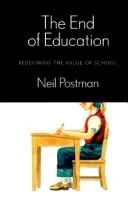
The End of Education

Redefining the Value of School

By Neil Postman

Neil Postman argues that the deepest crisis in American public schooling is not primarily a shortage of information, technology, testing, or administrative technique. It is a crisis of purpose. Schools, he contends, need compelling shared narratives that explain why learning matters and what kind of society education should help create. He examines inadequate substitutes—including economic utility, consumerism, technological progress, and narrowly divisive accounts of identity—and then proposes alternative organizing stories. These include planetary responsibility, disciplined awareness of human fallibility, democratic experimentation, diversity as a source of collective strength, and attention to language as a maker of social reality. The title uses “end” chiefly in the sense of an aim or purpose, while warning that schooling without a defensible end may lose public legitimacy. Written as cultural criticism and philosophy of education, the book asks readers to judge schools not only…

View book

Related category

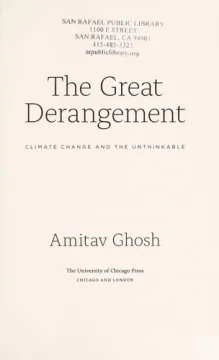
The Great Derangement

Climate Change and the Unthinkable

By Amitav Ghosh

In this book-length work of cultural criticism, Amitav Ghosh asks why societies that possess extensive knowledge about climate change remain so poor at imagining its consequences. He examines the problem through three connected fields: stories, history, and politics. Modern literary fiction, he argues, often treats improbable disasters and nonhuman forces as unsuitable for serious realism, even as a destabilized climate makes such events increasingly consequential. Historical accounts can likewise obscure the entanglement of fossil fuels, empire, industrialization, and unequal development. In politics, an emphasis on individual virtue and national interest struggles to address a planetary crisis requiring collective action. Ghosh therefore presents climate change not only as an environmental or technical problem but as a failure of cultural imagination. The book challenges writers, historians, and political communities to recover ways of thinking that can accommodate surprise, nonhuma…

View book

Articles in this category

No published articles are currently connected to this category in this language.