Category

Operations & Supply Chain

Operations is how work actually gets done, and supply chains are how things get to us. Marc Levinson's The Box tells how the standard shipping container cut the cost of moving goods so much that it made today's global trade possible. The Phoenix Project by Gene Kim, Kevin Behr and George Spafford is a business novel about rescuing a failing IT project, and a popular introduction to DevOps and flow in technical work. Two engaging books for managers, engineers and anyone curious about how complex systems run. See Business & Economics for more.

2 published books 0 published articles

Books in this category

Related category

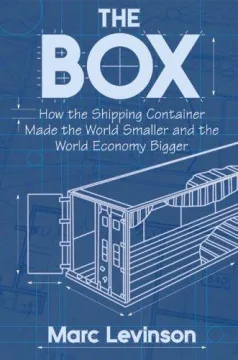
The Box

How the Shipping Container Made the World Smaller and the World Economy Bigger

By Marc Levinson

A standardized steel box might seem an unlikely agent of economic transformation, but Marc Levinson shows how container shipping reorganized the movement of goods and helped create the infrastructure of globalization. Beginning with Malcom McLean’s 1956 experiment aboard the Ideal-X, the book follows containerization through technical disputes, labor conflict, costly port reconstruction, military logistics, international standardization, and commercial expansion. Its subject is not merely an invention but an interconnected system of ships, cranes, trucks, railways, terminals, regulations, and business practices. Levinson explains how sharply lower freight-handling costs altered the location of factories and warehouses, weakened older waterfront economies, strengthened new ports, and enabled longer supply chains. The result is both a history of modern logistics and an argument about technological change: simple devices become revolutionary only when institutions, infrastructure, invest…
View book

Related category

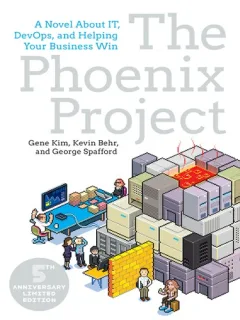
The Phoenix Project

A Novel About IT, DevOps, and Helping Your Business Win

By Gene Kim , Kevin Behr , George Spafford

When a critical business initiative at Parts Unlimited falls dangerously behind schedule, IT manager Bill Palmer is abruptly placed in charge of technology operations and given little time to restore order. He inherits unstable systems, conflicting priorities, exhausted employees, weak coordination, and a project whose failure could threaten the company. Guided by the enigmatic Erik, Bill begins treating technology work as a production system rather than an endless series of emergencies. The Phoenix Project uses a fictional corporate crisis to introduce DevOps, the Theory of Constraints, flow, feedback, controlled work in process, and continual learning. Its central argument is that reliable technology delivery depends less on isolated technical heroics than on understanding the entire value stream. By dramatizing the relationships among development, operations, security, executives, and business units, the novel shows how organizational design and management decisions shape technical…

View book

Articles in this category

No published articles are currently connected to this category in this language.