Category

Educational Psychology

Educational psychology studies how people learn, remember and stay motivated. Daniel T. Willingham's Why Don't Students Like School? explains what cognitive science says about the mind and turns it into practical advice: why knowledge comes before critical thinking, why memory depends on what we think about, and how teachers can keep students engaged. Natalie Wexler's The Knowledge Gap applies similar findings to reading and curriculum. Two clear, practical books for teachers and parents. See Education & Reference for more.

2 published books 0 published articles

Books in this category

Primary category

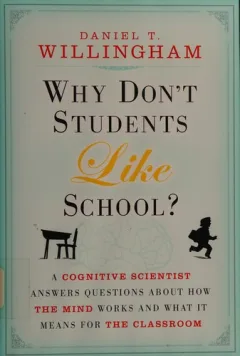
Why Don’t Students Like School?

A Cognitive Scientist Answers Questions About How the Mind Works and What It Means for the Classroom

By Daniel T. Willingham

Why Don’t Students Like School? explains classroom learning through cognitive psychology. Daniel T. Willingham begins with an apparent contradiction: people are curious, yet sustained thinking is slow, demanding, and often avoided. Students are most likely to engage when a problem is challenging enough to be satisfying but not so difficult that success seems remote. From that foundation, the book examines how prior knowledge supports reasoning and reading comprehension, why memory depends on what learners think about, why abstract ideas require concrete examples, and when practice helps. It also considers expertise, differences among learners, beliefs about intelligence, educational technology, and the mental demands placed on teachers. Rather than offering a single teaching method, Willingham presents cognitive principles and asks educators to adapt them to particular subjects and classrooms. The result is an accessible bridge between research on memory and thought and the daily work…
View book

Related category

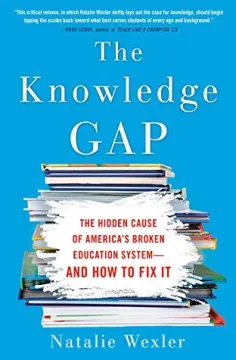
The Knowledge Gap

The Hidden Cause of America's Broken Education System—and How to Fix It

By Natalie Wexler

Why do many children learn to pronounce written words yet struggle to understand increasingly complex texts? Natalie Wexler argues that a major cause lies in the way American elementary schools often teach reading comprehension: as a collection of general-purpose skills, such as identifying a main idea, rather than as an ability grounded in vocabulary and knowledge of the world. Combining classroom reporting, intellectual history, cognitive-science research, and education-policy analysis, she traces how content-light literacy instruction became widespread and why it particularly disadvantages children who cannot rely on home environments to supply missing background knowledge. The book also follows educators experimenting with coherent, content-rich curricula organized around subjects such as history, science, and the arts. Wexler’s larger claim is that curriculum is an equity issue: schools cannot narrow educational disparities unless they deliberately give every child sustained acce…

View book

Articles in this category

No published articles are currently connected to this category in this language.