Category

North American History

The history of the United States and Canada, told from many points of view. Dee Brown's Bury My Heart at Wounded Knee tells the story of the American West between 1860 and 1890 from the side of the Native American nations who lost their lands, using treaty records, council speeches and first-hand accounts, and ending with the massacre at Wounded Knee. Published in 1970, it changed how many readers understood American history. Essential reading. More books on North America will join this shelf; see Regional History for more.

2 published books 0 published articles

Books in this category

Primary category

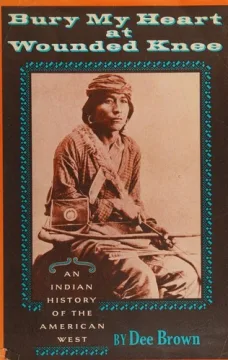
Bury My Heart at Wounded Knee: An Indian History of the American West

An Indian History of the American West

By Dee Brown

Dee Brown's 1970 history retells the conquest of the American West from the side of the Native nations who lived through it. Covering roughly 1860 to 1890, it moves from the Navajo Long Walk and the Dakota war in Minnesota through Sand Creek, Red Cloud's war, the Little Bighorn, the Nez Perce flight and the Apache surrenders, and closes with the killing of Sitting Bull and the massacre at Wounded Knee in 1890. Brown builds each episode around treaty councils, speeches and recollections, so that named leaders such as Red Cloud, Cochise, Chief Joseph and Sitting Bull speak for themselves. It remains a landmark among historical non fiction books on the American West, valued for changing whose testimony counts, and best read alongside later scholarship that has refined parts of its picture.

View book

Primary category

Bury My Heart at Wounded Knee

An Indian History of the American West

By Dee Brown

Dee Brown’s Bury My Heart at Wounded Knee recounts the conquest of the American West largely through the experiences and recorded words of Native peoples. Concentrating on the period from 1860 to 1890, it follows a succession of treaty negotiations, removals, wars, surrenders, killings, and reservation policies involving nations across the Plains, Southwest, Great Basin, and Northwest. Leaders including Little Crow, Red Cloud, Black Kettle, Sitting Bull, Crazy Horse, Chief Joseph, Captain Jack, and Big Foot emerge not as marginal figures in someone else’s frontier story but as political and military actors confronting invasion and dispossession. Brown ends with the killing at Wounded Knee, making it the culmination of a repeated pattern: federal promises yield to settler pressure, military force, and administrative control. Published in 1970, the book decisively challenged celebratory popular accounts of western expansion. It remains powerful and influential, though it is best read al…

View book

Articles in this category

No published articles are currently connected to this category in this language.