Category

Urban Studies

Books about cities: how they are built, governed and threatened. Robert A. Caro's Pulitzer Prize-winning The Power Broker shows how Robert Moses, an unelected official, reshaped New York for decades with parks, bridges and expressways, and displaced hundreds of thousands of people along the way. Jeff Goodell's The Water Will Come reports from coastal cities, from Miami to Venice and Lagos, already facing rising seas. Two essential books on urban power and urban futures. See History & Society for more.

2 published books 0 published articles

Books in this category

Related category

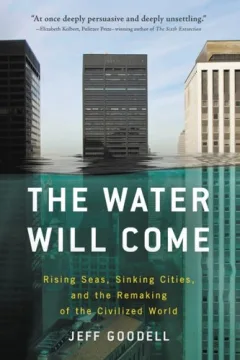
The Water Will Come

Rising Seas, Sinking Cities, and the Remaking of the Civilized World

By Jeff Goodell

In The Water Will Come, environmental journalist Jeff Goodell investigates how rising seas will alter coastlines, cities, economies, and patterns of human settlement. Traveling from Miami and New York to Venice, Lagos, the Netherlands, the Marshall Islands, and vulnerable military installations, he connects climate science with the decisions being made by engineers, politicians, property owners, and residents. The book explains how warming water and melting land ice raise sea levels, but its principal concern is social: what happens when roads, homes, drinking-water systems, cultural landmarks, and entire communities can no longer be defended at an acceptable cost? Goodell presents adaptation as an unavoidable process involving engineering, finance, migration, and political conflict. Published in 2017, the book is both a report from places already confronting recurrent flooding and an examination of the difficult choices that coastal societies face as the boundary between land and sea…
View book

Related category

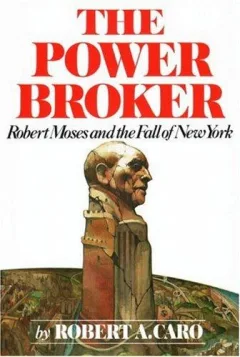
The Power Broker

Robert Moses and the Fall of New York

By Robert A. Caro

Robert A. Caro’s monumental biography examines how Robert Moses transformed New York’s physical landscape while building a political empire largely insulated from voters. Following Moses from idealistic reformer to dominant public official, Caro shows how command of legislation, public authorities, patronage, toll revenue, and overlapping appointments enabled one unelected man to influence parks, highways, bridges, housing, and urban renewal for decades. The book gives substantial attention to the achievements associated with that power, including beaches, parkways, playgrounds, and major infrastructure. Its central concern, however, is the human and democratic cost: displaced neighborhoods, weakened institutions, racial and class inequalities, and a transportation system oriented toward automobiles rather than mass transit. More than a biography, The Power Broker is an investigation of how power is acquired, concealed, exercised, and eventually lost—and of how governmental machinery…

View book

Articles in this category

No published articles are currently connected to this category in this language.