Category

Geopolitics

2 published books 0 published articles

Books in this category

Related category

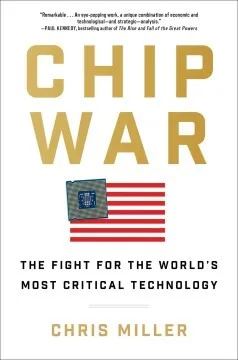
Chip War

The Fight for the World's Most Critical Technology

By Chris Miller

Chip War is a global history of the semiconductor and an argument about technological power. Chris Miller traces how transistors and integrated circuits moved from American laboratories and Cold War weapons programs into nearly every part of modern economic life. He follows the industry’s expansion through the United States, Japan, South Korea, Taiwan, Europe, and China, showing how design, fabrication, manufacturing equipment, and intellectual property became distributed across a remarkably intricate supply chain. That specialization made chips cheaper and more capable, but it also concentrated indispensable expertise in a small number of firms and locations. Miller connects business decisions by companies such as Intel and TSMC with military strategy, industrial policy, globalization, and the intensifying rivalry between the United States and China. The result is both a history of technological development and a warning that access to computing power now shapes prosperity, national…
View book

Related category

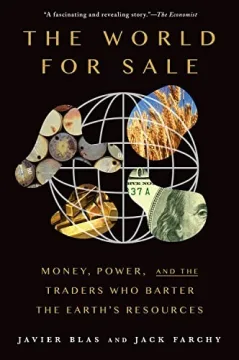
The World for Sale

Money, Power and the Traders Who Barter the Earth’s Resources

By Javier Blas , Jack Farchy

The World for Sale investigates the private commodity-trading firms that move oil, metals, grain, and other raw materials between producers and buyers. Javier Blas and Jack Farchy show how these firms became essential intermediaries in the global economy while remaining far less visible than banks, oil majors, or governments. Their account follows traders into markets transformed by decolonization, resource nationalization, the rise of OPEC, the Soviet Union’s collapse, China’s economic expansion, sanctions, and civil war. Companies such as Glencore, Vitol, Trafigura, and Cargill emerge not merely as brokers but as financiers, logisticians, intelligence gatherers, and sometimes politically consequential actors. The book’s central significance lies in connecting ordinary consumption to transactions conducted in distant ports, mines, ministries, and financial centers. It presents commodity trading as a form of capitalism built on information, credit, appetite for risk, and a willingness…

View book

Articles in this category

No published articles are currently connected to this category in this language.