Salman Schocken ran a department store in Berlin before establishing Schocken Verlag in 1931, a press devoted to Jewish writing in the German language. The list quickly drew major figures in philosophy, theology and letters: Martin Buber, Franz Rosenzweig, Franz Kafka, Gershom Scholem, S. Y. Agnon and Walter Benjamin all published here. Schocken emigrated to Palestine during the 1930s. The Nazis shut the Berlin firm down in 1939. In 1945 he was in New York, launching Schocken Books as the English-language continuation of the project.
Random House acquired Schocken Books in 1987. The imprint now sits within the Knopf Doubleday Publishing Group at Penguin Random House.
The catalogue stretches further than the "Jewish publisher" tagline implies. Hannah Arendt's political theory shares a shelf with Rabbi Jonathan Sacks's religious thought, Deborah Lipstadt's Holocaust scholarship, and Joan Nathan's cookbooks for the Shabbat table. Aharon Appelfeld and Elie Wiesel write novels; Sholem Aleichem's Yiddish humour gets a serious editorial treatment. Bella Chagall, wife of the painter Marc Chagall, published poetry and essays in Yiddish through the house.
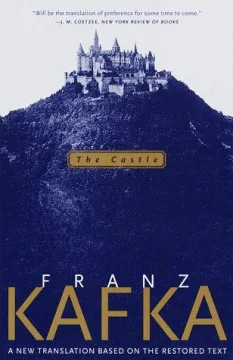
If you are arriving here after reading The Castle in Mark Harman's translation, a consistent editorial posture will be familiar. Schocken takes its authors' source languages seriously and aims to carry the full weight of a text into English rather than smoothing it down. The range is wide: medieval Hebrew philosophy, twentieth-century German fiction, American nonfiction, a recipe for cholent. What ties the list together is the sense that Jewish intellectual and cultural life is one ongoing conversation, not a subject that belongs in a display case.