Category

Literary Criticism

Literary criticism asks what books mean and how they work. Amitav Ghosh's The Great Derangement turns criticism on the modern novel itself, arguing that serious fiction, with its focus on the probable and the everyday, has been unable to face the extreme events of climate change. WebToTell's article The Unreliable Editor looks at how framed manuscripts and fictional footnotes change the way a story is told and trusted. Thought-provoking reading for book clubs, students and writers. See Literature, Language & Writing for more.

2 published books 1 published article

Books in this category

Primary category

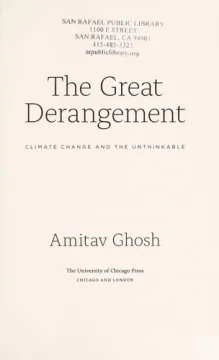
The Great Derangement

Climate Change and the Unthinkable

By Amitav Ghosh

In this book-length work of cultural criticism, Amitav Ghosh asks why societies that possess extensive knowledge about climate change remain so poor at imagining its consequences. He examines the problem through three connected fields: stories, history, and politics. Modern literary fiction, he argues, often treats improbable disasters and nonhuman forces as unsuitable for serious realism, even as a destabilized climate makes such events increasingly consequential. Historical accounts can likewise obscure the entanglement of fossil fuels, empire, industrialization, and unequal development. In politics, an emphasis on individual virtue and national interest struggles to address a planetary crisis requiring collective action. Ghosh therefore presents climate change not only as an environmental or technical problem but as a failure of cultural imagination. The book challenges writers, historians, and political communities to recover ways of thinking that can accommodate surprise, nonhuma…
View book

Related category

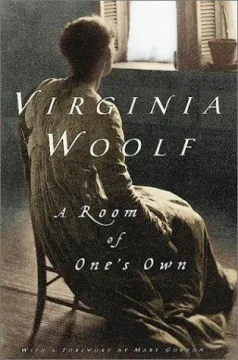
A Room of One's Own

By Virginia Woolf

A Room of One's Own is Virginia Woolf's 1929 extended essay on a deceptively simple problem: why so few women wrote major literature before the twentieth century, and what a woman needs in order to write well. It grew out of two talks given at the Cambridge women's colleges in 1928. A fictional narrator wanders through a university, a library and imagined histories before reaching a practical conclusion. Creative freedom depends on material conditions, chiefly an independent income and a private space. Woolf blends argument, storytelling and literary criticism, and the result is one of the best-known works of modern feminist thought. For readers who enjoy books that make you think, it offers a short, witty way into questions about gender, class, education and the conditions of creative work.

View book

Articles in this category