Category

Experimental Fiction

5 published books 1 published article

Books in this category

Primary category

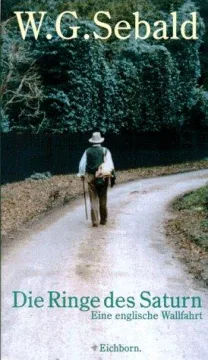
The Rings of Saturn

An English Pilgrimage

By W. G. Sebald

A walking journey through coastal East Anglia becomes an investigation of memory, destruction, and the hidden connections between local landscapes and global history. The narrator passes through towns, estates, heathlands, and shorelines, but physical travel repeatedly gives way to meditations on subjects including Sir Thomas Browne, Rembrandt, Joseph Conrad, Roger Casement, the herring industry, European sericulture, colonial exploitation, the destruction of war, and imperial China. Photographs and other images interrupt the prose without settling whether they document, haunt, or complicate its accounts. Neither conventional novel nor straightforward travelogue, The Rings of Saturn follows associative paths rather than a plot-driven itinerary. Its deepest concern is the persistence of loss: how ruined buildings, depleted industries, natural processes, works of art, and unreliable recollections preserve traces of vanished lives. Sebald makes a sparsely populated English region feel li…

View book

Related category

The Spear Cuts Through Water

A Novel

By Simon Jimenez

In a country ruled by the Moon Throne, divine power has become an instrument of dynastic terror. Jun, a prince and former enforcer burdened by what he has done, helps the imprisoned Moon goddess escape. Their flight joins him with Keema, a one-armed warrior bound by an oath to carry out a dead man’s mission. Together, the two men must escort the dying goddess across a ravaged landscape while the emperor’s fearsome sons pursue them. The five-day journey supplies the momentum of an epic quest, but Simon Jimenez places it inside a more unusual structure: an unnamed descendant dreams himself into the Inverted Theater, where ancestral history is performed by dancers and interrupted by the voices of the dead. The resulting novel is simultaneously an adventure, a love story, and an inquiry into inherited violence, migration, cultural memory, and the power of retelling the past.

View book

Related category

Austerlitz

By W. G. Sebald

In Austerlitz, an unnamed narrator recounts his intermittent encounters with Jacques Austerlitz, an architectural historian whose composed intellectual life conceals a childhood he cannot remember. Sent from Prague to Britain on a Kindertransport in 1939, Austerlitz was raised by a Welsh minister and his wife under a different name and without knowledge of his Jewish family. Decades later, fragments of memory lead him through railway stations, libraries, archives, photographs, Prague, Terezín, and Paris as he attempts to reconstruct what was taken from him. Sebald turns this search into a meditation on historical catastrophe, exile, personal identity, and the uncertain authority of images and documents. Buildings and transport networks become repositories of suppressed history, while the novel’s long sentences and embedded photographs blur fiction, testimony, essay, and archival investigation. The result is both an intimate account of belated remembrance and a wider examination of how…

View book

Related category

Lincoln in the Bardo

By George Saunders

In February 1862, as the American Civil War enters a worsening phase, eleven-year-old Willie Lincoln dies of illness and is placed in a Georgetown cemetery. George Saunders builds his novel around the grief of Willie’s father, President Abraham Lincoln, and the voices of spirits who linger among the graves, unable or unwilling to accept their deaths. During one night, the child’s confusion, the president’s mourning, and the ghosts’ unfinished attachments converge. The story moves between supernatural testimony and documentary-looking fragments about the Lincolns, the war, and the night of Willie’s burial. Its unusual chorus turns private bereavement into a larger meditation on attachment, denial, compassion, and collective loss. Both historical and deliberately invented, the novel asks how people release what they love—and how sorrow might deepen a person’s sense of responsibility toward strangers.

View book

Related category

The Sellout

A Novel

By Paul Beatty

Paul Beatty’s The Sellout is a ferocious comic novel about race, belonging, and the contradictions hidden inside American ideals. Its unnamed Black narrator lives in Dickens, a fictional community on the southern edge of Los Angeles that has been erased from official maps. Convinced that restoring the town requires drastic action, he attempts to reintroduce segregation and becomes entangled in an arrangement that others interpret as slavery. The resulting case carries him to the United States Supreme Court. Beatty uses this deliberately outrageous premise to examine racial identity, civic neglect, educational inequality, policing, historical memory, and the consolations offered by simplistic stories of progress. The novel’s jokes are dense, abrasive, and inseparable from its serious questions: Who is allowed to define a community? What does equality mean when institutions remain unequal? And what happens when the language of racial transcendence obscures the persistence of racism?

View book

Articles in this category