
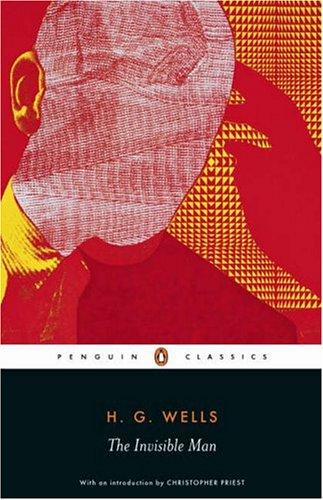
The Invisible Man
H. G. Wells's 1897 novel follows a bandaged, bad-tempered stranger who takes a room at an inn in the Sussex village of Iping. His secret is that he is Griffin, a brilliant optics researcher who has made himself invisible and cannot undo it. What begins as a village comedy of gossip and suspicion turns into a chase and a story of violence. Wells uses the idea to ask what happens when a person gains power and anonymity at the same moment, with nothing to answer to. The book is short, fast and often funny, and it is one of the foundational science fiction books of the late Victorian period. It also fixed the image of the invisible man in popular culture. This Penguin Classics edition adds scholarly notes and an introduction.
Where to buy or borrow
Are you selling this book? Bookstores, publishers, authors and libraries can be listed here for free. Request a listing
About this book
Deep Overview
The structure matters. For most of the book the invisible man is seen from outside, through the reactions of people who do not understand him. Wells then turns to a second narrative mode. Griffin, an optics researcher who had left medical studies, seeks shelter with an old acquaintance, Dr. Kemp, and tells his own story. This account covers his discovery of a way to alter a body's refractive properties so that it no longer interacts with light. It also covers his first experiments, his flight from London, and the practical misery of being invisible in an English winter. Wells knows that invisibility has costs. Griffin cannot easily eat, stay warm or go outside without being hurt, and he cannot walk through a crowded street without being knocked over. The idea that begins as a dream of freedom turns into a problem to be managed.
The human story is what gives the novel its weight. Griffin has no interest in using his discovery for the public good, and he does not share it. The thing that makes him invisible also lets him steal, threaten and destroy without being identified. As his isolation deepens, his plans grow more extreme, and he comes to imagine a campaign of terror, with Kemp as his partner. Kemp has already told the authorities, so the last part of the book becomes a hunt. Police and townspeople try to catch someone they cannot see, and the idea of a community defending itself against one man's intelligence and rage becomes the book's final test.
Wells is not simply condemning science. The novel is more interested in the person who holds the knowledge. It shows a narrow, secretive and self-justifying researcher who treats other people as obstacles. It also shows the villagers and the crowd, who can be petty, panicky and cruel when they feel threatened. Because both sides are drawn without much sympathy, readers have to decide where the moral weight falls. Part of the novel's staying power is this ambiguity, along with its dark humour and the clarity of its central image.
Key Themes
Science and ethics run through the whole book. Griffin's research is brilliant, but he pursues it in secret and without regard for anyone else. Wells does not offer a simple warning against knowledge. He shows what happens when ability outruns conscience.
Isolation and obsession shape Griffin's decline. He cuts himself off from his family, colleagues and, in the end, ordinary human contact. The novel suggests that this isolation feeds his violence as much as his invisibility does.
Society's response is another theme. The villagers, shopkeepers and police are shown as curious, gossiping, frightened and sometimes brutal. Wells uses them to show how a community behaves when it faces something it cannot explain.
The last theme is the gap between appearance and reality. Bandages, goggles and a false nose fool the village, and the book keeps asking how much we really know about people from how they look.
Historical Context
The novel was first serialised in Pearson's Weekly in 1897 and published as a book the same year. That origin helps explain its brisk, episodic opening and its mixture of comedy and menace. The setting is rural and small-town England at the end of the nineteenth century, with a village inn, a local doctor and a county police force. Against that ordinary world, Wells places a single impossible invention, which is the method he is known for.
The story also draws on older ideas. Wells's text has been linked to a comic verse by W. S. Gilbert about a man who vanishes while his clothes do not. It also echoes the Ring of Gyges in Plato's Republic, where a man who could become invisible might act like a god without any fear of consequences. Setting these older sources beside Victorian anxieties about science shows what Wells was borrowing and what he was adding.
Intended Audience
Fans of horror, suspense or social satire may enjoy the mixture of dark comedy and escalating menace. Teachers and reading groups will find that the book is compact enough to cover in a few sessions while still raising large questions.
Readers who want a heavily technical explanation of invisibility, or who expect modern action pacing and characterisation, may find the book less satisfying. The science is a premise rather than a detailed account, and some characters are drawn quickly and broadly. People who prefer a sympathetic central figure may also find Griffin hard to like.
Reading Difficulty
No scientific background is needed. The explanation of Griffin's method is brief and serves the story. The harder work is interpretive: deciding how far to sympathise with Griffin, and what Wells wants readers to think about him and about the society that hunts him.
The Penguin Classics edition includes an introduction, a biographical essay, a further reading list and notes on the text. First-time readers may prefer to read the story first and the introduction afterward, so that the plot is not spoiled. Students and those who want more context will find the notes useful.
Helpful Background Knowledge
It can also help to know the older invisibility stories behind the novel. A look at the Ring of Gyges passage in Plato's Republic gives a sharp philosophical frame for Griffin's behaviour. Readers who know the 1933 film version may be surprised by how different the novel is in tone, structure and detail, so it is worth reading the book on its own terms.
Readers who dislike spoilers should read the introduction after the novel.
Why Read This Book?
The book is distinctive because it is both funny and frightening. Wells treats the village with sly humour and the invisible man with real menace, and the shift between the two is one of the book's pleasures. The central idea also lasts. Because Griffin is neither a hero nor a simple monster, the book gives readers something to argue over long after the final chapter.
This particular edition adds an introduction by a novelist who has written about illusion and secrecy in his own fiction, together with notes and a biographical essay that help readers see the book in context.
Reader Takeaways
Readers may also reconsider the common reading of the book as a simple warning against science. The novel points as much to character, secrecy and the lack of accountability as to the invention itself.
Finally, readers may see how much the popular image of the invisible man owes to later adaptations, and how much in the novel is stranger, darker and funnier than those versions.
Strengths
The tone is also a strength. Wells combines humour, horror and social observation without letting any one of them take over, and the village scenes have a liveliness that distinguishes the book from a purely technical story.
The Penguin Classics edition is helpful in its apparatus. The scholarly editing, introduction, biographical essay, further reading list and notes give readers a way into the period and the text.
Limitations and Cautions
Griffin's confession is the main way we learn about his past, and it comes from an unreliable and unstable narrator. The story is also told largely from the point of view of men, and women and other characters have limited roles.
Interpretations of the book differ. Some readers see it mainly as a warning about unchecked science, others as a study of individual psychology, and others as a social satire. The novel does not settle these readings, and readers should be wary of any single claim about what Wells intended.
The edition's page count and publication date vary between listings, so readers who need exact details for citation should check the copy in their hands.
Important Concepts, People, and Places
Dr. Kemp: an old acquaintance of Griffin's who hears his story. He rejects Griffin's plan and alerts the authorities, which makes him the main opponent in the last part of the book.
Colonel Adye: the chief of police in Port Burdock, who leads the effort to stop Griffin.
Iping: the Sussex village where the story opens. It is the setting for the comic first section, in which villagers try to make sense of the bandaged stranger.
The Coach and Horses: the inn where Griffin takes a room and where his secret begins to unravel.
Port Burdock: the town where Kemp lives and where the story reaches its climax.
Refractive index: the optical property that Griffin alters so that a body no longer absorbs or reflects light. It is the one piece of science the book describes.
Pearson's Weekly: the magazine in which the story was first serialised in 1897.
Ring of Gyges: a story in Plato's Republic about invisibility and impunity, which gives the novel a philosophical background.
Patrick Parrinder, Christopher Priest and Andy Sawyer: the editor, the author of the introduction and the author of the notes in this Penguin Classics edition.
Questions the Book Explores
Does scientific discovery carry responsibility for the person who makes it? Griffin's secrecy and indifference raise this question without giving a lecture on it.
How far is Griffin's violence the result of his invisibility, and how far of his temperament? Wells leaves room for both answers.
How does a community respond to something it cannot explain? The villagers, the police and the crowd show fear, curiosity and cruelty in different measures.
What can we know about a person from appearance and from their own account? Bandages, disguise and confession all complicate the question.
Reading Group Guide
Groups may want to compare the village chapters with Griffin's long confession and discuss how the tone changes. Another approach is to read the Ring of Gyges passage from Plato's Republic alongside the novel and compare the two treatments of invisibility.
If members have seen a film or television version, they can compare it with the book. The 1933 film directed by James Whale, with a screenplay by R. C. Sherriff, and the 1984 BBC series are two adaptations that readers may know. Differences in tone, character and ending can lead to discussion of what each form adds or loses.
It may help to agree beforehand whether the group wants to read the Penguin introduction first or after the novel, since it can reveal plot details.
Discussion Questions
2. Is Griffin a villain, a victim, or something else? What evidence from the book supports your view?
3. Why might Wells have chosen to tell Griffin's history as a confession to another character rather than in a straight narrative?
4. How does the book treat the ordinary people who confront Griffin? Are they more or less admirable than he is?
5. What does the novel suggest about the relationship between knowledge and responsibility?
6. How far do the physical difficulties of invisibility change your sense of what Griffin gained and lost?
7. Does the ending feel earned? What does it say about how the society in the book deals with a threat?
8. How does the story compare with the versions of the invisible man you know from film, television or popular culture?
Sources and Verification
Sources disagree on the publication date of this edition, so no date is given here. Penguin's own pages give 208 pages, while one bookseller lists 161, so the page count shown follows the publisher. Plot and background points rely on the reference sources and on general knowledge of the novel, and readers who need exact details for study or citation should check them against their own copy.
Comments
No published comments yet.
Available editions
Paperback
Penguin Classics edition, ed. Patrick Parrinder; introduction by Christopher Priest; notes by Andy Sawyer
- Publisher
- Penguin Classics
- ISBN-13
- 9780141439983
- Pages
- 208