Category

Scientists, Doctors & Inventors

2 published books 0 published articles

Books in this category

Primary category

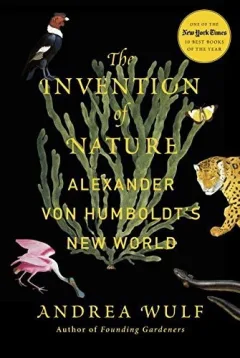
The Invention of Nature

Alexander von Humboldt's New World

By Andrea Wulf

Andrea Wulf’s biography restores Alexander von Humboldt to the center of nineteenth-century science and environmental thought. Following the Prussian naturalist from his constrained youth through expeditions in the Spanish Americas and Russia, the book shows how field observation, measurement, aesthetic response, and wide reading shaped his vision of nature as an interconnected whole. Wulf also traces his encounters with figures including Johann Wolfgang von Goethe, Aimé Bonpland, Simón Bolívar, and Thomas Jefferson. The later chapters move beyond Humboldt’s lifetime to examine his influence on Charles Darwin, Henry David Thoreau, George Perkins Marsh, Ernst Haeckel, and John Muir. The result is both an adventure-filled life and a history of ideas: an account of how connections among climate, geography, plants, animals, and human activity became central to understanding the living world—and why Humboldt’s warnings about environmental destruction remain significant.
View book

Related category

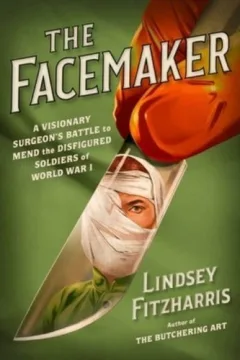
The Facemaker

A Visionary Surgeon's Battle to Mend the Disfigured Soldiers of World War I

By Lindsey Fitzharris

The Facemaker recounts how surgeon Harold Gillies and an interdisciplinary medical team confronted the devastating facial wounds of the First World War. Modern artillery and trench combat produced injuries that existing surgical practice was poorly equipped to treat, leaving survivors with impaired breathing, eating, speech, and vision as well as severe social isolation. Lindsey Fitzharris follows Gillies from wartime service to his leadership of specialized treatment in Britain, where repeated operations, skin grafts, dental work, anesthesia, medical illustration, and careful experimentation helped establish modern reconstructive plastic surgery. The book is both a historical biography and a patient-centered account of medical innovation. It emphasizes that repairing a face was never solely a technical problem: the work also concerned identity, dignity, relationships, and the possibility of returning to public life. By placing surgical progress beside individual experiences of injury…

View book

Articles in this category

No published articles are currently connected to this category in this language.