Category

Finance

Finance is the system of money, credit and markets that runs underneath everyday life. Niall Ferguson's The Ascent of Money tells its history, from ancient credit and the first banks to bonds, insurance, the stock market and the crises that keep recurring. Christopher Leonard's The Lords of Easy Money looks at the US Federal Reserve after 2008 and how its policies changed markets and who got rich. Two accessible books for readers who want to understand where money comes from and why financial crises happen. See Business & Economics for more.

1 published book 0 published articles

Related subcategories

Finance

Financial Markets

Financial markets, for stocks, bonds and currencies, set the price of money and risk. Niall Ferguson's The Ascent of Money explains how they came to be: the invention of bonds that funded wars, the first stock markets, insurance and the rise of global finance, through to the crises that markets keep producing. Ferguson writes for general readers, with history and stories rather than formulas. An ideal first book for anyone who wants to understand how markets shape the world. More books will join this category; see Finance for related reading.
Explore category

Finance

Banking

Banking, from the high street bank to the central bank, decides how money is created and who can borrow it. Christopher Leonard's The Lords of Easy Money tells how the US Federal Reserve, the bank behind the banks, kept interest rates near zero and bought trillions in assets after the 2008 crisis, and how that flood of cheap money reshaped markets, companies and inequality. A clear, reported account for readers who want to understand central banking without equations. More banking books will join this shelf; see Finance for related reading.

Explore category

Books in this category

Related category

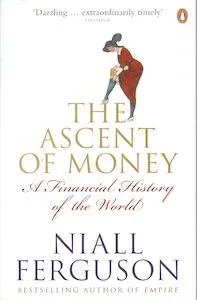
The Ascent of Money

A Financial History of the World

By Niall Ferguson

Niall Ferguson presents finance as a central force in world history rather than a technical activity confined to banks and trading floors. Moving from early money and credit through banking, government bonds, joint-stock companies, insurance, mortgages, and global capital flows, he connects financial institutions to war, empire, revolution, social policy, homeownership, and economic crisis. The book’s recurring claim is that financial innovation has expanded societies’ capacity to mobilize resources and distribute risk, while repeatedly generating new forms of instability and inequality. Ferguson builds his account around vivid cases—including the Medici, the Rothschilds, John Law’s Mississippi scheme, the development of insurance, and the financial relationship between China and the United States. The result is a broad narrative explaining both how modern finance acquired its power and why systems built on credit, confidence, and leverage remain vulnerable to panic and collapse.

View book

Articles in this category

No published articles are currently connected to this category in this language.