Category

Teaching & Pedagogy

How to teach well, in theory and in practice. bell hooks's Teaching to Transgress describes teaching as a practice of freedom, where the classroom becomes a place of excitement, honesty and shared learning across differences of race, class and gender. Daniel T. Willingham's Why Don't Students Like School? brings cognitive science into the classroom with practical principles about memory, attention and practice. One inspiring and one practical book, for teachers at every level and anyone who helps others learn. See Education & Reference for more.

2 published books 0 published articles

Books in this category

Related category

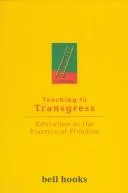
Teaching to Transgress

Education as the Practice of Freedom

By bell hooks

In this collection of essays, bell hooks presents education as a potentially liberating practice rather than the one-way transmission of approved knowledge. Drawing on her experiences as a Black student, feminist theorist, and university teacher, she examines how race, gender, class, language, authority, and emotion shape classroom life. Her alternative, “engaged pedagogy,” asks teachers and students to participate actively in learning, connect ideas with lived experience, and recognize that education is never detached from power. hooks develops her position through encounters with critical pedagogy, Black intellectual traditions, feminism, multicultural education, and engaged Buddhism. She also confronts practical tensions: who gets to speak, how authority should operate, whether experience counts as knowledge, and how teachers can invite participation without denying conflict. The result is both an argument about educational freedom and a candid account of how difficult such freedom…
View book

Related category

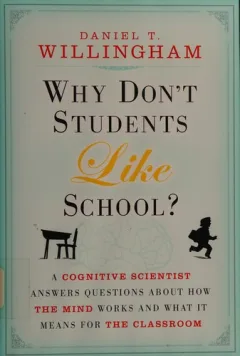
Why Don’t Students Like School?

A Cognitive Scientist Answers Questions About How the Mind Works and What It Means for the Classroom

By Daniel T. Willingham

Why Don’t Students Like School? explains classroom learning through cognitive psychology. Daniel T. Willingham begins with an apparent contradiction: people are curious, yet sustained thinking is slow, demanding, and often avoided. Students are most likely to engage when a problem is challenging enough to be satisfying but not so difficult that success seems remote. From that foundation, the book examines how prior knowledge supports reasoning and reading comprehension, why memory depends on what learners think about, why abstract ideas require concrete examples, and when practice helps. It also considers expertise, differences among learners, beliefs about intelligence, educational technology, and the mental demands placed on teachers. Rather than offering a single teaching method, Willingham presents cognitive principles and asks educators to adapt them to particular subjects and classrooms. The result is an accessible bridge between research on memory and thought and the daily work…

View book

Articles in this category

No published articles are currently connected to this category in this language.