Category

Neuroscience & Neurology

Books about the brain and how it shapes who we are. Oliver Sacks's The Man Who Mistook His Wife for a Hat tells the stories of patients with unusual neurological conditions, such as a man who cannot recognise faces, with curiosity and compassion. Robert M. Sapolsky's Behave explains human behaviour, from our best acts to our worst, by moving back in time from the moment of action through hormones, development and evolution. Two engaging books that make neuroscience accessible to every reader. See Health & Medicine for more.

2 published books 0 published articles

Books in this category

Primary category

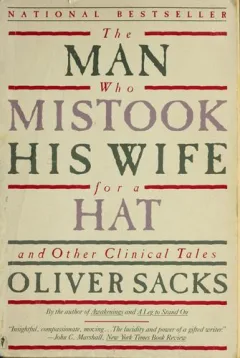
The Man Who Mistook His Wife for a Hat

And Other Clinical Tales

By Oliver Sacks

In this collection of twenty-four clinical narratives, neurologist Oliver Sacks examines people whose injuries, illnesses, and atypical neurological conditions have profoundly altered perception, memory, bodily awareness, language, impulse, or identity. The title case concerns Dr. P., a musician who can describe individual visual features yet cannot reliably recognize the objects and people before him. Other chapters consider severe amnesia, Tourette syndrome, loss of proprioception, phantom limbs, involuntary reminiscence, unusual artistic abilities, and distinctive forms of calculation and attention. Sacks is interested not only in locating an impairment but also in understanding the life constructed around it. Music, routine, imagination, faith, art, and personal relationships may become essential means of orientation. The result is an influential example of literary medical writing that presents neurology as a study of whole lives, while also raising enduring questions about patie…
View book

Related category

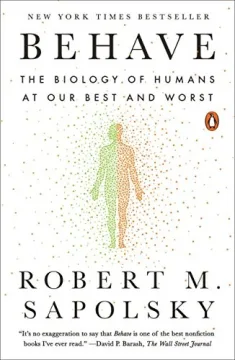
Behave

The Biology of Humans at Our Best and Worst

By Robert M. Sapolsky

Why can the same species commit calculated cruelty, protect strangers, cooperate at enormous scale, and sacrifice for principles? In Behave, neuroendocrinologist and primatologist Robert M. Sapolsky investigates human conduct by tracing its causes backward through time. He begins with neural activity in the instant before an act, then moves through sensory cues, hormones, earlier experiences, childhood development, genes, culture, and evolutionary history. This structure allows him to challenge explanations that isolate a single cause—testosterone, an aggressive brain region, a supposed “violence gene,” upbringing, or social environment. Behavior instead emerges from interacting biological and social processes whose effects depend on context. Sapolsky applies this framework to empathy, hierarchy, competition, tribalism, prejudice, punishment, war, reconciliation, and moral responsibility. The result is a broad scientific synthesis that treats humanity’s generosity and brutality not as…

View book

Articles in this category

No published articles are currently connected to this category in this language.