Category

Modern History

Modern history, roughly the last two centuries, explains the world we live in now. Adam Hochschild's King Leopold's Ghost tells how King Leopold II of Belgium ruled the Congo as his private colony, and how journalists and activists exposed the forced labour and killings, starting one of the first international human rights campaigns. Hannah Arendt's The Origins of Totalitarianism traces antisemitism and imperialism to explain how Nazism and Stalinism became possible. Two essential books on the twentieth century's darkest chapters. See General & World History for more.

2 published books 0 published articles

Books in this category

Related category

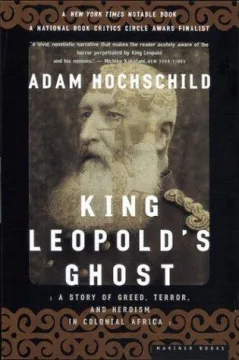
King Leopold's Ghost

A Story of Greed, Terror, and Heroism in Colonial Africa

By Adam Hochschild

In King Leopold’s Ghost, Adam Hochschild reconstructs the creation of the Congo Free State, the privately controlled Central African territory ruled by Belgium’s King Leopold II from 1885 to 1908. Promoted internationally as a humanitarian and antislavery project, the regime became an extractive system built around ivory, rubber, forced labor, hostage-taking, military coercion, and carefully managed propaganda. Hochschild follows both the people who helped construct this system and those who exposed it, including George Washington Williams, William Henry Sheppard, Roger Casement, E. D. Morel, and Alice Seeley Harris. The book is therefore not only an account of colonial brutality but also a history of political concealment and organized protest. By connecting corporate interests, royal ambition, racial ideology, missionary testimony, journalism, photography, and international activism, Hochschild shows how distant violence was made profitable, how evidence of it reached the wider worl…
View book

Related category

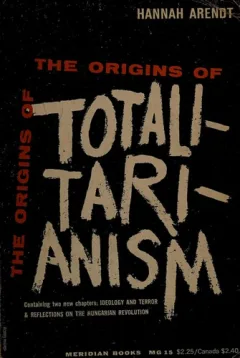
The Origins of Totalitarianism

By Hannah Arendt

Hannah Arendt’s The Origins of Totalitarianism investigates how unprecedented systems of domination emerged from the political and social crises of modern Europe. Organized into three major parts—Antisemitism, Imperialism, and Totalitarianism—the book traces elements that converged in Nazi Germany and Stalin’s Soviet Union without presenting their rise as the inevitable result of a single cause. Arendt examines the weakening of the nation-state, the production of stateless and rightless populations, racial ideology, colonial violence, mass political organization, propaganda, secret police, and concentration camps. Her central claim is that totalitarianism cannot be understood as ordinary dictatorship enlarged in scale. It seeks to transform reality and human beings themselves through ideology and terror, destroying spontaneity, plurality, legal protection, and the distinction between fact and fiction. The book remains influential because it joins historical inquiry to political theory…

View book

Articles in this category

No published articles are currently connected to this category in this language.