Category

Philosophy of Religion

3 published books 0 published articles

Books in this category

Related category

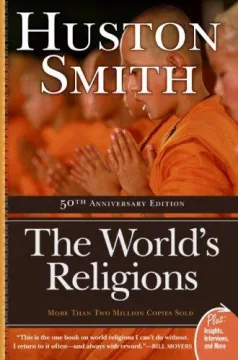
The World's Religions

By Huston Smith

Huston Smith introduces several of the world’s most influential religious traditions by asking what makes each one compelling to its adherents. Separate chapters consider Hinduism, Buddhism, Confucianism, Taoism, Islam, Judaism, Christianity, and traditions Smith groups under the historically common but now contested label “primal religions.” Rather than attempting an exhaustive institutional history, he concentrates on formative teachings, spiritual ideals, conceptions of reality, and paths of human transformation. The result is a sympathetic work of comparative religion that treats faiths as living responses to enduring questions about suffering, purpose, morality, community, and transcendence. Smith’s approach helped make the book an enduring introduction to religious diversity, but it also reflects the assumptions of an earlier generation of religious studies: it favors coherent spiritual essences over internal disputes, political conditions, and everyday variations. Readers can t…

View book

Related category

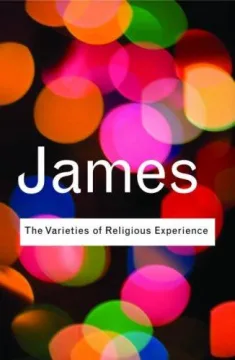
The Varieties of Religious Experience

A Study in Human Nature; Being the Gifford Lectures on Natural Religion Delivered at Edinburgh in 1901–1902

By William James

In The Varieties of Religious Experience, psychologist and philosopher William James examines religion through the reported experiences of individuals rather than through creeds, institutions, or proofs of doctrine. Drawing on autobiographies, conversion narratives, mystical testimony, devotional writings, and psychological case material, he compares contrasting forms of religious life: confident spiritual optimism, profound awareness of sin and suffering, sudden or gradual conversion, saintliness, prayer, and mysticism. James asks where such experiences come from, how they alter personality, and whether their consequences justify treating them as meaningful. He rejects both automatic religious belief and automatic medical dismissal, arguing that an experience should not be judged solely by its psychological or bodily origins. Its practical effects—what it enables a person to become and do—also matter. Published in 1902 from his Gifford Lectures, the book helped establish the psycholo…

View book

Related category

The Case for God

By Karen Armstrong

Karen Armstrong presents a wide-ranging intellectual history of how human beings have approached God, sacred reality, and religious knowledge. Moving from Paleolithic ritual through ancient philosophy, Judaism, Christianity, Islam, medieval theology, the scientific revolution, the Enlightenment, modern atheism, and fundamentalism, she argues that religion was traditionally understood less as assent to factual propositions than as a disciplined way of life. Ritual, ethical conduct, contemplation, myth, and compassion were practices through which people sought transformation and transcendence. Central to her account is the apophatic tradition: the recognition that ultimate reality exceeds literal description and conceptual mastery. Armstrong contends that modern believers and critics often share an overly rationalized picture of God, treating religious language as if it were scientific explanation. The book therefore makes its “case” not by proving a supernatural being, but by recoverin…

View book

Articles in this category

No published articles are currently connected to this category in this language.