Category

Exploration & Expeditions

True stories of expeditions into the unknown. Wilfred Thesiger's Arabian Sands describes his crossings of the Empty Quarter of Arabia in the 1940s with Bedu companions, a way of life that was about to vanish. David Grann's The Lost City of Z follows the British explorer Percy Fawcett, who disappeared in the Amazon in 1925 searching for a lost city, and Grann's own journey on his trail. Two gripping books for adventurers and armchair explorers. See Travel, Geography & Place for more.

2 published books 0 published articles

Books in this category

Primary category

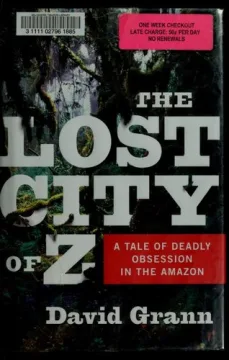
The Lost City of Z

A Tale of Deadly Obsession in the Amazon

By David Grann

In 1925, British explorer Percy Harrison Fawcett entered Brazil’s Mato Grosso with his son Jack and Jack’s friend Raleigh Rimell. They were searching for evidence of an ancient Amazonian society that Fawcett called “Z.” None returned. David Grann reconstructs the expedition, the career that led Fawcett toward it, and the succession of investigators and adventurers who tried to solve the disappearance. He also follows Fawcett’s trail himself, turning the investigation into a meeting point between biography, travel reporting, historical mystery, and archaeology. The result is not merely a survival story. It examines how imperial assumptions shaped exploration, why outsiders long underestimated Indigenous Amazonian societies, and how a powerful idea can consume both its originator and later seekers. Grann preserves the uncertainty surrounding Fawcett’s fate while showing that his broad conviction—that the Amazon once supported complex, settled communities—deserved more serious considerat…
View book

Related category

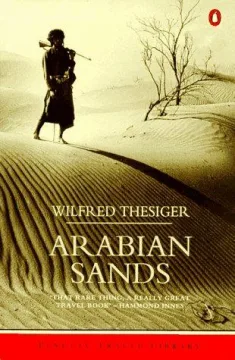
Arabian Sands

By Wilfred Thesiger

Arabian Sands is Wilfred Thesiger’s account of his journeys through southern Arabia between 1945 and 1950, including two camel crossings of the Rubʿ al Khali, or Empty Quarter. Although the crossings supply the book’s physical drama, its deeper subject is the life Thesiger shared with his Bedouin companions: dependence on wells and camels, endurance of hunger and thirst, tribal obligations, hospitality, loyalty, raiding, and the constant judgment required for survival. Written after oil development and motor transport had begun transforming the region, the narrative also serves as an elegy for a social world Thesiger believed was disappearing. The book combines expedition narrative, portraiture, landscape description, and cultural observation. Its lasting interest lies in the tension between its unusually close record of mid-twentieth-century desert life and the unmistakably personal—and sometimes romanticizing—perspective through which that life is presented.

View book

Articles in this category

No published articles are currently connected to this category in this language.