

WebToTell

Books

Discover published books from independent authors and publishers.

Explore the library

Find your next book

Clear filters

2 unique books found Books may appear in more than one category.

The Years book cover

The Years

By Annie Ernaux , translated from the French by Alison L. Strayer

Spanning 1941 to 2006, The Years joins one woman’s life to the transformation of postwar France. Annie Ernaux recalls childhood, education, marriage, motherhood, work, sexuality, illness, aging, and the desire to write, but she resists presenting these experiences as a conventional first-person memoir. Instead, photographs, family meals, slogans, songs, advertisements, political events, consumer goods, and changing habits accumulate into the memory of a generation. The intimate and historical repeatedly alter one another: class mobility changes family language; reproductive freedom changes women’s futures; television and digital technology reshape attention; public events survive as fragments of ordinary conversation. By moving between “she,” “we,” and broader collective voices, Ernaux asks how much of a supposedly private identity is composed from shared social time. The result is both autobiography and social record—a sustained attempt to preserve lives, objects, expressions, and ex…
View The Years

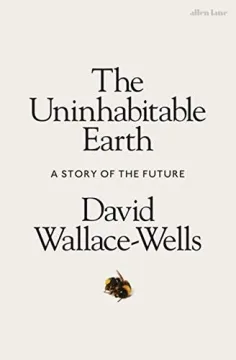
The Uninhabitable Earth book cover

The Uninhabitable Earth

By David Wallace-Wells

Life After Warming

In The Uninhabitable Earth, journalist David Wallace-Wells surveys the human consequences of a rapidly warming planet. Rather than treating climate change chiefly as a question of rising seas or endangered wildlife, he presents it as a force capable of reshaping food systems, public health, migration, conflict, economic life, politics, and culture. The book moves from physical dangers—including extreme heat, wildfire, water scarcity, ocean damage, and disease—to the social narratives and institutions through which people interpret those dangers. Its central contention is that climate disruption is neither remote nor confined to a single environmental problem: it is an all-encompassing condition created by human choices. Wallace-Wells writes in an intentionally alarming register, but he does not argue that catastrophe is predetermined. The range of possible futures remains politically contingent, making the book both a warning about cascading risks and an argument for collective agency.

View The Uninhabitable Earth