WebToTell

Books

Discover published books from independent authors and publishers.

Explore the library

Find your next book

Clear filters

5 unique books found Books may appear in more than one category.

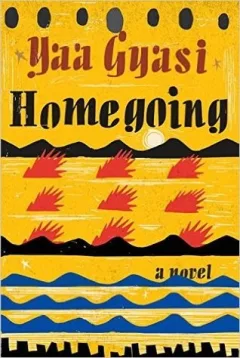
Homegoing book cover

Homegoing

By Yaa Gyasi

Beginning in eighteenth-century Ghana, Homegoing follows two branches of one family whose histories divide before its members know they are related. Effia becomes the wife of a British officer at Cape Coast Castle, while her half sister, Esi, is imprisoned below and transported into American slavery. Yaa Gyasi then moves through successive generations in alternating chapters, tracing lives shaped by the slave trade, British colonial power, racial slavery in the United States, convict leasing, migration, segregation, and their modern consequences. Each character receives a concentrated story, yet together those stories form a family saga spanning roughly 250 years. The novel’s central achievement is to make historical inheritance visible without reducing descendants to symbols of suffering. Love, ambition, complicity, estrangement, and survival remain intensely personal even as institutions limit what each person can choose. Homegoing presents history not as a finished past but as a fo…

View Homegoing

The Night Watchman book cover

The Night Watchman

By Louise Erdrich

A Novel

In 1953, Thomas Wazhashk works nights at a jewel-bearing factory near North Dakota’s Turtle Mountain Reservation while serving as a tribal council leader. When Congress promotes a policy presented as Native “emancipation,” Thomas recognizes its real danger: ending federal obligations, weakening tribal sovereignty, and exposing his community’s remaining land and institutions to dissolution. He begins organizing a resistance that must carry local testimony all the way to Washington, D.C. Alongside this political struggle, young factory worker Patrice Paranteau travels to Minneapolis in search of her missing sister, Vera, encountering an urban world of danger, exploitation, and uneasy possibility. Through these intersecting stories, Louise Erdrich portrays a community defending itself through paperwork, memory, humor, kinship, labor, and spiritual endurance. Inspired by the life and letters of Erdrich’s grandfather, Patrick Gourneau, the novel transforms an often-overlooked chapter of fe…

View The Night Watchman

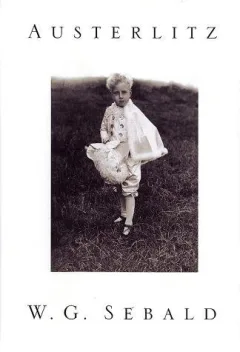
Austerlitz book cover

Austerlitz

By W. G. Sebald

In Austerlitz, an unnamed narrator recounts his intermittent encounters with Jacques Austerlitz, an architectural historian whose composed intellectual life conceals a childhood he cannot remember. Sent from Prague to Britain on a Kindertransport in 1939, Austerlitz was raised by a Welsh minister and his wife under a different name and without knowledge of his Jewish family. Decades later, fragments of memory lead him through railway stations, libraries, archives, photographs, Prague, Terezín, and Paris as he attempts to reconstruct what was taken from him. Sebald turns this search into a meditation on historical catastrophe, exile, personal identity, and the uncertain authority of images and documents. Buildings and transport networks become repositories of suppressed history, while the novel’s long sentences and embedded photographs blur fiction, testimony, essay, and archival investigation. The result is both an intimate account of belated remembrance and a wider examination of how…

View Austerlitz

The Thousand Autumns of Jacob de Zoet book cover

The Thousand Autumns of Jacob de Zoet

By David Mitchell

In 1799, Jacob de Zoet arrives at Dejima, the tightly controlled Dutch trading post in Nagasaki Harbor, intending to earn enough money to marry his fiancée at home. Employed as a clerk, he is expected to investigate corrupt accounts without becoming entangled in the colony’s rivalries. His plans change after he meets Orito Aibagawa, a gifted Japanese midwife and medical student whose intelligence attracts him across formidable boundaries of language, law, class, and custom. When Orito is taken to an isolated religious estate governed by the powerful Lord Enomoto, the novel widens from commercial intrigue and constrained courtship into a darker struggle over coercion, belief, and political influence. David Mitchell uses Jacob’s moral awakening, Orito’s fight for autonomy, and interpreter Uzaemon Ogawa’s divided loyalties to explore contact between societies that exchange goods and knowledge while remaining deeply suspicious of one another.

View The Thousand Autumns of Jacob de Zoet

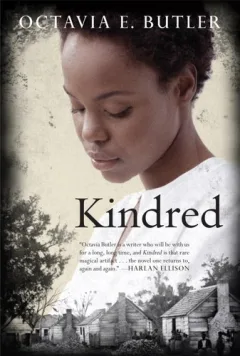
Kindred book cover

Kindred

By Octavia E. Butler

In 1976 California, Dana Franklin, a Black writer, is repeatedly and inexplicably transported to antebellum Maryland. Each journey places her near Rufus Weylin, a white ancestor whose survival is necessary for Dana’s own birth. What initially appears to be a series of rescues becomes prolonged exposure to the plantation on which Rufus is being formed by slavery’s habits of ownership, violence, and entitlement. Dana must protect him without accepting the system he represents, while also trying to help the enslaved people whose lives are bound to her family history. When her white husband, Kevin, is carried into the past with her, their marriage is tested by a society that assigns them radically unequal positions. Combining time travel, historical fiction, and the tradition of the slavery narrative, Kindred turns ancestry into an immediate physical crisis. Butler asks what it means to inherit a history that remains present in bodies, families, institutions, and relationships.

View Kindred