WebToTell

Books

Discover published books from independent authors and publishers.

Explore the library

Find your next book

Clear filters

6 unique books found Books may appear in more than one category.

The Fifth Season book cover

The Fifth Season

By N. K. Jemisin

On the continent called the Stillness, civilization has been shaped by recurring geological catastrophes known as Fifth Seasons. Communities survive through rigid planning, inherited rules, and the exploitation of orogenes—people capable of sensing and manipulating thermal and seismic energy. When a massive rift threatens to produce an exceptionally long Season, Essun discovers that her husband has murdered their young son and fled with their daughter. Her pursuit unfolds alongside the stories of Damaya, a frightened child taken for training, and Syenite, an ambitious young orogene sent on an imperial assignment. Through these intertwined lives, N. K. Jemisin examines oppression, survival, parenthood, trauma, and the dangerous bargain between social usefulness and freedom. The result is both an apocalyptic journey and a structural mystery, using speculative geology and intimate human loss to ask what happens when a civilization depends upon the people it dehumanizes.
View The Fifth Season

Under a White Sky book cover

Under a White Sky

By Elizabeth Kolbert

The Nature of the Future

Human beings have altered rivers, coastlines, climates, and ecosystems on such a scale that further intervention can appear to be the only way to contain the damage. In Under a White Sky, environmental journalist Elizabeth Kolbert investigates this unsettling predicament through visits to laboratories, waterways, endangered-species habitats, and experimental climate projects. Her subjects include efforts to block invasive carp from the Great Lakes, sustain the exceptionally vulnerable Devils Hole pupfish, help corals survive warmer oceans, remove carbon dioxide from the atmosphere, and reduce global temperatures through solar geoengineering. These projects display remarkable scientific ingenuity, but they also expose the risks of treating complex natural systems as manageable machinery. Rather than offering a simple case for or against technology, Kolbert examines the recurring cycle in which one attempted solution creates conditions demanding another. The result is a concise explorat…

View Under a White Sky

The Old Ways book cover

The Old Ways

By Robert Macfarlane

A Journey on Foot

In The Old Ways, Robert Macfarlane travels along ancient routes to investigate how paths connect landscape, history, imagination, and memory. His journeys encompass chalk tracks, holloways, pilgrimage roads, dangerous tidal crossings, mountain routes, and sea paths in Britain and beyond. Rather than treating a path as a line between destinations, Macfarlane reads it as a record made through repeated movement—a place where geology, ecology, language, custom, and personal experience converge. The poet and walker Edward Thomas serves as an important guiding presence, linking physical travel to literary remembrance. Macfarlane also walks with contemporary artists, writers, sailors, and local guides whose knowledge reveals different ways of inhabiting terrain. Blending travel narrative, nature writing, cultural history, biography, and meditation, the book argues that people shape paths while paths, in turn, shape perception, memory, and identity.

View The Old Ways

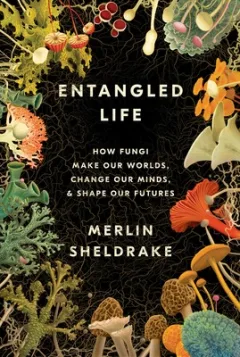
Entangled Life book cover

Entangled Life

By Merlin Sheldrake

How Fungi Make Our Worlds, Change Our Minds & Shape Our Futures

In Entangled Life, biologist Merlin Sheldrake examines fungi as organisms that transform environments, sustain ecological partnerships, and unsettle familiar definitions of intelligence and individuality. Moving from truffles, lichens, yeasts, and psychedelic mushrooms to vast underground mycelial networks, the book shows that fungi are far more than the mushrooms visible above ground. They decompose matter, help plants obtain nutrients, participate in soil formation, alter animal behavior, produce medicines, and make fermentation possible. Sheldrake also considers how fungal abilities might contribute to environmental repair and new materials. The book’s larger purpose is conceptual as well as scientific: fungal lives reveal how poorly the natural world fits into categories built around separate, self-contained individuals. Combining biology, ecological fieldwork, cultural history, and philosophical inquiry, Entangled Life invites readers to see life as a web of changing relationship…

View Entangled Life

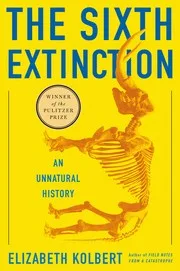
The Sixth Extinction book cover

The Sixth Extinction

By Elizabeth Kolbert

An Unnatural History

The Sixth Extinction investigates the proposition that human activity is producing a biological crisis comparable in scale—though not necessarily identical in mechanism or duration—to the five major mass extinctions identified in the fossil record. Kolbert develops this case through thirteen chapters, each organized around an emblematic species, extinction mechanism, scientific discovery, or conservation problem. The sequence moves between deep time and contemporary field sites rather than presenting a conventional textbook survey. The early chapters reconstruct the intellectual history of extinction. Georges Cuvier’s study of fossil remains helped establish that species could disappear permanently, overturning assumptions that nature’s inventory was fixed. The great auk illustrates how direct exploitation can eliminate an abundant species, while ammonites and the end-Cretaceous catastrophe introduce sudden planetary disruption and the scientific struggle to recognize it. The book the…

View The Sixth Extinction

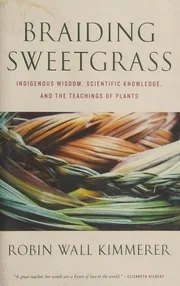
Braiding Sweetgrass book cover

Braiding Sweetgrass

By Robin Wall Kimmerer

Indigenous Wisdom, Scientific Knowledge and the Teachings of Plants

Braiding Sweetgrass is a collection of connected nonfiction essays in which Robin Wall Kimmerer brings together botany, personal experience, Potawatomi teachings, environmental history, and reflections on language and ethics. Rather than presenting Indigenous knowledge and Western science as interchangeable, the book explores what each way of knowing can perceive and what may become possible when they enter a respectful conversation. Plants provide the book’s recurring subjects and organizing teachers. Pecans, strawberries, maples, asters, goldenrod, black ash, beans, corn, squash, sweetgrass, and other beings become points of entry into ecology, family history, land use, gratitude, restoration, and responsibility. Scientific explanations are embedded in stories about parenting, teaching, gathering, gardening, field research, and participation in community life. The book gradually expands in scale. Early essays establish creation, gift, attention, and relationship as guiding ideas. Mi…

View Braiding Sweetgrass