
WebToTell

Books

Discover published books from independent authors and publishers.

Explore the library

Find your next book

Clear filters

10 unique books found Books may appear in more than one category.

Jonathan Strange & Mr Norrell book cover

Jonathan Strange & Mr Norrell

By Susanna Clarke

In an alternative version of early nineteenth-century England, magic survives mainly as an antiquarian subject discussed by gentlemen who cannot perform it. That changes when the private, possessive Gilbert Norrell proves that practical magic still exists. Seeking respectability and political influence, he takes English magic to London and offers his services during the Napoleonic Wars. His rise depends, however, on a secret bargain with a dangerous fairy. Jonathan Strange soon emerges as a second practicing magician. More intuitive, sociable, and adventurous than Norrell, Strange becomes first his pupil and then his rival. Their dispute over how magic should be studied, controlled, and restored draws in the Duke of Wellington, Lord Byron, the legendary Raven King, and people trapped by enchantments the magicians do not fully understand. Susanna Clarke combines historical fantasy, social comedy, Gothic unease, and an invented scholarly record to examine authority, ambition, knowledge,…

View Jonathan Strange & Mr Norrell

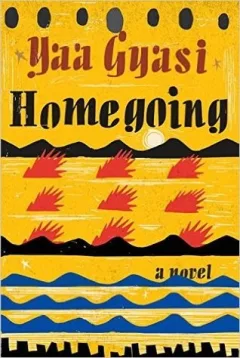
Homegoing book cover

Homegoing

By Yaa Gyasi

Beginning in eighteenth-century Ghana, Homegoing follows two branches of one family whose histories divide before its members know they are related. Effia becomes the wife of a British officer at Cape Coast Castle, while her half sister, Esi, is imprisoned below and transported into American slavery. Yaa Gyasi then moves through successive generations in alternating chapters, tracing lives shaped by the slave trade, British colonial power, racial slavery in the United States, convict leasing, migration, segregation, and their modern consequences. Each character receives a concentrated story, yet together those stories form a family saga spanning roughly 250 years. The novel’s central achievement is to make historical inheritance visible without reducing descendants to symbols of suffering. Love, ambition, complicity, estrangement, and survival remain intensely personal even as institutions limit what each person can choose. Homegoing presents history not as a finished past but as a fo…

View Homegoing

The Night Watchman book cover

The Night Watchman

By Louise Erdrich

A Novel

In 1953, Thomas Wazhashk works nights at a jewel-bearing factory near North Dakota’s Turtle Mountain Reservation while serving as a tribal council leader. When Congress promotes a policy presented as Native “emancipation,” Thomas recognizes its real danger: ending federal obligations, weakening tribal sovereignty, and exposing his community’s remaining land and institutions to dissolution. He begins organizing a resistance that must carry local testimony all the way to Washington, D.C. Alongside this political struggle, young factory worker Patrice Paranteau travels to Minneapolis in search of her missing sister, Vera, encountering an urban world of danger, exploitation, and uneasy possibility. Through these intersecting stories, Louise Erdrich portrays a community defending itself through paperwork, memory, humor, kinship, labor, and spiritual endurance. Inspired by the life and letters of Erdrich’s grandfather, Patrick Gourneau, the novel transforms an often-overlooked chapter of fe…

View The Night Watchman

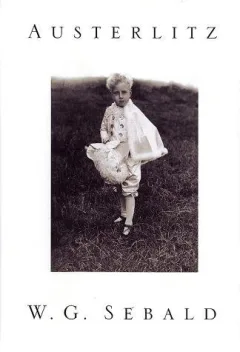
Austerlitz book cover

Austerlitz

By W. G. Sebald

In Austerlitz, an unnamed narrator recounts his intermittent encounters with Jacques Austerlitz, an architectural historian whose composed intellectual life conceals a childhood he cannot remember. Sent from Prague to Britain on a Kindertransport in 1939, Austerlitz was raised by a Welsh minister and his wife under a different name and without knowledge of his Jewish family. Decades later, fragments of memory lead him through railway stations, libraries, archives, photographs, Prague, Terezín, and Paris as he attempts to reconstruct what was taken from him. Sebald turns this search into a meditation on historical catastrophe, exile, personal identity, and the uncertain authority of images and documents. Buildings and transport networks become repositories of suppressed history, while the novel’s long sentences and embedded photographs blur fiction, testimony, essay, and archival investigation. The result is both an intimate account of belated remembrance and a wider examination of how…

View Austerlitz

The Thousand Autumns of Jacob de Zoet book cover

The Thousand Autumns of Jacob de Zoet

By David Mitchell

In 1799, Jacob de Zoet arrives at Dejima, the tightly controlled Dutch trading post in Nagasaki Harbor, intending to earn enough money to marry his fiancée at home. Employed as a clerk, he is expected to investigate corrupt accounts without becoming entangled in the colony’s rivalries. His plans change after he meets Orito Aibagawa, a gifted Japanese midwife and medical student whose intelligence attracts him across formidable boundaries of language, law, class, and custom. When Orito is taken to an isolated religious estate governed by the powerful Lord Enomoto, the novel widens from commercial intrigue and constrained courtship into a darker struggle over coercion, belief, and political influence. David Mitchell uses Jacob’s moral awakening, Orito’s fight for autonomy, and interpreter Uzaemon Ogawa’s divided loyalties to explore contact between societies that exchange goods and knowledge while remaining deeply suspicious of one another.

View The Thousand Autumns of Jacob de Zoet

Kindred book cover

Kindred

By Octavia E. Butler

In 1976 California, Dana Franklin, a Black writer, is repeatedly and inexplicably transported to antebellum Maryland. Each journey places her near Rufus Weylin, a white ancestor whose survival is necessary for Dana’s own birth. What initially appears to be a series of rescues becomes prolonged exposure to the plantation on which Rufus is being formed by slavery’s habits of ownership, violence, and entitlement. Dana must protect him without accepting the system he represents, while also trying to help the enslaved people whose lives are bound to her family history. When her white husband, Kevin, is carried into the past with her, their marriage is tested by a society that assigns them radically unequal positions. Combining time travel, historical fiction, and the tradition of the slavery narrative, Kindred turns ancestry into an immediate physical crisis. Butler asks what it means to inherit a history that remains present in bodies, families, institutions, and relationships.

View Kindred

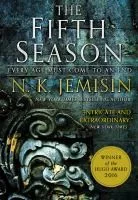
The Fifth Season book cover

The Fifth Season

By N. K. Jemisin

On the continent called the Stillness, civilization has been shaped by recurring geological catastrophes known as Fifth Seasons. Communities survive through rigid planning, inherited rules, and the exploitation of orogenes—people capable of sensing and manipulating thermal and seismic energy. When a massive rift threatens to produce an exceptionally long Season, Essun discovers that her husband has murdered their young son and fled with their daughter. Her pursuit unfolds alongside the stories of Damaya, a frightened child taken for training, and Syenite, an ambitious young orogene sent on an imperial assignment. Through these intertwined lives, N. K. Jemisin examines oppression, survival, parenthood, trauma, and the dangerous bargain between social usefulness and freedom. The result is both an apocalyptic journey and a structural mystery, using speculative geology and intimate human loss to ask what happens when a civilization depends upon the people it dehumanizes.

View The Fifth Season

Beloved book cover

Beloved

By Toni Morrison

A Novel

Set in Cincinnati in 1873, Beloved follows Sethe, a formerly enslaved woman living with her daughter Denver in a house troubled by a hostile spirit. When Paul D, a man Sethe knew at the Kentucky plantation called Sweet Home, reenters her life, his arrival unsettles the household’s uneasy relationship with the past. Soon afterward, a mysterious young woman calling herself Beloved appears and develops an intense attachment to Sethe. Her presence draws buried memories into the open, including the desperate act that made Sethe an outcast within her community. Moving between Reconstruction and the years of enslavement, Toni Morrison examines how historical violence persists in bodies, families, language, and memory. The novel combines psychological realism, fragmented chronology, oral storytelling, and the supernatural to portray survival after slavery—not as a clean passage into freedom, but as a difficult struggle to reclaim selfhood, love, and connection.

View Beloved

Wolf Hall book cover

Wolf Hall

By Hilary Mantel

Hilary Mantel’s Wolf Hall reimagines the rise of Thomas Cromwell, the statesman who moves from Cardinal Thomas Wolsey’s household into the center of Henry VIII’s government. Beginning with Cromwell’s violent childhood and advancing through the political crisis surrounding Henry’s marriage to Catherine of Aragon, the novel follows a gifted outsider as he turns legal knowledge, commercial experience, memory, and personal alliances into power. Mantel presents Tudor politics not as a settled sequence of famous events but as an unstable present in which succession, religion, money, family loyalty, and royal desire continually alter what is possible.

View Wolf Hall

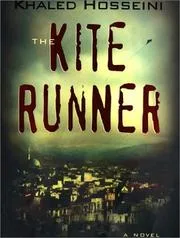
The Kite Runner book cover

The Kite Runner

By Khaled Hosseini

The Kite Runner is a first-person novel about Amir, a privileged boy growing up in Kabul, and Hassan, the Hazara son of a servant in Amir’s household. Their intimacy is genuine but structurally unequal: affection, dependence, ethnicity, social rank, and Amir’s desire for his father’s approval all shape what the boys can ask of one another. After Amir witnesses a brutal assault and fails to help Hassan, fear and shame lead him into a further betrayal. The narrative follows the long consequences of that failure. Political upheaval drives Amir and his father from Afghanistan to the United States, where their social positions change dramatically. Amir builds an adult life in California, but migration does not erase his memory or responsibility. A summons from the past eventually returns him to an Afghanistan transformed by war and Taliban rule, where an attempt to help Hassan’s son becomes both a rescue mission and a test of whether remorse can produce meaningful action. Although major ev…

View The Kite Runner