
WebToTell

Books

Discover published books from independent authors and publishers.

Explore the library

Find your next book

Clear filters

6 unique books found Books may appear in more than one category.

Under a White Sky book cover

Under a White Sky

By Elizabeth Kolbert

The Nature of the Future

Human beings have altered rivers, coastlines, climates, and ecosystems on such a scale that further intervention can appear to be the only way to contain the damage. In Under a White Sky, environmental journalist Elizabeth Kolbert investigates this unsettling predicament through visits to laboratories, waterways, endangered-species habitats, and experimental climate projects. Her subjects include efforts to block invasive carp from the Great Lakes, sustain the exceptionally vulnerable Devils Hole pupfish, help corals survive warmer oceans, remove carbon dioxide from the atmosphere, and reduce global temperatures through solar geoengineering. These projects display remarkable scientific ingenuity, but they also expose the risks of treating complex natural systems as manageable machinery. Rather than offering a simple case for or against technology, Kolbert examines the recurring cycle in which one attempted solution creates conditions demanding another. The result is a concise explorat…
View Under a White Sky

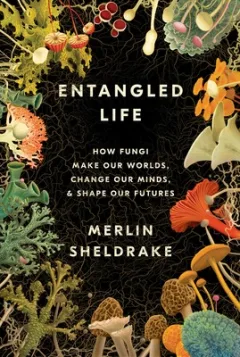
Entangled Life book cover

Entangled Life

By Merlin Sheldrake

How Fungi Make Our Worlds, Change Our Minds & Shape Our Futures

In Entangled Life, biologist Merlin Sheldrake examines fungi as organisms that transform environments, sustain ecological partnerships, and unsettle familiar definitions of intelligence and individuality. Moving from truffles, lichens, yeasts, and psychedelic mushrooms to vast underground mycelial networks, the book shows that fungi are far more than the mushrooms visible above ground. They decompose matter, help plants obtain nutrients, participate in soil formation, alter animal behavior, produce medicines, and make fermentation possible. Sheldrake also considers how fungal abilities might contribute to environmental repair and new materials. The book’s larger purpose is conceptual as well as scientific: fungal lives reveal how poorly the natural world fits into categories built around separate, self-contained individuals. Combining biology, ecological fieldwork, cultural history, and philosophical inquiry, Entangled Life invites readers to see life as a web of changing relationship…

View Entangled Life

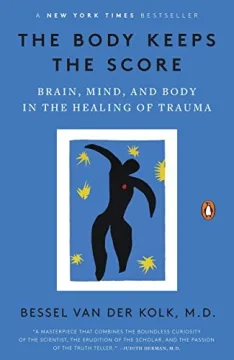
The Body Keeps the Score book cover

The Body Keeps the Score

By Bessel van der Kolk

Brain, Mind, and Body in the Healing of Trauma

In The Body Keeps the Score, psychiatrist Bessel van der Kolk presents trauma as an experience that can persist through bodily reactions, disrupted attention, emotional dysregulation, dissociation, and altered relationships—not merely through consciously remembered events. Drawing on clinical cases, the history of post-traumatic stress research, neuroscience, developmental psychology, and his own professional experience, he examines how overwhelming experiences can affect a person’s sense of safety and control. The book moves from the recognition and diagnosis of traumatic stress to an account of memory and brain-body responses, then surveys approaches to recovery, including established trauma-focused psychotherapy and several body-, movement-, and attention-based practices. Its broad synthesis helped bring embodied accounts of trauma into mainstream discussion. Readers should also treat its strongest scientific and therapeutic claims critically, because subsequent scholarship has cha…

View The Body Keeps the Score

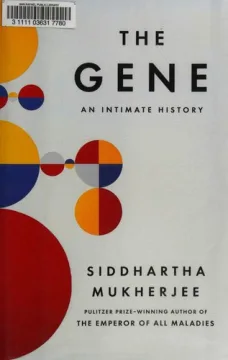
The Gene book cover

The Gene

By Siddhartha Mukherjee

An Intimate History

The Gene is a large-scale history of heredity as both a scientific problem and a consequential human idea. Mukherjee follows the subject from early speculation about reproduction and inheritance through Gregor Mendel’s experiments, Darwinian evolution, chromosome theory, the identification of DNA as hereditary material, molecular genetics, recombinant DNA, gene sequencing, cloning, the Human Genome Project, and early twenty-first-century genome editing. The chronology is interwoven with accounts of Mukherjee’s family history of mental illness and his clinical perspective as a cancer physician and researcher. This personal strand turns heredity from an abstract mechanism into a source of uncertainty about illness, identity, probability, and family responsibility. The book is therefore not simply a technical account of how genes work. It examines how societies have interpreted genetic knowledge, how eugenic programs converted claims about heredity into coercive policy, and how the abili…

View The Gene

The Emperor of All Maladies book cover

The Emperor of All Maladies

By Siddhartha Mukherjee

A Biography of Cancer

Siddhartha Mukherjee approaches cancer as though it were the subject of a biography: an entity with ancient appearances, changing identities, influential interpreters, periods of apparent defeat, and repeated transformations. The book moves from early descriptions of tumors through surgery, radiation, chemotherapy, epidemiology, prevention, genetics, targeted treatment, and the political campaign commonly called the War on Cancer. Rather than presenting medical progress as a smooth accumulation of discoveries, Mukherjee reconstructs a history shaped by experiments, rival theories, institutional ambitions, public advocacy, commercial interests, clinical failures, and patients willing to undergo uncertain treatments. A contemporary leukemia patient, Carla Reed, helps anchor the historical account in the realities of diagnosis and care. The result combines medical history, popular science, clinical narrative, and institutional history while repeatedly returning to a central biological in…

View The Emperor of All Maladies

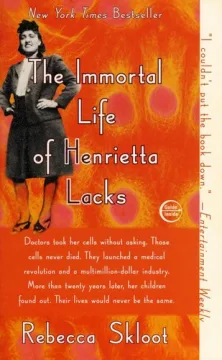
The Immortal Life of Henrietta Lacks book cover

The Immortal Life of Henrietta Lacks

By Rebecca Skloot

Rebecca Skloot combines biography, family history, science writing, medical history, and investigative reporting to reconstruct the life and legacy of Henrietta Lacks. In 1951, while Lacks was being treated for cervical cancer at Johns Hopkins Hospital, cells obtained from her tumor without her knowledge or consent became the source of HeLa, the first human cell line that could be continuously propagated in culture. The book explains why this development mattered to laboratory science, but its central purpose is to restore a person and family to a story that had often been told chiefly as scientific progress. The narrative moves among three interconnected histories: Henrietta's life and treatment; the development and expanding use of HeLa cells; and the later experiences of her children, particularly Deborah Lacks, as they tried to understand what had happened. Skloot also includes the process of her own reporting, showing that access to a family's history depends on trust, patience,…

View The Immortal Life of Henrietta Lacks