Category

Organizational Management

Three books on how organizations run, and how to make them run better. Atul Gawande's The Checklist Manifesto argues that well-designed checklists prevent errors in complex work, from operating rooms to cockpits. The Phoenix Project, a business novel by Gene Kim, Kevin Behr and George Spafford, follows a manager who must save a failing IT project. Brad Stone's The Everything Store shows the systems and the culture behind Amazon's growth. For managers, team leads and students of how work actually gets done.

3 published books 0 published articles

Books in this category

Primary category

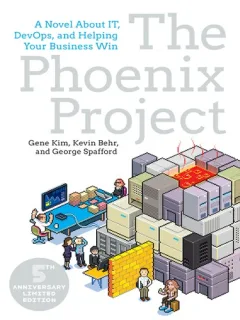
The Phoenix Project

A Novel About IT, DevOps, and Helping Your Business Win

By Gene Kim , Kevin Behr , George Spafford

When a critical business initiative at Parts Unlimited falls dangerously behind schedule, IT manager Bill Palmer is abruptly placed in charge of technology operations and given little time to restore order. He inherits unstable systems, conflicting priorities, exhausted employees, weak coordination, and a project whose failure could threaten the company. Guided by the enigmatic Erik, Bill begins treating technology work as a production system rather than an endless series of emergencies. The Phoenix Project uses a fictional corporate crisis to introduce DevOps, the Theory of Constraints, flow, feedback, controlled work in process, and continual learning. Its central argument is that reliable technology delivery depends less on isolated technical heroics than on understanding the entire value stream. By dramatizing the relationships among development, operations, security, executives, and business units, the novel shows how organizational design and management decisions shape technical…

View book

Primary category

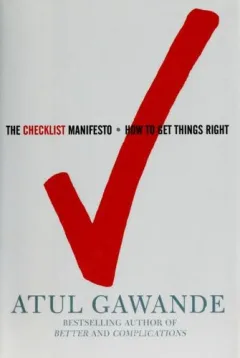
The Checklist Manifesto

How to Get Things Right

By Atul Gawande

Modern professionals possess extraordinary knowledge, yet serious mistakes persist because knowledge must be applied amid expanding complexity, time pressure, specialization, and imperfect communication. In The Checklist Manifesto, surgeon and writer Atul Gawande argues that well-designed checklists can make demanding work more reliable without replacing judgment or expertise. Drawing on medicine, aviation, construction, disaster response, and investment, he examines how brief prompts help teams remember essential steps, exchange critical information, and prepare for predictable trouble. The book gives particular attention to hospital infections and the development and testing of the World Health Organization Surgical Safety Checklist. Its larger argument concerns professional culture: experts often resist simple procedural aids because they appear to diminish autonomy, but disciplined coordination can be as important as individual brilliance. Gawande presents the checklist not as a u…

View book

Related category

The Everything Store

Jeff Bezos and the Age of Amazon

By Brad Stone

Brad Stone’s The Everything Store traces Amazon’s transformation from an online bookseller into a company determined to sell, build, and operate nearly everything. Its central figure is founder Jeff Bezos, whose appetite for expansion shapes the company’s strategy, demanding culture, technological ambitions, and dealings with competitors. Stone follows Amazon through early funding crises, the dot-com collapse, the development of its fulfillment network, and major initiatives such as Marketplace, Amazon Prime, the Kindle, and Amazon Web Services. The result is both a company history and a portrait of a leader whose long-term thinking repeatedly pushed Amazon beyond conventional retail. Written before Amazon reached its later scale, the book is best read as an account of the formative decisions, conflicts, and management principles that established its trajectory—and as an investigation of the human and commercial costs accompanying relentless growth.

View book

Articles in this category

No published articles are currently connected to this category in this language.