Category

History of Technology

The inventions that quietly built the modern world. Walter Isaacson's The Innovators tells the collaborative story of the computer and the internet, from Ada Lovelace to Silicon Valley. Marc Levinson's The Box explains how a simple steel shipping container changed global trade, and Chris Miller's Chip War shows why microchips became the most fought-over technology on Earth. Three clear, engaging books for readers who want to understand the machines and systems behind everyday life.

3 published books 0 published articles

Books in this category

Primary category

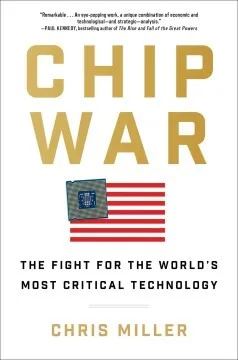
Chip War

The Fight for the World's Most Critical Technology

By Chris Miller

Chip War is a global history of the semiconductor and an argument about technological power. Chris Miller traces how transistors and integrated circuits moved from American laboratories and Cold War weapons programs into nearly every part of modern economic life. He follows the industry’s expansion through the United States, Japan, South Korea, Taiwan, Europe, and China, showing how design, fabrication, manufacturing equipment, and intellectual property became distributed across a remarkably intricate supply chain. That specialization made chips cheaper and more capable, but it also concentrated indispensable expertise in a small number of firms and locations. Miller connects business decisions by companies such as Intel and TSMC with military strategy, industrial policy, globalization, and the intensifying rivalry between the United States and China. The result is both a history of technological development and a warning that access to computing power now shapes prosperity, national…
View book

Primary category

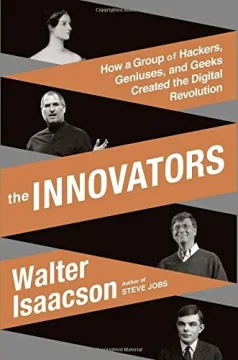
The Innovators

How a Group of Hackers, Geniuses, and Geeks Created the Digital Revolution

By Walter Isaacson

Walter Isaacson’s The Innovators traces the development of computers, software, semiconductors, personal computing, the internet, and the web through the people and teams behind them. Beginning with Charles Babbage and Ada Lovelace, the narrative moves through wartime computing, Bell Labs, the microchip, Silicon Valley, hobbyist culture, Microsoft, Apple, online communities, and the World Wide Web. Its central argument challenges the familiar image of the solitary inventor: transformative technologies usually emerge when theorists, engineers, programmers, entrepreneurs, institutions, and earlier generations exchange ideas. Isaacson also emphasizes the productive meeting of technical skill with imagination, design, and human needs. Written as a broad, character-driven history rather than a technical manual, the book explains how linked breakthroughs accumulated into the digital revolution and why collaboration, institutional culture, and the ability to turn concepts into usable systems…

View book

Related category

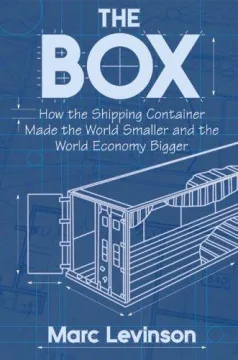
The Box

How the Shipping Container Made the World Smaller and the World Economy Bigger

By Marc Levinson

A standardized steel box might seem an unlikely agent of economic transformation, but Marc Levinson shows how container shipping reorganized the movement of goods and helped create the infrastructure of globalization. Beginning with Malcom McLean’s 1956 experiment aboard the Ideal-X, the book follows containerization through technical disputes, labor conflict, costly port reconstruction, military logistics, international standardization, and commercial expansion. Its subject is not merely an invention but an interconnected system of ships, cranes, trucks, railways, terminals, regulations, and business practices. Levinson explains how sharply lower freight-handling costs altered the location of factories and warehouses, weakened older waterfront economies, strengthened new ports, and enabled longer supply chains. The result is both a history of modern logistics and an argument about technological change: simple devices become revolutionary only when institutions, infrastructure, invest…

View book

Articles in this category

No published articles are currently connected to this category in this language.