Category

Wars & Campaigns

Histories of particular wars, from the decisions that started them to the campaigns that decided them. Christopher Clark's The Sleepwalkers explains how the leaders of Europe, none of them wanting a world war, walked step by step into the First World War in 1914. Barbara W. Tuchman's Pulitzer Prize-winning The Guns of August then follows the war's first month, as the great war plans met reality. Read together, they give a full picture of how the First World War began. See Military & Conflict History for more.

3 published books 0 published articles

Books in this category

Primary category

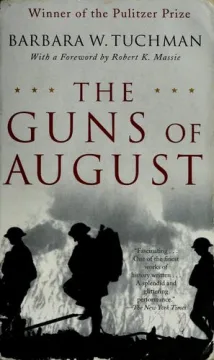
The Guns of August

By Barbara W. Tuchman

Barbara W. Tuchman reconstructs the opening of the First World War, moving from the assumptions and military plans formed before 1914 to the German advance through Belgium and France, the Allied retreat, and the Battle of the Marne. Her central concern is not simply who won or lost particular engagements. She examines how rigid timetables, institutional habits, personal rivalries, faulty intelligence, nationalism, and misplaced confidence narrowed the choices available to political and military leaders. The result is a closely observed account of strategy colliding with reality. Although concentrated chiefly on Europe’s western theater, the book also considers Russia’s invasion of East Prussia and the resulting pressures on German planning. Published in 1962, it became an influential work of narrative history and received the 1963 Pulitzer Prize in General Nonfiction. Its vivid storytelling remains compelling, while its interpretations are best read alongside later scholarship on the…
View book

Related category

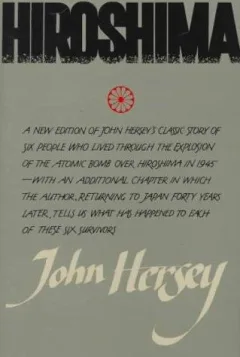
Hiroshima

By John Hersey

John Hersey's Hiroshima follows six people through the atomic bombing of Hiroshima on August 6, 1945, and the weeks, months and years that followed: two physicians, a clerk, a tailor's widow, a Methodist pastor and a German Jesuit priest. Rather than arguing about strategy or morality, Hersey reconstructs what each person saw, did and suffered, and lets plain detail carry the scale of the catastrophe. The text first appeared in The New Yorker in 1946 and then became a book that has stayed in print. This 1985 Knopf edition adds a closing chapter based on Hersey's return to Japan four decades later. For anyone assembling world war 2 books, it is a short, humane and influential piece of reporting that shows how the war's end looked from the ground.

View book

Related category

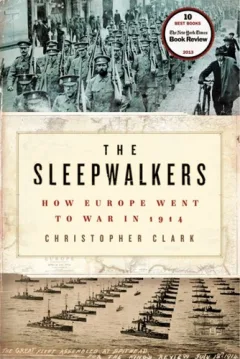
The Sleepwalkers

How Europe Went to War in 1914

By Christopher Clark

Christopher Clark reconstructs the political and diplomatic decisions that transformed the assassination of Archduke Franz Ferdinand in Sarajevo into a European war. Rather than treating the catastrophe as the execution of a single power’s settled plan, he follows decision-makers in Serbia, Austria-Hungary, Germany, Russia, France, and Britain as they responded to threats, allies, domestic pressures, incomplete information, and rapidly narrowing choices. The account reaches back beyond the July Crisis to Serbian politics, Balkan nationalism, imperial rivalry, shifting alliances, and earlier confrontations that shaped how leaders interpreted events in 1914. Its central significance lies in replacing a simple search for one guilty state with an international study of interacting agency. Clark does not present the war as automatic: he emphasizes choices, misjudgments, and calculated risks. The result is both a detailed narrative of escalation and a major intervention in the long-running…

View book

Articles in this category

No published articles are currently connected to this category in this language.