Category

European History

Europe on the brink of the First World War, and the world it destroyed. Barbara W. Tuchman's Pulitzer Prize-winning The Guns of August recounts the first month of the war, while Christopher Clark's The Sleepwalkers shows how Europe's leaders walked into it without seeing where they were going. Patrick Leigh Fermor's A Time of Gifts, the story of his walk across Europe in 1933-34, preserves a continent shortly before the next war changed it forever. Essential reading for anyone interested in modern European history.

3 published books 0 published articles

Books in this category

Related category

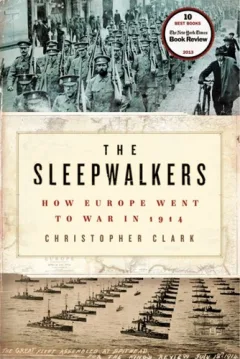
The Sleepwalkers

How Europe Went to War in 1914

By Christopher Clark

Christopher Clark reconstructs the political and diplomatic decisions that transformed the assassination of Archduke Franz Ferdinand in Sarajevo into a European war. Rather than treating the catastrophe as the execution of a single power’s settled plan, he follows decision-makers in Serbia, Austria-Hungary, Germany, Russia, France, and Britain as they responded to threats, allies, domestic pressures, incomplete information, and rapidly narrowing choices. The account reaches back beyond the July Crisis to Serbian politics, Balkan nationalism, imperial rivalry, shifting alliances, and earlier confrontations that shaped how leaders interpreted events in 1914. Its central significance lies in replacing a simple search for one guilty state with an international study of interacting agency. Clark does not present the war as automatic: he emphasizes choices, misjudgments, and calculated risks. The result is both a detailed narrative of escalation and a major intervention in the long-running…

View book

Related category

A Time of Gifts

On Foot to Constantinople: From the Hook of Holland to the Middle Danube

By Patrick Leigh Fermor

In December 1933, eighteen-year-old Patrick Leigh Fermor began walking from the Hook of Holland toward Constantinople. A Time of Gifts follows the first portion of that journey through the Low Countries, Germany, Austria, Czechoslovakia, and toward Hungary. He moves between barns, inns, monasteries, workers’ homes, and aristocratic houses, observing landscapes and social worlds that would soon be transformed by dictatorship and war. Written more than four decades after the walk, the book combines youthful immediacy with an older writer’s historical knowledge. Rivers, buildings, songs, languages, legends, religious traditions, and chance encounters become routes into Europe’s layered past. The result is at once a travel narrative, a coming-of-age memoir, and an elegy for the cultural variety of interwar Central Europe. Its central achievement lies less in reaching a destination than in showing how attentive movement through unfamiliar places can turn geography into lived history.

View book

Related category

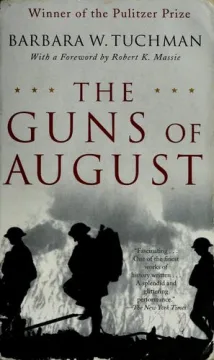
The Guns of August

By Barbara W. Tuchman

Barbara W. Tuchman reconstructs the opening of the First World War, moving from the assumptions and military plans formed before 1914 to the German advance through Belgium and France, the Allied retreat, and the Battle of the Marne. Her central concern is not simply who won or lost particular engagements. She examines how rigid timetables, institutional habits, personal rivalries, faulty intelligence, nationalism, and misplaced confidence narrowed the choices available to political and military leaders. The result is a closely observed account of strategy colliding with reality. Although concentrated chiefly on Europe’s western theater, the book also considers Russia’s invasion of East Prussia and the resulting pressures on German planning. Published in 1962, it became an influential work of narrative history and received the 1963 Pulitzer Prize in General Nonfiction. Its vivid storytelling remains compelling, while its interpretations are best read alongside later scholarship on the…

View book

Articles in this category

No published articles are currently connected to this category in this language.