Category

Cooperation & Conflict

2 published books 0 published articles

Books in this category

Related category

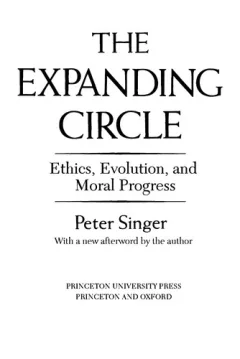
The Expanding Circle

Ethics, Evolution, and Moral Progress

By Peter Singer

Why do human beings help one another, and how can concern extend beyond family, community, or nation? Peter Singer approaches these questions by bringing evolutionary accounts of altruism into conversation with moral philosophy. Biology, he argues, helps explain the origins and limits of many social impulses: natural selection can favor assistance to relatives, reciprocal cooperation, and loyalty within groups. Yet an evolutionary explanation of conduct does not by itself determine how anyone ought to live. Singer assigns a decisive role to reason, whose demand for consistency can expose the arbitrariness of privileging one’s own group simply because it is one’s own. The resulting image is an expanding circle of moral concern, potentially widening from kin and neighbors to distant strangers and nonhuman animals. Originally published amid intense debate over sociobiology, the book remains a compact argument about human nature, impartiality, and whether moral progress is possible.
View book

Related category

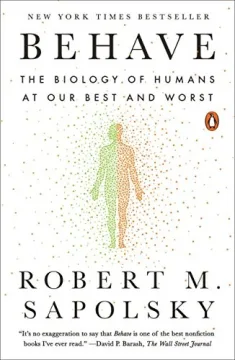
Behave

The Biology of Humans at Our Best and Worst

By Robert M. Sapolsky

Why can the same species commit calculated cruelty, protect strangers, cooperate at enormous scale, and sacrifice for principles? In Behave, neuroendocrinologist and primatologist Robert M. Sapolsky investigates human conduct by tracing its causes backward through time. He begins with neural activity in the instant before an act, then moves through sensory cues, hormones, earlier experiences, childhood development, genes, culture, and evolutionary history. This structure allows him to challenge explanations that isolate a single cause—testosterone, an aggressive brain region, a supposed “violence gene,” upbringing, or social environment. Behavior instead emerges from interacting biological and social processes whose effects depend on context. Sapolsky applies this framework to empathy, hierarchy, competition, tribalism, prejudice, punishment, war, reconciliation, and moral responsibility. The result is a broad scientific synthesis that treats humanity’s generosity and brutality not as…

View book

Articles in this category

No published articles are currently connected to this category in this language.