Category

Climate Change

Three ways of facing the climate crisis. David Wallace-Wells's The Uninhabitable Earth sets out, without softening, what warming could mean for food, water, cities and politics. Jeff Goodell's The Water Will Come reports from the cities already confronting rising seas. Amitav Ghosh's The Great Derangement asks why our novels, politics and culture have failed to imagine climate change at all. Urgent, readable books for anyone who wants to understand the stakes.

3 published books 0 published articles

Books in this category

Primary category

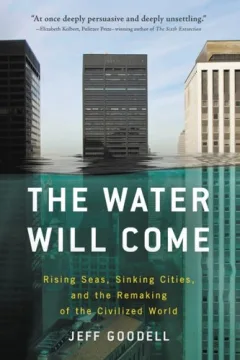
The Water Will Come

Rising Seas, Sinking Cities, and the Remaking of the Civilized World

By Jeff Goodell

In The Water Will Come, environmental journalist Jeff Goodell investigates how rising seas will alter coastlines, cities, economies, and patterns of human settlement. Traveling from Miami and New York to Venice, Lagos, the Netherlands, the Marshall Islands, and vulnerable military installations, he connects climate science with the decisions being made by engineers, politicians, property owners, and residents. The book explains how warming water and melting land ice raise sea levels, but its principal concern is social: what happens when roads, homes, drinking-water systems, cultural landmarks, and entire communities can no longer be defended at an acceptable cost? Goodell presents adaptation as an unavoidable process involving engineering, finance, migration, and political conflict. Published in 2017, the book is both a report from places already confronting recurrent flooding and an examination of the difficult choices that coastal societies face as the boundary between land and sea…
View book

Primary category

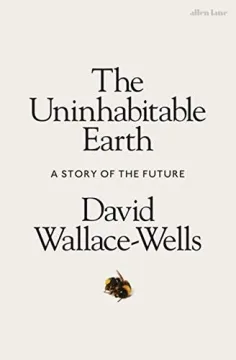
The Uninhabitable Earth

Life After Warming

By David Wallace-Wells

In The Uninhabitable Earth, journalist David Wallace-Wells surveys the human consequences of a rapidly warming planet. Rather than treating climate change chiefly as a question of rising seas or endangered wildlife, he presents it as a force capable of reshaping food systems, public health, migration, conflict, economic life, politics, and culture. The book moves from physical dangers—including extreme heat, wildfire, water scarcity, ocean damage, and disease—to the social narratives and institutions through which people interpret those dangers. Its central contention is that climate disruption is neither remote nor confined to a single environmental problem: it is an all-encompassing condition created by human choices. Wallace-Wells writes in an intentionally alarming register, but he does not argue that catastrophe is predetermined. The range of possible futures remains politically contingent, making the book both a warning about cascading risks and an argument for collective agency.

View book

Related category

The Great Derangement

Climate Change and the Unthinkable

By Amitav Ghosh

In this book-length work of cultural criticism, Amitav Ghosh asks why societies that possess extensive knowledge about climate change remain so poor at imagining its consequences. He examines the problem through three connected fields: stories, history, and politics. Modern literary fiction, he argues, often treats improbable disasters and nonhuman forces as unsuitable for serious realism, even as a destabilized climate makes such events increasingly consequential. Historical accounts can likewise obscure the entanglement of fossil fuels, empire, industrialization, and unequal development. In politics, an emphasis on individual virtue and national interest struggles to address a planetary crisis requiring collective action. Ghosh therefore presents climate change not only as an environmental or technical problem but as a failure of cultural imagination. The book challenges writers, historians, and political communities to recover ways of thinking that can accommodate surprise, nonhuma…

View book

Articles in this category

No published articles are currently connected to this category in this language.