Category

Cultural Geography

Cultural geography studies how people shape places, and how places shape cultures. Bruce Chatwin's In Patagonia gathers the stories that make up a remote region: Welsh settlers, Butch Cassidy, anarchists and lonely pioneers at the edge of the world. Paul Theroux's The Great Railway Bazaar shows how a single railway journey reveals the cultures of Europe and Asia through the people on board. Two vivid books on places and the lives lived in them. See Geography for more.

2 published books 0 published articles

Books in this category

Related category

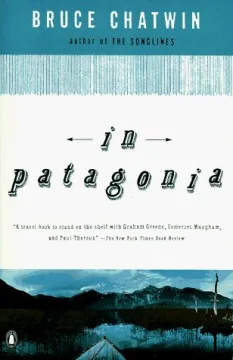
In Patagonia

By Bruce Chatwin

Bruce Chatwin’s In Patagonia follows a journey through the southern regions of Argentina and Chile, but it is neither a practical guide nor a continuous record of an itinerary. Chatwin assembles the book from brief encounters, historical digressions, family legends, archival traces, and sharply observed landscapes. A childhood memory of a mysterious scrap of animal skin—said to come from a prehistoric creature—provides the journey with its initial quest. Along the way, Chatwin investigates Welsh settlement, Indigenous displacement, European migration, labor unrest, vanished outlaws, eccentric colonists, and stories attached to remote houses and settlements. The result is a mosaic in which Patagonia becomes both a geographical region and a repository of exile, longing, violence, and reinvention. First published in 1977, the book became influential for its compressed, episodic approach to travel writing and its deliberate movement between reportage, oral history, literary reconstruction…
View book

Related category

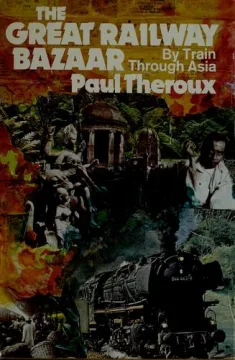
The Great Railway Bazaar

By Train Through Asia

By Paul Theroux

In The Great Railway Bazaar, Paul Theroux recounts a four-month rail journey begun in London in 1973. Traveling east through Europe, Turkey, Iran, the Indian subcontinent, Southeast Asia, and Japan, he eventually returns across the Soviet Union on the Trans-Siberian Railway. The itinerary supplies the book's structure, but its real substance lies in railway compartments, stations, border crossings, delays, landscapes, and conversations with strangers. Theroux treats each train as a temporary society in which class, nationality, loneliness, prejudice, curiosity, and political tension become unusually visible. His approach is literary rather than instructional: he selects telling encounters and sharp impressions instead of offering a comprehensive account of every destination. The result is both a record of a vanished network of overland travel and an influential example of personality-driven travel writing. Its wit and observational force remain central to its appeal, while its judgmen…

View book

Articles in this category

No published articles are currently connected to this category in this language.