Harper & Row lasted twenty-eight years, from 1962 to 1990, but the name carries a much longer history. The company began in March 1817 as J. & J. Harper, a small family printing shop in New York City run by brothers James and John. Their younger siblings Joseph Wesley and Fletcher joined in the mid-1820s, and the firm became Harper & Brothers in 1833. By 1859 the house was selling roughly two million volumes a year from its Franklin Square complex in Lower Manhattan, and its periodicals Harper's New Monthly Magazine (1850) and Harper's Weekly (1857) had become defining voices in American print culture. In 1962, Harper & Brothers merged with the Evanston, Illinois textbook publisher Row, Peterson & Company, and the combined firm took the new name.
During those decades the house published across the full range of American letters. Editor Edward Aswell persuaded Thomas Wolfe to leave Scribner's and later edited the writer's posthumous novels. Eugene F. Saxton, who joined in 1925, guided Edna St. Vincent Millay and Thornton Wilder through publication. In the 1970s the firm absorbed Thomas Y. Crowell and J. B. Lippincott, and in 1988 it acquired the religious publisher Zondervan, broadening its list well beyond trade fiction.
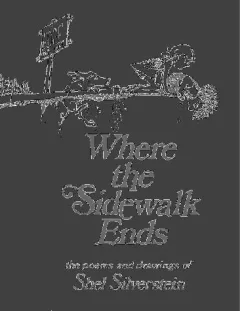
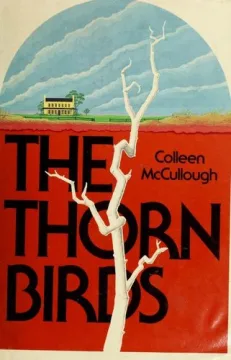
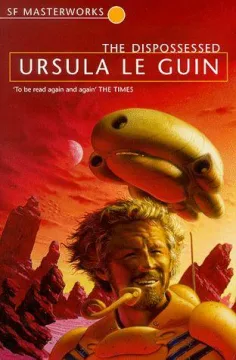
Among the titles on this publisher's page, Ursula K. Le Guin's The Dispossessed stands out. Published by Harper & Row in 1974, the novel follows a physicist who travels between a collectivist moon and a stratified planet, and it went on to win the Nebula and Hugo awards. Colleen McCullough's The Thorn Birds and Shel Silverstein's Where the Sidewalk Ends also appear in this listing, a pairing that spans sweeping family saga and illustrated verse.
Rupert Murdoch's News Corporation bought Harper & Row in 1987 and, two years later, combined it with William Collins, Sons to form HarperCollins. The Harper name continues in use as the flagship trade imprint of that global publisher.