
WebToTell

Books

Discover published books from independent authors and publishers.

Explore the library

Find your next book

Clear filters

36 unique books found Books may appear in more than one category.

The Ministry for the Future book cover

The Ministry for the Future

By Kim Stanley Robinson

A Novel

Kim Stanley Robinson’s near-future novel examines climate change as a crisis of institutions, economics, technology, justice, and collective action rather than as a single disaster with a single solution. It opens with a lethal heat wave in India, experienced by aid worker Frank May, and follows the psychological and political consequences of that catastrophe. A second central thread concerns Mary Murphy, the head of an international body informally called the Ministry for the Future, whose mandate is to represent future generations and living beings that lack political power in the present. The book gradually expands beyond Frank and Mary into a global systems narrative. It moves among central bankers, climate scientists, activists, refugees, lawyers, agricultural communities, engineers, political officials, and covert organizations. Conventional scenes are interspersed with testimony, reports, meeting notes, explanatory passages, dialogues, and nonhuman or conceptual voices. This co…
View The Ministry for the Future

The New Jim Crow book cover

The New Jim Crow

By Michelle Alexander

Mass Incarceration in the Age of Colorblindness

Michelle Alexander argues that the extraordinary expansion of the United States criminal legal system—especially through the War on Drugs—created a durable structure of racial control after the formal dismantling of Jim Crow segregation. Her argument is not simply that individual officials may be prejudiced or that racial disparities are unfortunate side effects. She maintains that ostensibly race-neutral laws, discretionary policing, prosecutorial power, plea bargaining, sentencing policy, and the continuing penalties attached to a criminal record operate together as a system. The book begins by placing mass incarceration within a longer history of racial hierarchy, moving from slavery through Reconstruction, Jim Crow, and the late-twentieth-century politics of crime. It then explains how drug enforcement and criminal procedure give police and prosecutors broad discretion while courts make proof of systemic racial discrimination exceptionally difficult. Alexander follows people beyon…

View The New Jim Crow

The Color of Law book cover

The Color of Law

By Richard Rothstein

A Forgotten History of How Our Government Segregated America

The book presents a historical and constitutional argument about residential segregation in the United States. Richard Rothstein disputes the familiar description of metropolitan segregation as merely de facto—that is, arising through private prejudice, household preference, economic inequality, or market behavior without decisive government involvement. He argues that federal, state, and local authorities repeatedly imposed, reinforced, or protected racial separation, making much of the resulting geography de jure segregation. ([guides.loc.gov](https://guides.loc.gov/real-estate-industry-sources/residential/fair-housing?utm_source=openai)) Rothstein builds this case through connected examples rather than a single-city history. He examines racially explicit zoning, segregated public housing, discriminatory federal mortgage policy, suburban development restricted to white purchasers, tax and land-use decisions, official tolerance of violence against integrating families, and public act…

View The Color of Law

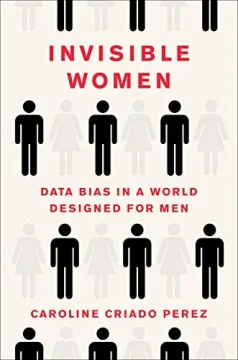
Invisible Women book cover

Invisible Women

By Caroline Criado Perez

Data Bias in a World Designed for Men

Invisible Women examines what happens when institutions treat male bodies, routines, and experiences as the human norm. Caroline Criado Perez calls attention to a “gender data gap”: missing, unreported, or insufficiently separated information about women. Her central argument is not merely that women are absent from datasets. It is that decisions made from incomplete evidence can turn that absence into material disadvantages—including unsuitable products, ineffective public services, distorted economic measurements, and avoidable health and safety risks. The book moves from ordinary environments to increasingly consequential systems. Its six parts address daily life, employment, design, medicine, public life, and disasters. Examples involving transportation, toilets, unpaid care, workplace practices, protective equipment, phones, medical research, government spending, refugee assistance, and disaster recovery allow the same underlying pattern to be observed across otherwise unrelated…

View Invisible Women

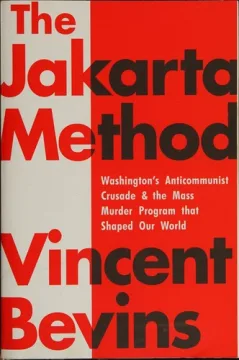
The Jakarta Method book cover

The Jakarta Method

By Vincent Bevins

Washington's Anticommunist Crusade and the Mass Murder Program That Shaped Our World

Vincent Bevins presents a transnational history of Cold War anticommunist violence, placing the Indonesian mass killings of 1965–1966 at the center of a much larger story. Rather than treating Indonesia as a peripheral episode in a contest dominated by Washington and Moscow, he argues that the destruction of Indonesia’s organized left was a major geopolitical turning point. The book traces connections among decolonization, the Non-Aligned Movement, the 1964 Brazilian military coup, the Indonesian Army’s rise under Suharto, and later campaigns of repression in Latin America and elsewhere. The phrase “Jakarta Method” describes more than one operation or fixed doctrine. In the book, it becomes a framework for recognizing a recurring political pattern: communist, socialist, labor, peasant, or reform movements are portrayed as existential threats; military and conservative forces receive encouragement or assistance; targeted people are detained, disappeared, or killed; and the resulting po…

View The Jakarta Method

Say Nothing book cover

Say Nothing

By Patrick Radden Keefe

A True Story of Murder and Memory in Northern Ireland

Say Nothing is a work of investigative narrative nonfiction about the Troubles and their long aftermath in Northern Ireland. Its central case is the December 1972 abduction and killing of Jean McConville, a widowed mother of ten taken from her Belfast home. McConville’s disappearance gives the book a human-scale route into a much larger history of republican militancy, British security policy, sectarian division, clandestine intelligence, imprisonment, political negotiation, and unresolved grief. Rather than attempting a complete chronological history of the conflict, Keefe follows intersecting lives. These include members of the McConville family; republican activists Dolours and Marian Price; senior IRA figure Brendan Hughes; and Gerry Adams, whose alleged relationship to the IRA is treated as a major question in the narrative. The book also examines the Boston College oral-history undertaking commonly known as the Belfast Project. Interviews recorded for that archive promised parti…

View Say Nothing

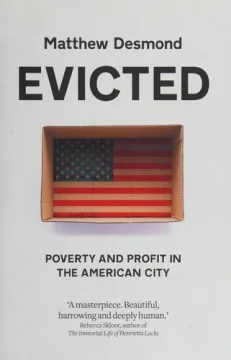
Evicted book cover

Evicted

By Matthew Desmond

Poverty and Profit in the American City

Evicted examines how the loss of a home operates within the broader machinery of American poverty. Its principal setting is Milwaukee during and after the 2008 financial crisis, where Desmond follows eight low-income families—Black tenants on the city’s North Side and white tenants in a South Side mobile-home park—along with the landlords whose decisions shape their housing prospects. Rather than presenting poverty only through statistics or policy analysis, the book reconstructs daily life under severe rent burdens: searching for apartments, negotiating with landlords, appearing in housing court, losing possessions, moving between temporary homes, and trying to preserve work and family routines amid displacement. The narrative is based on embedded fieldwork supplemented by interviews, surveys, and analysis of eviction-court records. Desmond reports that he interviewed 250 tenants in eviction court, surveyed more than 1,000 Milwaukee renters, and analyzed hundreds of thousands of cour…

View Evicted

The Overstory book cover

The Overstory

By Richard Powers

The Overstory is a large-scale literary novel in which the lives of nine Americans become entangled with trees, forests, scientific discovery, and environmental resistance. Its opening movement presents several largely independent personal and family histories. Each history contains an encounter with a particular tree or species—a surviving American chestnut, a banyan, a mulberry, a maple, or the ancient forests of the Pacific Northwest—that changes how a character understands time, survival, or human responsibility. These separate narratives eventually converge around forest defense and then branch apart again as the consequences of activism reshape the characters' lives. The novel is divided into four parts—“Roots,” “Trunk,” “Crown,” and “Seeds”—so that its architecture follows an arboreal pattern. This is more than decorative organization. The early biographies establish the characters' origins; the central sections connect them through shared purposes and conflicts; and the conclu…

View The Overstory

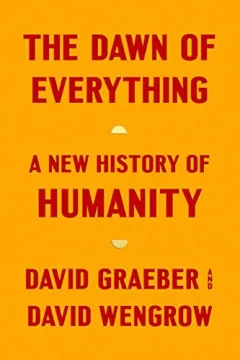
The Dawn of Everything book cover

The Dawn of Everything

By David Graeber , David Wengrow

A New History of Humanity

The Dawn of Everything is an ambitious reinterpretation of early human social and political history. Rather than offering another single-track account of humanity's supposed ascent from small egalitarian bands through agriculture, cities, states, and entrenched inequality, David Graeber and David Wengrow challenge the idea that these developments formed an inevitable sequence. They assemble archaeological, anthropological, and historical examples suggesting that people repeatedly experimented with different combinations of hierarchy, equality, administration, ritual authority, seasonal leadership, and collective government. The book begins by examining familiar European stories about human origins, particularly narratives associated with Thomas Hobbes and Jean-Jacques Rousseau. It then argues that European political thought was partly shaped by Indigenous criticism of European society, giving particular attention to accounts involving the Wendat statesman Kandiaronk. From there, the a…

View The Dawn of Everything

The Anarchy book cover

The Anarchy

By William Dalrymple

The East India Company, Corporate Violence, and the Pillage of an Empire

The Anarchy is a large-scale narrative history of how the English East India Company evolved from a commercial enterprise into a military and governmental power in South Asia. Its central story runs through the eighteenth century, when Mughal authority fragmented, regional powers competed for territory and revenue, and Company officials learned to exploit both Indian political rivalries and financial resources. The book is not simply a chronicle of British expansion. Dalrymple reconstructs a crowded political field involving the Mughal court, Bengal’s nawabs, the Maratha Confederacy, Mysore, Afghan invaders, Indian bankers and financiers, European mercenaries, Company shareholders and officials in London. Figures such as Shah Alam II, Robert Clive, Warren Hastings, Tipu Sultan and the Maratha leader Mahadji Scindia appear within a history shaped as much by negotiation, credit and revenue collection as by battles. Dalrymple’s organizing argument is that the conquest was extraordinary b…

View The Anarchy

The Warmth of Other Suns book cover

The Warmth of Other Suns

By Isabel Wilkerson

The Epic Story of America’s Great Migration

Isabel Wilkerson reconstructs the Great Migration, the decades-long movement of roughly six million Black Americans from the South to Northern, Midwestern, and Western cities. Rather than treating migration primarily as a demographic trend, she builds the history around three people whose journeys represent different routes, decades, social positions, and destinations: Ida Mae Brandon Gladney leaves Mississippi sharecropping for Chicago; George Swanson Starling escapes dangerous labor conflict in Florida and settles in New York; and Robert Joseph Pershing Foster leaves Louisiana to pursue a medical career in Los Angeles. Their stories are interwoven with census findings, archival evidence, historical explanation, and accounts gathered through extensive interviews. The result is both a collective history and a study of individual decision-making under racial constraint. The narrative follows the migrants before departure, through the practical and emotional ordeal of leaving, and acros…

View The Warmth of Other Suns