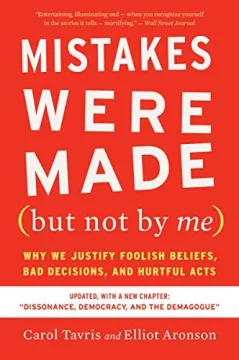
Mistakes Were Made (But Not by Me)
Why We Justify Foolish Beliefs, Bad Decisions, and Hurtful Acts
Why do intelligent, decent people defend poor decisions long after the evidence has turned against them? Carol Tavris and Elliot Aronson answer through cognitive dissonance: the discomfort produced when facts or actions collide with a favorable view of oneself. Rather than revise that self-image, people often reinterpret evidence, alter memories, blame others, or intensify their original commitment. The authors trace this machinery of self-justification from private quarrels to professional judgment, criminal investigations, political allegiance, prejudice, and international conflict. Their central warning is not merely that people deceive others, but that sincere self-deception can make error remarkably durable. At the same time, the book argues that defensiveness is not destiny. By separating wrongdoing from a total condemnation of the self, individuals and institutions can become more capable of correcting errors, making meaningful apologies, and learning before a small mistake har…