Category

Education Policy

Books on how schools are run, funded and reformed. Diane Ravitch's The Death and Life of the Great American School System turns against the testing and choice policies she once supported; Jonathan Kozol's The Shame of the Nation documents segregation and unequal funding. Natalie Wexler's The Knowledge Gap argues that schools neglect knowledge for skills, Amanda Ripley's The Smartest Kids in the World compares students across countries, and Neil Postman's The End of Education asks what purpose schooling still serves. Essential reading for teachers, parents and anyone voting on school policy.

5 published books 0 published articles

Books in this category

Primary category

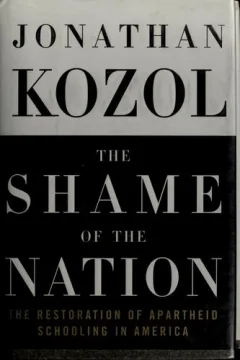
The Shame of the Nation

The Restoration of Apartheid Schooling in America

By Jonathan Kozol

Jonathan Kozol examines the renewed racial segregation of American public schools and the unequal educational conditions accompanying it. Drawing on visits to nearly sixty schools, especially in large urban systems, he combines classroom observation, conversations with children and educators, historical reflection, and policy criticism. His argument extends beyond disparities in buildings or budgets: racially isolated schools are often subjected to rigid discipline, scripted instruction, relentless test preparation, reduced arts and humanities offerings, and assumptions about children’s future economic roles that affluent communities would resist. The book places these conditions against the unfulfilled promise of Brown v. Board of Education and challenges claims that standards and accountability can compensate for unequal opportunities. Its central concern is moral as well as institutional: what does a democracy reveal about itself when it accepts profoundly different forms of school…
View book

Primary category

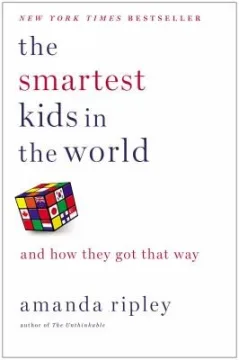
The Smartest Kids in the World

And How They Got That Way

By Amanda Ripley

Amanda Ripley investigates why students in some countries demonstrate stronger academic skills than their American counterparts—and what their schools, families, and societies do differently. Rather than treating education as a contest between abstract policy models, she follows three American exchange students attending schools in Finland, South Korea, and Poland. Their experiences reveal sharply contrasting systems: Finland emphasizes selective teacher preparation and professional autonomy; South Korea produces formidable results through an intensely competitive culture; and Poland illustrates how national reform can raise expectations within a relatively short period. Ripley connects these stories to international assessment data, interviews, classroom observations, and the experiences of foreign students in the United States. Her central concern is not intelligence in a narrow sense but whether schools expect young people to master demanding material. The result is an accessible w…

View book

Primary category

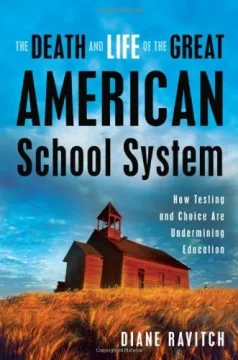
The Death and Life of the Great American School System

How Testing and Choice Are Undermining Education

By Diane Ravitch

In this critique of American education reform, historian and former federal education official Diane Ravitch reassesses policies she once supported. She argues that standards-based reform lost its educational purpose when standards became inseparable from high-stakes testing, sanctions, and numerical targets. She also questions whether charter schools, school choice, mayoral control, private management, and business-style accountability can deliver the broad improvements their advocates promise. Drawing on federal policy and reform campaigns in cities including New York and San Diego, Ravitch examines how incentives can narrow curricula, encourage manipulation of results, destabilize schools, and weaken trust in teachers. The book is both a policy argument and an intellectual self-correction: Ravitch explains why she changed her mind about central elements of the reform movement. Her alternative emphasizes a coherent curriculum, knowledgeable teachers, strong neighborhood schools, app…

View book

Related category

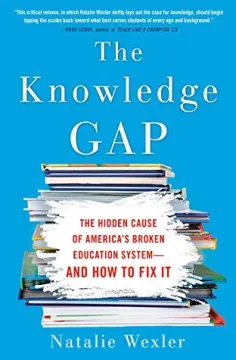
The Knowledge Gap

The Hidden Cause of America's Broken Education System—and How to Fix It

By Natalie Wexler

Why do many children learn to pronounce written words yet struggle to understand increasingly complex texts? Natalie Wexler argues that a major cause lies in the way American elementary schools often teach reading comprehension: as a collection of general-purpose skills, such as identifying a main idea, rather than as an ability grounded in vocabulary and knowledge of the world. Combining classroom reporting, intellectual history, cognitive-science research, and education-policy analysis, she traces how content-light literacy instruction became widespread and why it particularly disadvantages children who cannot rely on home environments to supply missing background knowledge. The book also follows educators experimenting with coherent, content-rich curricula organized around subjects such as history, science, and the arts. Wexler’s larger claim is that curriculum is an equity issue: schools cannot narrow educational disparities unless they deliberately give every child sustained acce…

View book

Related category

The End of Education

Redefining the Value of School

By Neil Postman

Neil Postman argues that the deepest crisis in American public schooling is not primarily a shortage of information, technology, testing, or administrative technique. It is a crisis of purpose. Schools, he contends, need compelling shared narratives that explain why learning matters and what kind of society education should help create. He examines inadequate substitutes—including economic utility, consumerism, technological progress, and narrowly divisive accounts of identity—and then proposes alternative organizing stories. These include planetary responsibility, disciplined awareness of human fallibility, democratic experimentation, diversity as a source of collective strength, and attention to language as a maker of social reality. The title uses “end” chiefly in the sense of an aim or purpose, while warning that schooling without a defensible end may lose public legitimacy. Written as cultural criticism and philosophy of education, the book asks readers to judge schools not only…

View book

Articles in this category

No published articles are currently connected to this category in this language.