Category

Philosophy of Mind

What is a mind, and who has one? Peter Godfrey-Smith's Other Minds explores consciousness through the octopus, an intelligence that evolved completely apart from ours. Robert Wright's Why Buddhism Is True uses evolutionary psychology to explain Buddhist ideas about the self and suffering. Ann Leckie's novel Ancillary Justice imagines a ship's artificial intelligence spread across many human bodies, and what that means for identity. Fascinating reading for anyone curious about consciousness and the self.

1 published book 0 published articles

Related subcategories

Philosophy of Mind

Consciousness

Consciousness, the experience of being someone, may be the deepest puzzle in science and philosophy. Peter Godfrey-Smith, a philosopher and diver, approaches it through the octopus in Other Minds. Octopuses evolved large brains along a completely separate path from ours, with much of their nervous system spread through their arms. By studying them, Godfrey-Smith asks how minds and experience evolved at all. An original, beautifully written book. More books will join this category; see Philosophy of Mind for more.
Explore category

Philosophy of Mind

Personal Identity

What makes you the same person over time, and what if a self could be split or shared? Ann Leckie's science fiction novel Ancillary Justice explores these questions through Breq, the last fragment of a warship's artificial intelligence that once ran through thousands of human bodies at once. Now confined to one body, Breq sets out for revenge, in a story that also questions gender and empire. Winner of the Hugo, Nebula and Arthur C. Clarke Awards. More books will join this category; see Philosophy of Mind for more.

Explore category

Books in this category

Related category

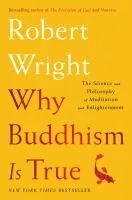
Why Buddhism Is True

The Science and Philosophy of Meditation and Enlightenment

By Robert Wright

Robert Wright argues that selected Buddhist teachings offer an unusually accurate diagnosis of ordinary human experience. Natural selection, he explains, shaped minds to pursue rewards, avoid threats, defend status, and divide the social world into allies and enemies—not necessarily to perceive reality impartially or remain content. This evolutionary framework helps him interpret Buddhist ideas about suffering, impermanence, attachment, not-self, and the deceptive character of perception. Drawing on psychology, evolutionary theory, philosophy, personal experience, and mindfulness practice, Wright presents meditation as a way to observe feelings without automatically obeying them. His claim is deliberately narrower than the title suggests: he does not defend every Buddhist doctrine or supernatural belief. Instead, he makes a secular case that central Buddhist insights into craving, cognition, and identity illuminate why people suffer and how greater awareness might produce clarity, equ…

View book

Articles in this category

No published articles are currently connected to this category in this language.