Category

Evolution

How evolution shaped bodies, minds and morals. Peter Godfrey-Smith's Other Minds traces the separate evolution of intelligence in octopuses and its lessons for consciousness. David Quammen's The Song of the Dodo explores island biogeography, from Darwin and Wallace to modern extinctions. Peter Singer's The Expanding Circle argues that human ethics grew out of evolved altruism and reason. For readers who want to see evolution at work far beyond the textbook.

3 published books 0 published articles

Books in this category

Related category

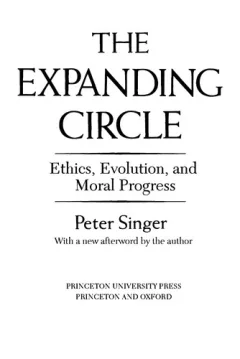
The Expanding Circle

Ethics, Evolution, and Moral Progress

By Peter Singer

Why do human beings help one another, and how can concern extend beyond family, community, or nation? Peter Singer approaches these questions by bringing evolutionary accounts of altruism into conversation with moral philosophy. Biology, he argues, helps explain the origins and limits of many social impulses: natural selection can favor assistance to relatives, reciprocal cooperation, and loyalty within groups. Yet an evolutionary explanation of conduct does not by itself determine how anyone ought to live. Singer assigns a decisive role to reason, whose demand for consistency can expose the arbitrariness of privileging one’s own group simply because it is one’s own. The resulting image is an expanding circle of moral concern, potentially widening from kin and neighbors to distant strangers and nonhuman animals. Originally published amid intense debate over sociobiology, the book remains a compact argument about human nature, impartiality, and whether moral progress is possible.
View book

Related category

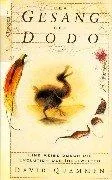
The Song of the Dodo

Island Biogeography in an Age of Extinctions

By David Quammen

David Quammen uses islands—both literal and ecological—to explain how species originate, spread, persist, and disappear. Moving between evolutionary history, field reporting, scientific biography, and conservation debates, he traces island biogeography from the observations of nineteenth-century naturalists to the mathematical theories and reserve-design controversies of the twentieth century. Alfred Russel Wallace occupies a central place in this history, while later figures such as Robert MacArthur, Edward O. Wilson, Daniel Simberloff, and Jared Diamond show how island patterns became a framework for modern ecology. The book’s crucial shift is from oceanic islands to fragmented continents: forests, parks, and reserves surrounded by altered land can function as ecological islands. Their isolated populations become vulnerable to genetic decline, demographic accidents, invasive species, and habitat disruption. Expansive and cautionary, the book connects the intellectual history of evol…

View book

Related category

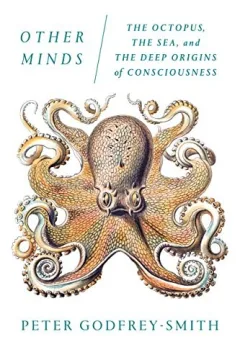
Other Minds

The Octopus, the Sea, and the Deep Origins of Consciousness

By Peter Godfrey-Smith

Other Minds examines consciousness by approaching it through one of evolution’s most unusual achievements: the complex behavior and nervous systems of cephalopods, especially octopuses. Peter Godfrey-Smith combines evolutionary biology, philosophy of mind, natural history, and firsthand underwater observation to ask how subjective experience could have emerged from ordinary biological processes. The book follows animal life from early multicellular organization and basic sensing to neurons, coordinated action, memory, and sophisticated behavior. Cephalopods are central because their lineage diverged from the vertebrate line hundreds of millions of years ago, yet independently produced large nervous systems and flexible intelligence. Their existence therefore challenges any assumption that minds must resemble centralized, social, long-lived human minds. Moving between deep evolutionary time and encounters at Australian dive sites, Godfrey-Smith presents the octopus as evidence that int…

View book

Articles in this category

No published articles are currently connected to this category in this language.