Category

Economics

Economics through the people and institutions that steer it. Sebastian Mallaby's The Man Who Knew is a biography of Alan Greenspan and his years at the Federal Reserve; Christopher Leonard's The Lords of Easy Money examines how the Fed's response to 2008 reshaped the economy. The Dictator's Handbook by Bruce Bueno de Mesquita and Alastair Smith explains how rulers keep power by paying the right supporters. Our article on ten economics books, from daily choices to global inequality, suggests where to go next. Readable, story-led economics for readers without a background in the subject.

1 published book 1 published article

Related subcategories

Economics

Macroeconomics

Macroeconomics studies the economy as a whole: growth, inflation, unemployment, interest rates and money. Christopher Leonard's The Lords of Easy Money brings these ideas down to earth by telling the story of the US Federal Reserve after the 2008 financial crisis, when years of near-zero interest rates and quantitative easing reshaped markets and widened inequality. Leonard follows the officials who made the decisions and the people affected by them. A readable introduction for anyone who wants to understand why interest rates matter. See Economics for more.
Explore category

Economics

Economic Policy

Economic policy is how governments and central banks try to steer growth, prices and jobs, and it affects everyone's savings, rent and wages. Christopher Leonard's The Lords of Easy Money examines the Federal Reserve's decade of low interest rates and quantitative easing after 2008, and who gained from it. Sebastian Mallaby's The Man Who Knew is a biography of Alan Greenspan and the choices made during his long years at the Fed. Clear, story-driven books for readers who want to understand the forces behind interest rates and financial crises.

Explore category

Books in this category

Related category

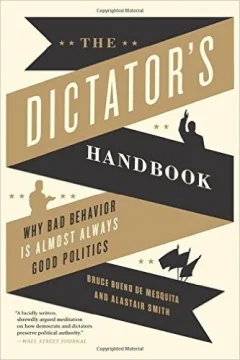
The Dictator's Handbook

Why Bad Behavior Is Almost Always Good Politics

By Bruce Bueno de Mesquita , Alastair Smith

The Dictator’s Handbook presents politics as a problem of survival rather than a contest between noble principles. Bruce Bueno de Mesquita and Alastair Smith argue that every leader—from an autocrat supported by a few generals to an elected president dependent on millions of voters—must maintain a coalition capable of keeping that leader in office. The size and replaceability of this coalition shape how rulers raise money, distribute benefits, tolerate corruption, provide public services, wage war, handle foreign aid, and respond to popular unrest. Small coalitions encourage private rewards for loyal insiders; large coalitions make broadly shared benefits more politically useful. Drawing examples from governments, municipalities, corporations, monarchies, and other organizations, the authors turn selectorate theory into an accessible framework for comparative politics. Their account is deliberately unsentimental: harmful conduct can be politically rational even when it is disastrous f…

View book

Articles in this category