Category

Mystery & Detective Fiction

Puzzles, detectives and secrets waiting to be uncovered. Umberto Eco's The Name of the Rose sets a murder investigation in a medieval abbey; Keigo Higashino's The Devotion of Suspect X is a Japanese crime novel built around a brilliant cover-up. Tana French's In the Woods follows a Dublin detective haunted by his own past, and Stuart Turton's The Seven Deaths of Evelyn Hardcastle replays one murder through eight different hosts. Alex Michaelides's The Silent Patient and Susanna Clarke's Piranesi offer mysteries of a different kind. For readers who like to work out the answer before the last page.

2 published books 0 published articles

Related subcategories

Mystery & Detective Fiction

Traditional Mystery

Traditional mysteries are puzzles: a crime, a set of clues and a solution the reader can try to find first. Keigo Higashino's The Devotion of Suspect X turns the form inside out, showing the crime at the start and making the mystery how the cover-up works. Stuart Turton's The Seven Deaths of Evelyn Hardcastle sets a murder at a country house party, where the narrator must relive the same day in the bodies of different guests until he solves it. Ingenious novels for puzzle lovers. See Mystery & Detective Fiction for more.

Explore category

Mystery & Detective Fiction

Police & Procedural

Police procedurals follow detectives through the real work of an investigation: interviews, evidence, dead ends and pressure. Tana French's In the Woods opens the Dublin Murder Squad series with detective Rob Ryan, who investigates a girl's murder in the same woods where, as a child, he survived the disappearance of his two friends. Keigo Higashino's The Devotion of Suspect X, translated from Japanese, pits a police detective and a physicist against a brilliant mathematician who has planned the perfect cover-up. See Mystery & Detective Fiction for more.

Explore category

Mystery & Detective Fiction

Historical Mystery

Historical mysteries set a crime in a carefully recreated past. Umberto Eco's The Name of the Rose takes place in a wealthy Italian abbey in 1327, where the Franciscan friar William of Baskerville and his young assistant Adso investigate a series of deaths among the monks, centred on the abbey's great labyrinthine library. It is a detective story, a novel of ideas about faith, books and knowledge, and one of the best-selling novels of its time. More historical mysteries will join this shelf; see Mystery & Detective Fiction for more.

Explore category

Books in this category

Related category

The Silent Patient

By Alex Michaelides

After the fatal shooting of her husband, successful London painter Alicia Berenson stops speaking. Her silence turns a domestic murder into a public mystery and eventually brings her to the Grove, a secure forensic psychiatric unit. Theo Faber, a psychotherapist intensely interested in her case, joins the institution determined to understand what happened and restore her voice. His investigation moves between treatment sessions, Alicia's private writings, her unsettling final painting, and the troubled relationships surrounding both patient and therapist. Alex Michaelides builds the novel around uncertain testimony, professional obsession, buried trauma, and the difficulty of distinguishing insight from projection. The result is a tightly engineered psychological thriller in which interpretation itself becomes dangerous: every account may conceal as much as it reveals, and the person claiming to uncover the truth may be shaping the reader's view of it.

View book

Related category

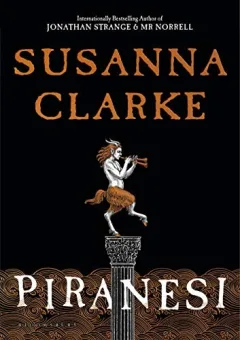
Piranesi

By Susanna Clarke

Piranesi lives in the House, an apparently endless world of classical halls, monumental statues, birds, clouds, and seawater. He maps its spaces, predicts its dangerous tides, cares for its dead, and records his discoveries in journals. His only regular companion is the Other, a sharply contrasting figure who treats the House as the possible repository of secret knowledge. When signs suggest that another living person has entered this world, Piranesi begins examining inconsistencies in his records and gaps in his memory. What starts as an account of solitary exploration gradually becomes a mystery about identity, captivity, trust, and the uses of knowledge. Susanna Clarke combines a fantastical setting with the investigative momentum of a psychological mystery, making the narrator’s careful observations both the substance of the world and the means by which its hidden history can be recovered.

View book

Articles in this category

No published articles are currently connected to this category in this language.