Category

Cognitive Psychology

How we think, remember and learn. Oliver Sacks's The Man Who Mistook His Wife for a Hat tells stories of patients whose brain conditions reveal how perception and memory work. Carol Tavris and Elliot Aronson's Mistakes Were Made (But Not by Me) explains how cognitive dissonance lets us justify our own errors. Daniel T. Willingham's Why Don't Students Like School? turns cognitive science into practical advice for teachers and parents. Accessible psychology, full of examples from everyday life.

1 published book 0 published articles

Related subcategories

Cognitive Psychology

Memory

Memory is not a recording but a story we keep rewriting. Carol Tavris and Elliot Aronson's Mistakes Were Made (But Not by Me) shows how memory and self-justification work together: when we act against our beliefs, the mind reduces the discomfort, cognitive dissonance, by adjusting what we remember and believe. The authors trace the effects in false memories, wrongful convictions, marriages and politics. Readable and eye-opening. More books on memory will join this category; see Cognitive Psychology for more.
Explore category

Cognitive Psychology

Learning

How people learn, and how to teach so that they do. Daniel T. Willingham's Why Don't Students Like School? explains what cognitive science has found about learning in plain language: that thinking depends on knowledge, that memory is the residue of what we think about, that practice is essential and that we are naturally curious but easily discouraged. Each chapter ends with practical advice for teachers and parents. More books on learning will join this category; see Cognitive Psychology and Education & Reference.

Explore category

Books in this category

Related category

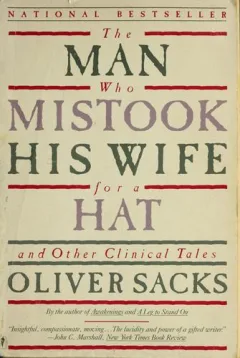
The Man Who Mistook His Wife for a Hat

And Other Clinical Tales

By Oliver Sacks

In this collection of twenty-four clinical narratives, neurologist Oliver Sacks examines people whose injuries, illnesses, and atypical neurological conditions have profoundly altered perception, memory, bodily awareness, language, impulse, or identity. The title case concerns Dr. P., a musician who can describe individual visual features yet cannot reliably recognize the objects and people before him. Other chapters consider severe amnesia, Tourette syndrome, loss of proprioception, phantom limbs, involuntary reminiscence, unusual artistic abilities, and distinctive forms of calculation and attention. Sacks is interested not only in locating an impairment but also in understanding the life constructed around it. Music, routine, imagination, faith, art, and personal relationships may become essential means of orientation. The result is an influential example of literary medical writing that presents neurology as a study of whole lives, while also raising enduring questions about patie…

View book

Articles in this category

No published articles are currently connected to this category in this language.