Grove Press takes its name from Grove Street in Greenwich Village, where John Balcomb and Robert Phelps set it up as a small reprint house in the late 1940s. The company's real story begins in 1951, when Barney Rosset bought the three-title operation for three thousand dollars and turned it into one of the most consequential presses of the century. Under Rosset, with editors Donald Allen, Fred Jordan, and Richard Seaver, Grove became the American home of the Beats and the European avant-garde alike.
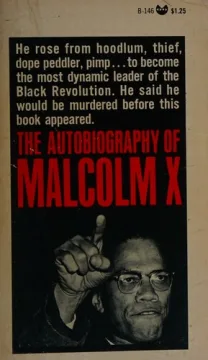
The list that defined the press reads like a who's who of the mid-century underground: William S. Burroughs, Jack Kerouac, Allen Ginsberg, Samuel Beckett, Jean Genet, Eugène Ionesco, Hubert Selby Jr. Grove also fought the censorship battles that reshaped American obscenity law, publishing unexpurgated editions of Lady Chatterley's Lover, Tropic of Cancer, and Naked Lunch. Its political list gave voice to Malcolm X, Frantz Fanon, and Che Guevara; The Autobiography of Malcolm X, which the company published after Doubleday pulled out following his assassination, remains a defining title for the press.
Since the 1993 merger with Atlantic Monthly Press, Grove Press has operated as an imprint of Grove Atlantic, Inc., an independent publisher based in New York City. Its catalog now spans literary fiction, drama, poetry, books in translation, and general nonfiction, alongside the Atlantic Monthly Press, Black Cat, and other imprints under the Grove Atlantic umbrella.
Readers who come here from Viet Thanh Nguyen's The Sympathizer or Abraham Verghese's The Covenant of Water will find a press with a long memory for books that cross borders, whether literary or national. The same instinct that made Grove the first American publisher of Waiting for Godot still shows up in its list: a willingness to take on a novel that demands something of the reader, in a genre and from a country the mainstream might have passed over.