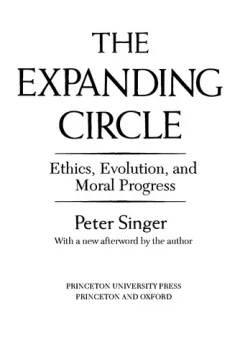
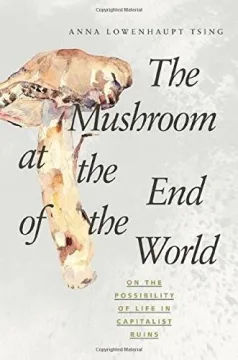
Princeton University Press was founded in 1905 by Whitney Darrow, a recent Princeton graduate, with initial funding from Charles Scribner II, a Princeton trustee and partner at Charles Scribner's Sons. What began as a small for-profit printer was reincorporated as a nonprofit in 1910. Its first book, a new edition of John Witherspoon's Lectures on Moral Philosophy, appeared in 1912. The press is headquartered in Princeton, New Jersey, with additional offices in Oxford, England, and Beijing, China. Christie Henry has served as director since 2017.
The press publishes more than 300 new non-fiction titles each year, spanning the sciences, humanities, social sciences, and general interest. Its backlist runs past 10,000 titles in print. Beyond books, it has expanded into audiobooks through Princeton Audio, launched a speakers' bureau called PUP Speaks, and maintains long-term documentary projects including the Papers of Thomas Jefferson, the Papers of Woodrow Wilson, and the Collected Papers of Albert Einstein. The Bollingen Series, acquired in 1969, covers psychology, mythology, art history, and related fields.
Seven PUP books have won Pulitzer Prizes and three have won the National Book Award. More than 50 of its authors have received Nobel Prizes. The press published Einstein's The Meaning of Relativity in 1922 and von Neumann and Morgenstern's Theory of Games and Economic Behavior in 1944. Recent titles include Claudia Goldin's Career and Family (2021), Eric H. Cline's 1177 B.C.: The Year Civilization Collapsed (2021), and Arvind Narayanan and Sayash Kapoor's AI Snake Oil (2024).
A reader who comes to this press looking for depth will find books that take their time. The result is a list where a practical field guide sits beside a sixty-nine-volume treatment of Woodrow Wilson's presidency. The writing is rigorous but not impenetrable, and the topics stretch from the physics that underpins the universe to the political economy of a single country's postwar recovery.